Field of Science

Showing posts with label Actinopteri. Show all posts

The Teleost Fuse

A while back, I discussed the group of fish known as the Holostei, the gars and bowfin. The Holostei constitute one branch of the clade Neopterygii which includes the majority of living ray-finned fishes. However, their success in the modern environment pales in comparison to that of their sister group, the Teleostei.

Siemensichthys macrocephalus, an early teleost of uncertain affinities, copyright Ghedoghedo.


Teleosts are such a major component of ray-finned fishes that it is simpler to list those members of the modern fauna that do not belong to this clade: the aforementioned gars and bowfin, sturgeons and paddlefish, and the bichirs of Africa. Everything else belongs to the great teleost radiation, representing about 96% of all modern fishes. The earliest fishes generally recognised as teleosts come from marine deposits of the Late Triassic in the form of the Pholidophoridae of Europe. The earliest known members of the crown group are from the Late Jurassic (Nelson et al. 2016). Teleosts have been recognised as an apomorphy-defined clade; the crown clade has been dubbed the Teleocephala. Among the features that have been used to define the Teleostei are the presence of a mobile premaxilla. In my previous post, I explained how the mobile maxilla of neopterygians including bowfins improved feeding by creating suction when the mouth was opened. Having both the maxilla and premaxilla mobile enhances this process further. In some of the most advanced teleosts, such as dories and ponyfish, the connection between the jaws and the cranium is entirely comprised of soft, flexible tissue, allowing the jaw apparatus as a whole to be catapulted towards unwary prey. Other features that have been highlighted include a strongly ossified caudal skeleton with long uroneural spines derived from the neural arches of the vertebrae, and the lower lobe of the caudal fin supported by two plate-like hypural bones articulating with a single vertebral centrum (Bond 1996).

Leptolepis coryphaenoides, one of the earliest teleosts with cycloid scales, copyright Daderot.


Of course, not all these features necessarily appeared in lock with each other. A phylogenetic analysis of basal teleosts by Arratia (2013) identified the aforementioned features of the caudal skeleton as absent in some of the basalmost teleosts. The condition of the premaxilla is ambiguous in Prohalecites, the earliest stem-group teleost from the Middle-Late Triassic boundary. It appears to be absent in the Aspidorhynchiformes and Pachycormiformes, Mesozoic orders that are currently regarded as on the teleost stem but not part of the Teleostei. However, as was found with the mobile maxilla in gars, one can't help wondering whether this character has been affected by the uniquely derived upper jaw morphologies in these orders. Other features identified by Arratia (2013) as supporting the Teleostei clade include the presence of two supramaxillary bones, a suborbital bone between the posterior margin of the posterodorsal infraorbitals and the anterior margin of the opercular apparatus (subsequently lost in the teleost crown group), and accessory suborbital bones ventrolateral to the postorbital region of the skull roof.

The earliest teleosts in the Pholidophoridae and other basal lineages retained the heavy ganoid scales of thick bone that may still be seen in modern Teleostei. Lighter, thinner cycloid scales first appear with the Early Jurassic Leptolepis coryphaenoides (Arratia 2013) and are the basal scale type for the teleost crown group (in some derived subgroups, the scales would become further modified or even lost). The greater mobility permitted by these lighter scales may have been another significant factor in the teleost explosion. By the Cretaceous period, stem-teleosts had radiated into a variety of specialised forms such as the gigantic predatory Ichthyodectiformes (of which Xiphactinus grew up to four metres in length) and the deep-finned Araripichthys. The three major subgroups of the crown Teleostei—the Elopomorpha, Osteoglossomorpha and Clupeocephala—had diverged from each other by the end of the Jurassic. The stem-teleosts would disappear with the end of the Mesozoic; the crown teleosts would dominates the world's waters from that time on.

REFERENCES

Arratia, G. 2013. Morphology, taxonomy, and phylogeny of Triassic pholidophorid fishes (Actinopterygii, Teleostei). Journal of Vertebrate Paleontology 33 (6 Suppl.): 1–138.

Nelson, J. S., T. C. Grande & M. V. H. Wilson. 2016. Fishes of the World 5th ed. Wiley.

Shadow of the Palaeoniscoids

Palaeoniscum freieslebeni, copyright James St. John.


Depending how you cut it, the ray-finned fishes (Actinopterygii) are arguably the most diverse group of vertebrates in the modern fauna. They are the dominant vertebrates in all aquatic environments, they encompass an enormous array of species, and they have evolved a bewildering assemblage of morphologies. But despite their current pre-eminence, the early evolution of actinopterygians remains rather understudied. The earliest actinopterygians appear in the fossil record in the Late Silurian/Early Devonian but, until fairly recently, the majority of Palaeozoic ray-finned fishes have often been lumped into a catch-all holding tank, the 'Palaeonisciformes'. This was a vague assemblage of fishes united by plesiomorphic features such as ganoid scales (heavy, bony scales with an outer layer of enamel, also found in modern gars and sturgeons), a single dorsal fin and a heterocercal tail (with the upper arm of the tail fin longer than the lower). The key genus of the group, the Permian Palaeoniscum, had a fusiform (or torpedo-shaped) body; at first glance, it would not have looked dissimilar to a modern herring. However, it lacked the mobile jaw structure of modern teleost fishes, with the maxilla and preopercular bones being fixed together. As such, it would have lacked the modern fish's capacity for suction feeding (Lauder 1980). Prey capture by Palaeoniscum would have been a simple smash-and-grab affair. Palaeoniscoid fishes remained a component of both marine and freshwater faunas until the end of the Cretaceous before being entirely supplanted by modern teleost radiations such as the ostariophysans and percomorphs.

Reconstruction of Acrolepis gigas, copyright DiBgd.


The core concept of 'Palaeonisciformes' has united fishes with a fusiform body shape like Palaeoniscum; depending on the author, more divergent contemporary fishes such as the deep-body platysomoids might be combined in the same order or treated separately. By modern standards, former 'Palaeonisciformes' probably combine stem-actinopterygians, stem-chondrosteans, stem-holosteans and possibly even stem-teleosts. As such, the term Palaeonisciformes has tended to fall out of favour, though the less formal 'palaeoniscoid' remains a useful descriptor. Nevertheless, the exact phylogenetic position of many palaeoniscoid taxa remains unestablished. Part of this is due to a lack of observable detail: though those heavy ganoid scales preserve well, they effectively cover up internal skeletal features. Many palaeoniscoids are preserved as compression fossils, effectively not much more than intriguing silhouettes. However, part of the problem is simple neglect. Palaeoniscoids are not rare fossils; in some formations, they may be the dominant part of the fauna by a large margin. They certainly deserve a closer look.

REFERENCE

Lauder, G. V., Jr. 1980. Evolution of the feeding mechanism in primitive actinopterygian fishes: a functional anatomical analysis of Polypterus, Lepisosteus, and Amia. Journal of Morphology 163: 283–317.

To Drop Jaw or Not?

The vast majority of living ray-finned fishes (that is, all of them except for bichirs, sturgeons and paddlefishes) fall under the auspices of the clade Neopterygii. I have commented on this clade in earlier posts and in those posts I have noted that modern neopterygians can theselves be divided between three basal lineages. By far the largest of these is the teleosts with only a handful of species representing the other two: the seven or so species of gar in the Lepisosteidae, and the phylogenetically isolated bowfin Amia calva. However, the exact relationships between these three lineages have been the subject of debate.

Close-up on bowfin Amia calva head, from Big Fishes of the World. Note the membranous attachment of the back of the upper jaw.


Historically, the bowfin and the gars were recognised as a group Holostei in apposition to the Teleostei. When first established, this division was motivated primarily by the nature of their scales: the heavy, solid scales of the holosteans contrasted with the thinner, lighter scales of the teleosts. Hence the name 'Holostei' meaning 'entirely bone': the holosteans have both a completely bony skeleton on the inside (as opposed to the partially cartilaginous skeletons of more basal fishes) and a complete covering of bony scales on the outside. However, the heavy scales of the Holostei are a primitive feature, indicating that the two lineages diverged before the evolution of the lighter teleost scales but not indicating a direct relationship with each other.

With the increasing emphasis on evolutionary relationships as the primary informer of classifications, a different system was proposed. This saw the gars as the most divergent lineage of the Neopterygii with the bowfin being united with the teleosts as a clade Halecostomi. This time, the primary evidence for this division was in how their jaws worked. The ancestral condition for vertebrate jaws has them working much as our own still do. The upper jaw, the maxilla, is largely fixed in place against the base of the neurocranium (the brain-holding bit) while the movement of opening and closing the mouth is achieved by the lower jaw, the mandible, pivoting around its hinge towards the back of the skull. In the bowfin and teleosts, however, the maxilla is hinged with the skull at its anterior end and with the mandible at the back. When the mouth opens, the maxila pivots downwards from this anterior hinge, dropping the mandible as a whole downwards. The bowfin and teleosts also possess a bone in the cheek, the interopercular bone, that is not found in other fishes; a muscle attached to this bone rotates the gill operculum as the mouth opens (Lauder 1980). Functionally, the expansion of the mouth cavity in this manner of opening the jaws creates a suction that pulls prey or other food into the fish's mouth.

Though it was by no means universally accepted, it is probably fair to say that the halecostomes vs gars picture of neopterygian evolution became the majority view. But then came the advent of molecular phylogenetic analysis, all ready and willing to cast the proverbial spanner. Rather than confirming halecostome monophyly, molecular analyses pointed the other way, back towards a clade of the bowfin and gars. Following this, a detailed study of gar systematics published by Grande (2010) also supported a gar plus bowfin monophylum on morphological grounds and resurrected the concept of Holostei (albeit redefined on phylogenetic grounds).

Skull of a longnose gar Lepisosteus osseus, from Grande (2010). In the lower diagram, the maxilla is labelled 'mx' and the lacrimomaxillaries are labelled 'lmx'.


Gar jaws, it should be noted at this point, are a bit weird. Rather than being primarily composed of a single maxilla on each side, the upper jaws are made up of a series of tooth-bearing bones, each bone carrying just a few teeth, that have been dubbed the lacrimomaxillaries. When the jaws open, as well as the lower jaw opening in the standard manner, the flexible upper jaw also bends upwards. Rather than using suction to draw in their food like other neopterygians, gars capture prey by sneaking up to it then using a quick sideways jerk of the head to bring the open jaws around the prey (Lauder 1980). Gars were excluded from the Halecostomi on the basis of their lack of a long, mobile maxilla but, as explained by Grande (2010), a mobile maxilla is indeed present in gars but reduced to a remnant splint at the back of the jaw (in mature alligator gars Atractosteus spatula, the maxilla does not ossify). In very young juvenile gars, the mobile maxilla remains a significant part of the upper jaw with the lacrimomaxillaries being added in front of it as the jaw lengthens. As for the interopercular, this is genuinely absent in modern gars but it is present in close fossil relatives of gars such as semionotids. Rather than retaining a primitive jaw structure that was superseded in the bowfin and teleosts, it appears that gars evolved their own derived jaw structure from 'halecostome' ancestors.

Given that suction-assisted feeding is generally regarded as a major advance in fish evolution, how did gars end up abandoning it? That I can only speculate about. Is it related to the evolution of their elongate rostra? Long beaks are certainly a thing for a number of teleosts, but I don't know if any have a beak as long and robust as a gar's. Could it be that the greater precision of gars' snapping mode of feeding is an advantage in the low-oxygen, muck-filled waters in which gars thrive? Or could it be a side effect somehow of gars' more heavily armoured condition than other early-diverging neopterygians?

It's only fair to note that monophyly of Holostei is still not universally accepted; there are sill researchers who are inclined to think the bowfin closer to teleosts. But even if the 'Halecostomi' hypothesis was to rise once more to the surface, it would not be for the same reasons it did before.

REFERENCES

Grande, L. 2010. An empirical synthetic pattern study of gars (Lepisosteiformes) and closely related species, based mostly on skeletal anatomy. The resurrection of Holostei. Copeia 2010 (2A): iii–x, 1–871.

Lauder, G. V., Jr. 1980. Evolution of the feeding mechanism in primitive actinopterygian fishes: a functional anatomical analysis of Polypterus, Lepisosteus, and Amia. Journal of Morphology 163: 283–317.

Gar!

Apart from the mostly terrestrial radiation of the tetrapods, the vast majority of today's bony-skeletoned fishes belong to the clade of the teleosts. Way back in the Triassic, the ancestors of this clade went through a process of modification of the jaw skeleton to make it more mobile and adroit in catching small prey, and this together with a tendency towards the lightening of the skeleton and the body's covering of bony scales marked the beginnings of what is now well over 25,000 species. But while they may pale in comparison to this phylogenetic behemoth, there are still non-teleost (and non-tetrapod) bony fishes out there if you look in the right places.

Alligator gar Atractosteus spatula, copyright Stan Shebs.


Most studies on fish phylogeny in the last decade or so have agreed that the living sister group of the teleosts is the Holostei, a clade including only eight living species. One of these is the bowfin Amia calva, an elongate, cylindrical-bodied fish with a long dorsal fin running most of the length of its back. The other seven sepecies belong to the gar genera Lepisosteus and Atractosteus, forming the family Lepisosteidae*. Gars are also elongate like the bowfin, albeit without the long dorsal fin, and have elongate, flattened jaws (tending to be narrower in Lepisosteus than Atractosteus). The tail fin in both bowfins and gars is rounded, not forked. Living holosteans are restricted to North America (including Central America and the Caribbean)** but fossils show them to have been more widespread in the past. They are mostly found in fresh water; some species may tolerate brackish or even salt water but they do not stay there permanently. Bowfins and gars are able to breathe air directly as well as through their gills (indeed, gars are reported to drown if prevented from coming to the surface for several hours) and can therefore survive in more stagnant waters than many other fish. The bowfin averages about half a metre in length; the smaller gar species are also in this range. The largest species, the alligator gar Atractosteus spatula, reaches at least close to three metres. Larger sizes (up to six metres or more!) have been reported for this species but appear likely to be errors or exaggerations; as noted by one authority, "All fishes shrink under the tape measure" (Grande 2010).

*The incorrect alternative spellings Lepidosteus and Lepidosteidae (as well as Lepidosteiformes) have often appeared in the past.

**References to a supposed Chinese gar have long persisted in the literature, based on a description of a "Lepidosteus sinensis" from 1873. This description was based on a drawing rather than an actual specimen, and it is now thought that the fish depicted was probably a belonid (an unrelated long-jawed teleost) rather than a gar.

Bowfin Amia calva sharing a tank with largemouth basses, copyright Bemep.


Modern holosteans are ambush predators, feeding on other fish or aquatic invertebrates. In general, larger species tend to prefer a diet of fish whereas smaller species focus on invertebrates, but all appear to be happy to take whatever they may, whether alive or dead. The alligator gar has been claimed to attack humans but no such attacks seem to have been authenticated; Grande (2010) stated that "swimmers probably have very little to fear from them". As well as their sheer size, this accusation may have been fueled by the alligator gar's apparent tendency in some areas to hang around wharves scavenging garbage. Neither bowfins nor gars are of high importance as food fish for humans though their size and strength gain them some attraction as sport fish*. An industry for the production and marketing of bowfin roe has arisen in recent years following the decline in availability of caviar from Russian sturgeon species; no such market exists for gar eggs, which are toxic to humans. Historically, the thick armour of scales covering the skin of gars was used by Caribbean Indians for making breastplates while individual scales could be used for arrowheads.

*Grande (2010) quotes Eberle (1990) to the effect that gars have "a poor reputation among anglers, who believe [they] would have been better suited as land dwellers had they been able to stand their own reflections in the water".

Shortnose gar Lepisosteus platostomus, copyright Rufus46.


Reproductive habits are best known in the bowfin and the longnose gar Lepisosteus osseus. Male bowfins construct a nest in mats of fibrous vegetation, into which they attempt to induce passing females to spawn. Guarding of the eggs after spawning is the duty of the male alone; the female moves on, perhaps to spawn in another male's nest (the male himself may also court more females). The eggs are adhesive and take about a week and a half to hatch. Following hatching, the fry attach themselves to nearby vegetation by an adhesive organ at the end of their snout and spend some time being nourished by the remains of their yolk sac beofre beginning to forage. The male will continue to guard his fry until they reach about a month of age. Reproduction in longnose gars is similar in the production of adhesive eggs and the early sessile, snout-attached period of the life cycle, but differs in that there is no nest construction or parental care. There is a record of gar eggs being deposited in the nest of a smallmouth bass and the fry being subsequently raised cuckoo-wise by the nest's owner, but it is unclear whether this reflects any deliberate action by the parental gars or simply a fortuitous accident. Gars take up to six years to reach maturity, with males maturing a couple of years earlier than females.

Semionotus bergeri, copyright Ghedoghedo.


The fossil record of holosteans extends back to their divergence from the teleosts in the early to mid-Triassic, with the bowfin and gar lineages apparently diverging from each other not long afterwards. As noted above, both lineages include a diversity of extinct members that somewhat belies their current paucity, such as Macrosemiidae and Semionotidae in the gar lineage, and Ophiopsidae, Ionoscopidae, Caturidae and Sinamiidae in the bowfin lineage. The greatest diversity in both lineages was during the Jurassic and Cretaceous (Brito & Alvarado-Ortega 2013; Cavin 2010) and the two modern gar genera appear to have been separate lineages at least since the late Cretaceous (Grande 2010). Holosteans were also more ecologically diverse in the past. Masillosteus, a gar genus from the Eocene of Europe and North America, had a shorter jaw and flatter teeth than modern jaws, and probably fed on harder-shelled animals such as molluscs and/or crustaceans. The Mesozoic 'Semionotidae', suggested by Cavin (2010) to be paraphyletic to the gars, were even more diverse, including marine as well as freshwater forms, and forms that may have plant feeders or detritivores. In the early Jurassic of eastern North America, one group of semionotids underwent a lake-based radiation that has been compared to the modern cichlids of African rift lakes. Adequately covering the diversity of fossil holosteans would make this post considerably longer than it already is; perhaps one day, I'll get to it.

REFERENCES

Brito, P. M. & J. Alvarado-Ortega. 2013. Cipatlichthys scutatus, gen. nov., sp. nov. a new halecomorph (Neopterygii, Holostei) from the Lower Cretaceous Tlayua Formation of Mexico. PLoS One 8 (9): e73551.

Cavin, L. 2010. Diversity of Mesozoic semionotiform fishes and the origin of gars (Lepisosteidae). Naturwissenschaften 97: 1035–1040.

Grande, L. 2010. An empirical synthetic pattern study of gars (Lepisosteiformes) and closely related species, based mostly on skeletal anatomy. The resurrection of Holostei. Copeia 2010 (2A): iii–x, 1–871.

Protacanthopterygii: A Brief History of a Vague Idea

There are some taxon names whose concepts are rock-solid, that have been universally recognised since their inception almost without variation. There are some taxon names that are coined, potentially linger through one or two subsequent uses, then disappear into the mists of history never to be used again. And then there are some taxon names that are used regularly but whose actual concept shifts wildly over time: names that seem to be used not so much for their own sake as because authors seem to think they need to be in there somewhere. Witness today's subject, the Protacanthopterygii.

Brown salmon Salmo trutta, photographed by Eric Engbretson, about as close to a definitive 'protacanthopterygian' as you're going to get.


The Protacanthopterygii has widely been recognised as a major group of ray-finned fishes since the name was established by Greenwood et al. (1966). Using the modern parlance, Greenwood et al.'s Protacanthopterygii was an explicitly paraphyletic group of euteleost fishes that could be recognised as branching off the lineage leading to the Acanthopterygii and Paracanthopterygii but lacked the full suite of characteristics of the latter group. As such, many of the characters listed by Greenwood et al. as diagnostic of the Protacanthopterygii were expressed in the form of trends: "widespread trend toward the development of premaxillary processes", for instance, or "hyoid and branchiostegal skeleton approaching paracanthopterygian and acanthopterygian form". We also get a number of references to majority rather than universal features: "glossohyal teeth usually prominent", or "few species with opercular spines or serrations". Greenwood et al. included the bulk of their Protacanthopterygii in the order Salmoniformes, but recognised this order in a much broader sense than modern authors. As well as the Salmonidae itself, their Salmoniformes included taxa that would now be placed in the orders Galaxiiformes, Esociformes, Myctophiformes, Aulopiformes and Stomiiformes, among others. Greenwood et al.'s Protacanthopterygii was also supposed to include the orders Cetomimiformes, Gonorynchiformes and Ctenothrissiformes. Their concept of Cetomimiformes is now recognised as polyphyletic and neither Cetomimiformes and Gonorynchiformes include any taxa closely related to Salmonidae; the case of Ctenothrissiformes has been discussed on this site previously.

Northern pike Esox lucius, copyright Jik jik.


In the intervening years, of course, the philosophy of systematics has shifted to prioritising the recognition of monophyletic taxa, requiring the dissolution of the original Protacanthopterygii. Unfortunately, calculating basal euteleost relationships has not proven an easy task. As a result, authors have differed considerably on exactly which fishes should be regarded as 'protacanthopterygians'. About the only constant factor in all circumscriptions of the taxon has been the inclusion of the Salmonidae, the salmons, trouts and the like. Indeed, the most extreme restriction of the Protacanthopterygii would treat it as including this family alone.

Recent molecular studies have agreed on the recognition of a clade uniting the Salmonidae with the Esociformes. The Esociformes is a small order of a bit over a dozen species of freshwater fish found in the Holarctic region, uniting the pikes of the genus Esox with the mudminnows of the Umbridae. Betancur-R et al. (2017) recognised Protacanthopterygii as the name for a clade uniting the Salmonidae, Esociformes, Argentiniformes (a marine order including herring smelts, barreleyes and the like) and Galaxiidae (whitebaits). However, other studies have not supported this clade.

Spotted galaxias Galaxias truttaceus, copyright Nathan Litjens, an Australian member of the whitebait family. Though galaxiids are rather salmon-like in overall appearance, it remains an open question whether this resemblance indicates any sort of direct relationship or just a shared hold-over from some ancestral neoteleost.


Considering the difficulty in defining it, one might question why the concept of a 'Protacanthopterygii' persists at all. Really, there doesn't seem to be much reason for it other than that the Greenwood et al. (1966) classification was long the base standard for teleost classifications, leaving subsequent authors loathe to discard any taxon recognised therein lightly. It might, in theory, be possible to rescue the Protacanthopterygii concept by phylogenetic definition: for instance, as those species more closely related to Salmo than Perca (indeed, I would not be surprised to learn this has already been done). But considering that the uncertain composition of the resulting clade would reduce the practicality of its recognition, I don't think I would be weeping too much if someone would just take the Protacanthopterygii concept out the back and shoot it.

REFERENCES

Betancur-R., R., E. O. Wiley, G. Arratia, A. Acero, N. Bailly, M. Miya, G. Lecointre & G. Ortí. 2017. Phylogenetic classification of bony fishes. BMC Evolutionary Biology 17: 162.

Greenwood, P. H., D. E. Rosen, S. H. Weitzman & G. S. Myers. 1966. Phyletic studies of teleostean fishes, with a provisional classification of living forms. Bulletin of the American Museum of Natural History 131 (4): 339–456.

A Parasitic Eel?

The following post was inspired by an e-mail that I was sent recently by Sebastian Marquez. He told me about a friend of his catching a trevally when fishing, then cutting it open to find a snake eel inside the body cavity (but outside the stomach), wrapped around the trevally's internal organs. According to Sebastian, the lead suspicion for what had happened was that the eel had somehow burst out of the trevally's stomach before it was caught, and he wanted to know if I'd ever heard of anything similar. I didn't have an explanation for him, but his story did get me thinking about the snub-nosed eel.

Snub-nosed eel Simenchelys parasitica, from Jordan (1907).


The snub-nose eel Simenchelys parasitica is a small deep-sea eel, about 20 to 35 centimetres long. It has attracted note by being found a number of times burrowed into the body cavity of larger fishes with perhaps the most renowned case being two juveniles that were found nested inside the heart of a mako shark. This lead to the description of S. parasitica as an endoparasite (hence the species name). However, acceptance of this tag has been far from universal. The snub-nosed eel has been caught free-living more regularly than it has been found in other fish and because of its deep-sea habitat it has never been observed in life. An alternative suggestion has been that Simenchelys is normally a scavenger; because many of its recorded 'hosts' have been collected through non-targeted methods such as trawls, it is not impossible that the snub-nosed eels may have burrowed into their body cavity after they were already deceased.

It was with this conundrum in mind that the cranial anatomy of the snub-nosed eel was described by Eagderi et al. (2016). The jaws of Simenchelys are relatively short and muscular (hence its 'snub nose'). It also has teeth arranged in such a way that they form an even cutting edge (in contrast to the more spaced and uneven teeth of other eels). Eadgeri et al. came to the conclusion that the snub-nosed eel probably feeds by biting out plugs of flesh, in a similar manner to a cookie-cutter shark. Simenchelys also resembles a cookie-cutter in having large, fleshy lips that are probably used to form a seal between jaws and food source. A large hyoid ('tongue') apparatus probably works to provide suction to maintain the seal. The snub-nosed eel may also rotate while biting, a behaviour known from both cookie-cutters and other eels.

So is Simenchelys a parasite? It is probably not a habitual endoparasite, lacking as it does any clear adaptations to the endoparasitic lifestyle. There are fish that could be described as ectoparasites, in that they habitually feed on live animals larger than themselves in a manner that does not normally lead to the host's death. The cookie-cutter is one such fish; another is the candiru Vandellia cirrhosa, a small freshwater catfish from the Amazon basin that feeds on blood from the gills of other fish. It is possible that the snub-nosed eel could have a similar lifestyle to one of these. However, recorded evidence of its habits is even more consistent with scavengers such as hagfish and the candiru-açu Cetopsis candiru (another South American catfish) that tear flesh from the submerged bodies of dead animals, and may often burrow their way into the corpse's body cavity as they do so.

Of course, the two modes of feeding are not mutually exclusive. The only difference between predator and parasite in this scenario is whether the attacked animal is alive or dead, and the thing about flesh-feeders is that they're not always picky. A habitual scavenger may easily choose the opportunity to take a nibble from a still-living host, especially is said host is in some way incapacited (as a result of being swept up by a trawl, for instance). The snub-nosed eel may not be a habitual parasite, but it may be an opportunistic one.

REFERENCE

Eagderi, S., J. Christiaens, M. Boone, P. Jacobs & D. Adriaens. 2016. Functional morphology of the feeding apparatus in Simenchelys parasitica (Simenchelyinae: Synaphobranchidae), an alleged parasitic eel. Copeia 104 (2): 421–439.

Many Kinds of Herring

The original herring: Baltic herrings Clupea harengus membras, copyright Riku Lumiaro.


The subject of today's post is something that I'm sure that you've all encountered at one time or another. It's a group of animals that features highly in the world's food supply. Some of you may be grat fans of these animals and seek them out on a regular basis; others may not be so enthused. They go by many names: herring, sardines, sprats, shad... but all are members of the fish family Clupeidae.

For the most part, clupeids are a prime example of what I think of as 'fishy' fish: that is, fish that look exactly how the majority of people imagine a fish to look (as opposed, say, to some of those deep-sea jobs that are all teeth and poor muscle tone). They are most diverse in marine waters of the continental shelf though many spend part or all of their lives in fresh water. Most form schools, sometimes very large ones; it is this tendency to congregate that makes them such an important part of the food chain for humans and other predators. The clupeids themselves are mostly micro-predators, feeding on minute plankton. Most are medium-sized to small fish with large species getting up to a couple of feet in length*. Conversely, species of the south-east Asian freshwater genus Sundasalanx (on which more below) reach maturity at only 15 mm in length.

*Bond (1996) makes the remarkable statement that "Palonia castelnaudi, a freshwater herring of South America, reaches at least 1.5 m (Dr. Barry Chernoff, personal communication)". Not only have I been unable to find another reference to a clupeid of this size, I have been unable to confirm the existence of a species of this name. The same reference gives a maximum length for the Chirocentridae as 3.5 m; a quick search online suggests the correct figure is less than a third of that.

Another commercially significant species: sardines Sardina pilchardus, photographed by Alessandro Duci.


The exact circumscription of the Clupeidae has varied over time. It is the largest family in a clade called the Clupeoidei which is well defined by characters such as a reduction in the lateral line and the presence of the recessus lateralis, a channel running through the pterotic bone between the swim bladder and the inner ear. Other families within the Clupeoidei are the Engraulidae (anchovies), Pristigasteridae (ilishas) and Chirocentridae (wolf herrings). While each of the other families is fairly distinctive, the Clupeidae lack clear uniting features of their own and have tended to be defined as 'the rest'. Historically, some authors have united some or all of the other families within the Clupeidae, or recognised clupeid subgroups as their own additional families.

It therefore would not have come as too much of a surprise when a molecular phylogenetic analysis of the Clupeoidei by Lavoué et al. (2013) did not identify the Clupeidae as a monophyletic group. Instead, both the Pristigasteridae and Chirocentridae were nested within the Clupeidae. What is more, not one of the five subfamilies currently recognised within the clupeids was monophyletic either. Instead, Lavoué et al. found six distinct sublineages within the clupeids; each of these was individually well supported but the broader relationships between them were not. Four of these potentially formed a clade that may correspond to a restricted Clupeidae. However, members of the 'Dussumieriinae' (which differ from other clupeids in the shape of their pelvic scutes) formed two external lineages: one was potentially the sister group to all other clupeoids except the Engraulidae whereas the round herring genus Etrumeus was weakly placed as sister to the Chirocentridae. To the best of my knowledge, no-one has yet suggested a formal reclassification of the clupeoids as a result of such studies, but it seems likely that we will either see the Clupeidae expanded to include the chirocentrids and pristigasterids, or restricted to exclude the dussumieriines. Again, either one of these options would align with alternative classifications used in the past.

The paedomorphic Sundasalanx microps, copyright Michael Lo.


Also of note in recent studies on clupeid phylogeny is the position of the south-east Asian freshwater genus Sundasalanx. When first described in 1981, this genus was not recognised as a clupeid or even as a clupeoid. Instead, it was originally placed in the fish order Osmeriformes, the smelts, together with another fish genus Salanx. Members of these two genera are indeed similar in appearance: they are tiny and transparent, looking overall like whitebait but never growing into a larger adult. However, a study of the morphology of Sundasalanx in 1997 lead to the conclusion that the shared features of Salanx and Sundasalanx were actually convergences resulting from both exhibiting paedomorphy, becoming reproductively mature while still effectively in the larval stage. A relationship of Sundasalanx to the clupeoids was suggested instead and this was later corroborated by molecular analyses (Ishiguro et al. 2005). In fact, Sundasalanx is nested well within the Clupeidae, even in the family's restricted sense. Recent years have seen something of a surge in descriptions of paedomorphic fish (many of which were previously mistaken for juveniles of related taxa). Lavoué et al. (2008) recorded another paedomorphic clupeoid from marine waters of south-east Asia that the identified by molecular analysis as related to the dussumieriines, but to the best of my knowledge this species remains unnamed.

REFERENCES

Bond, C. E. 1996. Biology of Fishes 2nd ed. Saunders College Publishing.

Ishiguro, N. B., M. Miya, J. G. Inoue & M. Nishida. 2005. Sundasalanx (Sundasalangidae) is a progenetic clupeiform, not a closely-related group of salangids (Osmeriformes): mitogenomic evidence. Journal of Fish Biology 67: 561–569.

Lavoué, S., M. Miya, A. Kawaguchi, T. Yoshino & M. Nishida. 2008. The phylogenetic position of an undescribed paedomorphic clupeiform taxon: mitogenomic evidence. Ichthyol. Res. 55: 328–334.

Lavoué, S., M. Miya, P. Musikasinthorn, W.-J. Chen & M. Nishida. 2013. Mitogenomic evidence for an Indo-west Pacific origin of the Clupeoidei (Teleostei: Clupeiformes). PLoS ONE 8(2): e56485. doi:10.1371/journal.pone.0056485.

Cichlids are Not the Only Radiation

The Congo River catfish Chrysichthys brevibarbis, copyright John P. Sullivan.


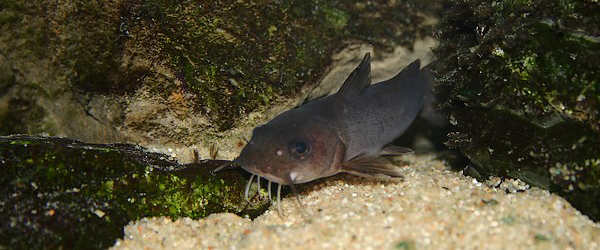
With their long barbels around the mouth and lack of scales, the catfish of the Siluriformes are one of most instantly recognisable groups of fishes. They are also one of the more diverse, with close to 3000 species and including a third of the world's freshwater fishes (Diogo & Peng 2010). Within the catfish, the Claroteidae are a distinctly African group of thirteen genera divided between two subfamilies, the Claroteinae and Auchenoglanididae. They are characterised by a moderately elongate body with a distinct adipose fin, and strong spines in the dorsal and pectoral fins (Geerinckx et al. 2003). Distinctive features of the Claroteinae include the presence of a toothplate on the palate. The Auchenoglanidinae have a rounded caudal fin and the anterior nostrils moved to the anteroventral side of the upper lip (Geerinckx et al. 2004). For a long time, the claroteids were included in the catfish family Bagridae before being raised to the level of their own family in 1991. A molecular phylogenetic analysis of the Siluriformes by Sullivan et al. (2006) placed the claroteids within a clade of African catfish that they somewhat whimsically labelled as 'Big Africa'. The Bagridae, meanwhile, were placed within 'Big Asia' (though one true bagrid genus, Bagrus, does occur in Africa). Sullivan et al. (2006) questioned claroteid monophyly, finding Auchenoglanidinae to be sister to a clade grouping the Claroteinae with the family Schilbidae, but other morphological studies have found claroteids as a monophyletic unit (Diogo & Peng 2010).

Lake Tanganyika catfish Lophiobagrus brevispinis, from tanganyikacichlide.nl.


The Claroteinae are notable for having undergone something of an adaptive radiation in one of African Great Lakes, Tanganyika. Though not as dramatic as the famous radiation of cichlids in the same lake, the Tanganyikan claroteines comprise over a dozen species divided between four genera (Bailey & Stewart 1984; Hardman 2008). Seven of these are placed in the genus Chrysichthys which has a wide distribution around Africa; the other three genera are unique to the lake. Molecular phylogeny indicates that the majority of Tanganyikan claroteines represent a single colonisation of the lake; only Chrysichthys brachynema has colonised Lake Tanganyika independently (Peart et al 2014). This indicates that the genus Chrysichthys as currently defined is non-monophyletic (something that had previously been suggested on morphological grounds) but any consequent reclassification is yet to occur. The species of Chrysichthys are mostly larger than the endemic Tanganyikan genera, ranging from 19 to 77 cm within Tanganyika (species elsewhere in Africa may reach up to 1.5 m). Of the endemic genera, the monotypic Bathybagrus tetranema is about 15 cm in length but the other two genera Phyllonemus and Lophiobagrus are even smaller, less than 10 cm in length. Bathybagrus and Lophiobagrus also both have reduced subcutaneous eyes. In Bathybagrus, this possibly reflects their occurrence at greater depths than other Tanganyika fish, occurring down to 80 m (nowhere near the depths reached by Lake Baikal sculpins but still impressive enough in the low-oxygen depths of a tropical lake). Lophiobagrus species are specialised to live in the gaps between rocky rubble on the lake bottom. The species of this genus have also been observed secreting a toxic mucus that can be fatal to other fish; this mucus is believed to be secreted from enlarged glands behind the pectoral fins.

Subcutaneous eyes are also found in two claroteines outside Tanganyika: the species Amarginops platus and Rheoglanis dendrophorus, both found in the Upper Congo (Hardman 2008). These two species are specialised for life in river rapids.

REFERENCES

Bailey, R. M., & D. J. Stewart. 1984. Bagrid catfishes from Lake Tanganyika, with a key and descriptions of new taxa. Miscellaneous Publication, Museum of Zoology, University of Michigan 168: 1–41.

Diogo, R., & Z. Peng. 2009. State of the art of siluriform higher-level phylogeny. In: Grande, T., F. Poyato-Ariza & R. Diogo (eds) Gonorynchiformes and Ostariophysan Relationships: A Comprehensive Review pp. 465–515. Science Publishers.

Geerinckx, T., D. Adriaens, G. G. Teugels & W. Verraes. 2003. Taxonomic evaluation and redescription of Anaspidoglanis akiri (Risch, 1987) (Siluriformes: Claroteidae). Cybium 27 (1): 17–25.

Geerinckx, T., D. Adriaens, G. G. Teugels & W. Verraes. 2004. A systematic revision of the African catfish genus Parauchenoglanis (Siluriformes: Claroteidae). Journal of Natural History 38: 775–803.

Hardman, M. 2008. New species of catfish genus Chrysichthys from Lake Tanganyika (Siluriformes: Claroteidae). Copeia 2008 (1): 43–56.

Peart, C. R., R. Bills, M. Wilkinson & J. J. Day. 2014. Nocturnal claroteine catfishes reveal dual colonisation but a single radiation in Lake Tanganyika. Molecular Phylogenetics and Evolution 73: 119–128.

Sullivan, J. P., J. G. Lundberg & M. Hardman. 2006. A phylogenetic analysis of the major groups of catfishes (Teleostei: Siluriformes) using rag1 and rag2 nuclear gene sequences. Molecular Phylogenetics and Evolution 41: 636–662.

Shock Me like an Electric Eel

Electric eel Electrophorus electricus, photographed by Stefan Köder.


The electric eel Electrophorus electricus is one of those animals that seem to border on the mythical. Most people will have come across some sort of reference to their existence, and may even have seen some sort of intended depiction of one in cartoon form. However, said depiction will probably bear little if any resemblance to a real-life electric eel. Most commonly, it will look more like a standard Anguilla eel, to which true electric eels are not close relatives. Instead, electric eels belong to a uniquely South and Central American group of fish, the Gymnotiformes.

The Gymnotiformes, commonly known as the Neotropical knife-fishes, are more closely related to catfish than they are to anguillid eels. They are characterised by an elongate body form, lacking the dorsal fin of other fish. The anus has been moved forward relative to other fish: in some gymnotiforms, the anus is actually in front of the pectoral fins, just behind the head. The anal fin that runs behind the anus has become greatly elongated, and instead of swimming by undulating the body from side to side like other fish, gymnotiforms swim by undulating the anal fin alone while the main body remains more or less rigid. This unusual swimming style is directly related to another distinctive feature of the gymnotiforms: their production of an electrical field. Many fish are able to passively sense electrical fields in the water: gymnotiforms take the next step and generate their own electrical field, which they use to sense their surrounding environment (Albert & Crampton 2005). As a result, they can live and hunt effectively at night and in turbid waters with poor visibility. They can also use their electrical fields for communication, signalling their moods and identities to other fish. The connection between electricity generation and swimming style is that, if gymnotiforms swam in the manner of other fish, their changes in body aspect would create changes in the shape of their electrical field. Holding the body more or less rigid means that the electrical field also remains constant, and any distortions must be caused by something external. Another group of fishes found in Africa and Asia that also navigates by electricity, the Notopteridae, has evolved a very similar appearance and swimming style to the gymnotiforms (and are also known as knife-fishes), but are entirely unrelated phylogenetically.

Tiger knife-fish Gymnotus tigre, from Trix.


The electric eel is something of an outlier among gymnotiforms. For a start, it's a monster: electric eels can be over two metres in length, while other gymnotiforms are all much smaller. The electric eel has also had a Susan Storm-style upgrade, and weaponised its electrosensory system. Electric eels can produce up to 600 volts of electricity, allowing them to stun reasonably large prey. The closest relatives of the electric eel are the banded knife-fishes of the genus Gymnotus; both are predators of fish and other aquatic animals. Males of at least some Gymnotus species and the electric eel build nests that the females lay their eggs into; males of Gymnotus carapo have been recorded to mouth-brood larvae.

The apteronotid Sternarchorhynchus mesensis, from here.


The remaining gymnotiforms were placed by Albert (2001) in a clade called the Sternopygoidei; these taxa have a smaller gape and feed on correspondingly smaller prey (some are planktivores). Two families, the Hypopomidae and Rhamphichthyidae, are united by the lack of teeth in the oral jaws; rhamphichthyids also have a very long and tubular snout. The other sternopygoids are placed in the families Sternopygidae and Apteronotidae; a distinctive feature uniting these two families is that they produce a wave- or tone-type electrical field instead of the pulse-type electrical field of other gymnotiforms. Pulse-type species produce discrete pulses of electricity at a lower frequency, while wave-type species produce a continuous series of electrical discharges at a much higher frequency (Albert 2001). While Albert (2001) regarded the pulse-type electrical field as ancestral for the gymnotiforms and the wave-type field as derived, other authors have preferred the opposite scenario. Sternopygids retain well developed eyes, in contrast to the reduced eyes of other gymnotiforms, while apteronotids are the only gymnotiforms to retain a caudal (tail) fin. If the wave-type families form a derived clade, then either these features were lost independently in the other families, or they represent reversals to an ancestral type.

One final thing to note is that the gymnotiforms have been going through something of a taxonomic boom, with many new species described in recent years. Albert & Crampton (2005) estimated that the total number of species out there could be nearly twice the 135 that had been named so far. In South America, it turns out, the streams are alive with the buzz of electricity.

REFERENCES

Albert, J. S. 2001. Species diversity and phylogenetic systematics of American knifefishes (Gymnotiformes, Teleostei). Miscellaneous Publications, Museum of Zoology, University of Michigan 190: 1-129.

Albert, J. S., & W. G. R. Crampton. 2005. Diversity and phylogeny of Neotropical electric fishes (Gymnotiformes). In: Bullock, T. H., C. D. Hopkins, A. N. Popper & R. R. Fay (eds) Electroreception, pp. 360-409. Springer: New York.

Loaches

European spined loach Cobitis taenia, from here.


The spined loaches of the Cobitidae are a family of small freshwater fishes found across Eurasia, with a single species (Cobitis maroccana) making it to the northern tip of Africa. A recent catalogue of the family by Kottelat (2012) recognised twenty-one genera in the families, though phylogenetic studies suggest that some reshuffling may be necessary: the Chinese Paramisgurnus dabryanus, for instance, may be nested within the genus Misgurnus, while the Sino-Japanese genus Niwaella may be a polyphyletic grouping of elongate species adapted to fast-flowing mountain streams (Šlechtová et al. 2008).

Eel loach Pangio anguillaris, photographed by Thomas Frank.

As a whole, loaches are more or less worm-like fishes that feed by benthic scavenging. Most species are small, less than ten centimetres long, though the Thai Acantopsis spectabilis gets up to around 15 centimetres (Kottelat 2012), and the weather fish Misgurnus anguillicaudatus reaches about 25 cm. Phylogenetically, the family was divided by Šlechtová et al. (2007) into two groups, a 'northern clade' containing the northern Eurasian species in the genera Cobitis, Misgurnus and related taxa, and a paraphyletic 'southern group' containing the remaining southern and south-east Asian species. The ranges of the northern and southern subdivisions overlap in northern Vietnem, but otherwise the two groups are geographically disjunct. A potential morphological synapomorphy of the northern clade is a horizontal ossified structure, called the 'scale of Canestrini', on the second ray of the male's pectoral fin, but if so this character has been lost in some subtaxa such as the western Eurasian genus Sabanejewia.

Weather fish Misgurnus anguillicaudatus, photographed by Emma Turner.

One interesting detail about the northern spined loaches is the existence in various localities of natural polyploid populations: such polyploids have been identified among European Cobitis species, and in the Japanese Misgurnus anguillicaudatus. These mostly triploid (sometimes tetraploid) populations of loaches reproduce clonally, but are always found in association with a sexually-reproducing diploid population. This is because the parthenogenetic females are what is referred to as 'sperm parasites'. The parthenogenetic females still mate with sexual males, not to be fertilised but in order that the act of mating will stimulate egg production. In external appearance, these polyploids are generally indistinguishable from their co-existing diploid associates. European polyploid Cobitis are believed to have arisen through hybridisation between closely related sexual species, possibly through male sperm fertilising an unreduced diploid egg.

Protocobitis typhlops, from Kottelat (2012).


Oh yes, and there are cave-dwelling loaches out there: two Chinese species, placed in the genus Protocobitis, are blind species collected from groundwater. How they relate to the above-ground species remains unknown.

REFERENCES

Šlechtová, V., J. Bohlen & A. Perdices. 2008. Molecular phylogeny of the freshwater fish family Cobitidae (Cypriniformes: Teleostei): delimitation of genera, mitochondrial introgression and evolution of sexual dimorphism. Molecular Phylogenetics and Evolution 47: 812-831.

Kottelat, M. 2012. Conspectus cobitidum: an inventory of the loaches of the world (Teleostei: Cypriniformes: Cobitoidei). Raffles Bulletin of Zoology, Supplement 26: 1-199.

The Surprisingly Mysterious Eels

European eel Anguilla anguilla, photographed by Ron Offermans.


The eels are, without a doubt, one of the more distinctive groups of bony fishes, with their elongate snake-like bodies and linearised fins. And among the eels, perhaps the most familiar to many people are the freshwater eels of the genus Anguilla. Being able to wriggle across land on damp nights, eels can be found in a wide variety of water bodies, even small and isolated ones (such as cattle troughs). But the very familiarity of the freshwater eels disguises what are, in some ways, very poorly known animals.

First off, though, I have to provide something of a correction. Way back in 2007, in one of my earliest posts at this site, I made the comment that the deep sea gulper eels were 'not real eels', on the basis that they were placed in a separate order Saccopharyngiformes from the true eels of the Anguilliformes (referred to in many older texts as the Apodes, the 'legless ones'—which is a bit of a funny feature to be focusing on when talking about a fish). Witness the misleading nature of non-phylogenetic classifications! For, as turns out, phylogenetic studies have demonstrated that gulpers are indeed 'real eels', with Saccopharyngiformes well-nested among the Anguilliformes (Inoue et al. 2010). Their previous separation was due not to phylogenetic distinctiveness, but just to their individual wierdness.

New Zealand long-finned eel Anguilla dieffenbachii, photographed by Gusmonkeyboy. This species is known to grow surprisingly large: the largest on record being about 24 kg (so sayeth Wikipedia). It is generally believed that such giants are females that have, for some reason, failed to develop to reproductive maturity and instead remain as juveniles.


Anywho, back to Anguilla. This genus includes some fifteen species, most of which are found around the Pacific, with four species around the Indian Ocean and two around the North Atlantic (Lecomte-Finiger 2003). Contrary to one of the opening statements in the just-quoted review, Anguilla species are not the only freshwater eels: the Indo-Pacific moray Gymnothorax polyuranodon also enters fresh water* (Ebner et al. 2011). All freshwater eels also return to the sea to breed; this is referred to as a catadromous life-cycle (as opposed to an anadromous life-cycle as found in salmon, where the fish spend part of their lives in the sea and return to fresh water to breed**). It wasn't until the 1990s that it was discovered that some Anguilla eels spend their entire lives in the sea, and never enter fresh water (Tsukamoto et al. 1998).

*Just to confuse matters, there are also the pantropical freshwater swamp eels and spiny eels. Despite the name (and despite their superficial appearance), these are members of the percomorph radiation.

**I mention this because personally I can never remember which is which.

Marbled eel Anguilla marmorata, in the evidently excited hands of Seishi Hagihara (the eel, presumably, was somewhat less impressed). This is the only species to be found in both the Indian and Pacific Oceans.


Where the eels go once they return to the sea was long an unknown, and it wasn't until the Danish biologist Johannes Schmidt traced the leptocephalus larvae of the European eel Anguilla anguilla across the Atlantic in the early 1920s that it was realised that they travel all the way across the Atlantic to the Sargasso Sea, close to North America. Even now the breeding locations are known for only three of the fifteen Anguilla species: the European eel Anguilla anguilla and the American eel A. rostrata both breed in the Sargasso Sea, and the Japanese eel A. japonica breeds in the Marianas Trench. Molecular dating suggests that the two Sargasso species diverged between 3.8 and 1.9 million years ago, and it has still not been established how the species became distinct. Certainly such a date would be far too recent for the once-popular suggestion that they might be the descendants of an ancestral population divided by the widening of the Atlantic. There is also evidence of a hybrid zone between the two species: eels collected from Iceland, though predominantly belonging to the European species, have been shown to have 2-4% derivation from the American species.

Polynesian long-finned eel Anguilla megastoma, from Bernhard Höller. The eel in the photo is estimated to be about 12 kg in weight. Both this species and A. marmorata are found in French Polynesia: A. marmorata is found in downstream, low-gradient parts of rivers while A. megastoma is found in upstream, higher-gradient stretches. A third species in the region, A. obscura, prefers still estuaries (Lecomte-Finiger 2003).


All fifteen Anguilla species were included in the phylogenetic analysis of Anguilliformes by Inoue et al. (2010). This analysis supported a relationship of Anguilla with a clade of mesopelagic eels containing the Serrivomeridae (sawtooth eels) and Nemichthyidae (snipe eels). Sister to all of these were our old friends the gulpers. The (admittedly limited) available evidence about the habits of Anguilla during the marine phase of their life suggests that these three lineages may form a single ancestrally pelagic clade, contrasting with the near-bottom habits of most other eels (members of the Derichthyidae, the longneck eels, represent an independent origin of pelagism).

REFERENCES

Ebner, B. C., B. Kroll, P. Godfrey, P. A. Thuesen, T. Vallance, B. Pusey, G. R. Allen, T. S. Rayner & C. N. Perna. 2011. Is the elusive Gymnothorax polyuranodon really a freshwater moray? Journal of Fish Biology 79 (1): 70-79.

Inoue, J. G., M. Miya. M. J. Miller, T. Sado, R. Hanel, K. Hatooka, J. Aoyama, Y. Minegishi, M. Nishida & K. Tsukamoto. 2010. Deep-ocean origin of the freshwater eels. Biology Letters 6: 363-366.

Lecomte-Finiger, R. 2003. The genus Anguilla Schrank, 1798: current state of knowledge and questions. Reviews in Fish Biology and Fisheries 13: 265-279.

Tsukamoto, K., I. Nakai & W.-V. Tesch. 1998. Do all freshwater eels migrate? Nature 396: 635-636.

Hunters in the Deep Sea

Longnose lancetfish Alepisaurus ferox, photographed by Paulo De Oliveira.


For today's post, I'm going to tackle the Alepisauroidei. The exact scope of this clade of fishes has changed a bit between authors; here, I'm focusing on the restricted sense used by Sato & Nakabo (2002). In contrast, Davis & Fielitz (2010) used 'Alepisauroidei' in a broader sense that combined the Alepisauroidei, Chlorophthalmoidei and Giganturoidei of the former authors; if I have to refer to this larger clade, it'll be as 'Alepisauroidei sensu lato'.

Tedious definitionising aside, the Alepisauroidei sensu stricto include the living families Scopelarchidae, Evermannellidae, Alepisauridae and Paralepididae. All members of these families are predators in the mesopelagic zone of the ocean, below the level of the light. Members of the Alepisauridae (lancetfishes) and Paralepididae (barracudinas) are elongate, reaching lengths of over a metre in the case of the lancetfishes. Many mesopelagic fish migrate closer to the surface at night, and Bond (1996) refers to lancetfishes being caught by anglers standing on the shore during spring in the Pacific Northwest of North America. The predatory nature of the alepisauroids, as well as something of their general appearance, can be inferred from the common names given to many of them: as well as the barracudinas already mentioned, there are the sabretooth fishes of the Evermannellidae, and the daggertooth Anotopterus pharao.

An array of alepisauroids, from here. Species shown are: (Paralepididae) (1) Stemonosudis rothschildi, (2) Lestidium atlanticum, (3) Lestrolepis intermedia, (Evermannellidae) (4) Coccorella atlantica, (5) Evermannella indica, (Scopelarchidae) (6) Scopelarchus analis.


Alepisauroids show many of the adaptations common among deep-water fishes, such as the presence of bioluminescent organs (absent in Alepisauridae) and thin-walled, distensible stomachs allowing the immediate engulfment of large prey items. In the evermannellid genus Coccorella, the caecum of the intestine has become expanded to the extent that part of it actually extends into the animal's head and can be seen in the base of the oral cavity (Wassersug & Johnson 1976). The members of the family Scopelarchidae are known as pearleyes due to their enlarged, dorsally-directed tubular eyes (also present in the Evermannellidae) that presumably increase their ability to detect the limited light filtering down from above (and, more importantly, from the bioluminescent organs of other mesopelagic animals). Another notable adaptation to the mesopelagic environment present in all alepisauroids is that they are simultaneous hermaphrodites: each individual has fully functional male and female reproductive organs. In an environment where the usual scarcity of food items means that species exist at very low population densities, simultaneous hermaphroditism means that any other individual of your species is a potential mate. Simultaneous hermaphroditism is also found in other members of the Alepisauroidei sensu lato, making it the largest clade of vertebrates utilising this reproductive strategy (Davis & Fielitz 2010).

Specimen of daggertooth Anotopterus vorax, photographed by Peter Marriott.


A comprehensive investigation of the molecular phylogeny of alepisauroids was published by Davis & Fielitz (2010). Evermannellids and scopelarchids were resolved as successive sister groups to the other alepisauroids sensu stricto, suggesting that their tubular eyes may have arisen independently (as corroborated by their absence in the evermannellid genus Odontostomops; alternatively, tubular eyes could have been lost in other alepisauroids). The Alepisauridae were nested within an apparently paraphyletic Paralepididae. The clade as a whole was suggested by molecular dating to have diverged some time in the Early Cretaceous, a result in concordance with the known fossil record.

REFERENCES

Bond, C. E. 1996. Biology of Fishes, 2nd ed. Saunders College Publishing.

Davis, M. P., & C. Fielitz. 2010. Estimating divergence times of lizardfishes and their allies (Euteleostei: Aulopiformes) and the timing of deep-sea adaptations. Molecular Phylogenetics and Evolution 57: 1194-1208.

Sato, T., & T. Nakabo. 2002. Paraulopidae and Paraulopus, a new family and genus of aulopiform fishes with revised relationships within the order. Ichthyological Research 49 (1): 25-46.

Wassersug, R. J., & R. K. Johnson. 1976. A remarkable pyloric caecum in the evermannellid genus Coccorella with notes on gut structure and function in alepisauroid fishes (Pisces, Myctophiformes). Journal of Zoology 179 (2): 273-289.

Who Left All this Fish Lying Around (Taxon of the Week: Neopterygii)


Two species of the swordfish-like Cretaceous pachycormid Protosphyraena. This genus was not even closely related to the modern swordfish (contra Wikipedia), and represents a case of convergence. Reconstruction by Dmitry Bogdanov.


The Neopterygii, or "new fins" (not, as it is often translated, "new wings") are one of the most successful clades of fishes today. One particular subgroup of the Neopterygii, the teleosts, includes almost all the living ray-finned fishes. However, just to be difficult, I decided that the most appropriate tack for a post on Neopterygii was to leave the teleosts in all their diversity for another time, and focus on the non-teleost neopterygians. This, as it turns out, was a mistake. The non-teleost neopterygians seem, to a fish, to be almost universally ignored, and most of what there is out there was covered by Toby White almost seven years ago. Nevertheless, I'll see what I can do.

The origins of the Neopterygii date back to sometime in the Permian (Hurley et al., 2007). Compared to earlier actinopterygians, the ancestors of Neopterygii lost their clavicle, beginning a trend of lightening and strengthening their skeletons, while at the same time reducing the weight of their scales. Early fish had been heavily armoured arrangements, but like the origins of the modern military, neopterygians were to trade in their clunky plate armour for something a bit more like a bullet-proof jacket*.

*Something that has almost nothing to do with the main post, but which struck me when I was thinking about it yesterday evening: When one looks at the living vertebrates only, it is easy to imagine that there was a progressive development of the bony skeleton - at the base of the tree, we have the living cartilaginous fishes and jawless fishes with little or no ossification, followed by the bony fishes and the tetrapods mostly with full skeletons. The fossil record, however, indicates that things were a little more complicated - early fishes such as placoderms had extensive skeletons, and the modern unossified fishes are actually the descendants of vertebrates that lost most of their skeletons. However, the original vertebrate bony skeleton did differ from the modern bony skeleton in one major regard - it was on the outside. Early fish had great coverings of bony armour, but little ossified interior skeleton. So over the course of evolution, vertebrates have gone from having their skeletons on the outside and meaty parts in the middle, to have the meaty parts on the outside and the skeletons in the middle. In other words, vertebrates have effectively been turned inside out.


Longnose gar, Lepisosteus osseus, one of the few living non-teleost neopterygians. Photo from here.


There are few living groups of non-teleost neopterygians - in fact, there's only two, both restricted to fresh waters of North America. One group, the Halecostomi, is represented in the modern fauna by only a single species, the bowfin, Amia calva. As Toby has noted before me, perhaps the single most remarkable feature of the bowfin is that it has absolutely nothing remarkable about it whatsoever. Amiid fishes go all the way back to the Jurassic, and don't look too much different from each other in all that time. The other living group, the American gars of the family Lepisosteidae, are entirely a different matter - gigantic carnivorous fish, with long beaks and sharp teeth. The largest gars can be over two metres long, and according to this site Rafinesque referred to gars up to twelve feet long. They also lay eggs that are toxic to humans. Unfortunately, it looks like American gars don't have green bones, despite common rumour - the green-boned "garfish" is a quite different, marine fish (Belone) nestled well within the teleosts.


Bowfin, Amia calva, the other survivor. Photo from here.


Relationships between the neopterygian clades are almost completely obscure - while features of the jaw musculature support a relationship between Amia and teleosts to the exclusion of gars, other authors have supported an Amia-Lepisosteidae clade that excludes teleosts. Hurley et al. (2007) found the latter result in a morphological analysis, but the former in a molecular analysis. While a number of fossil groups of non-teleost neopterygians are known, few authors seem to have plugged them into a phylogenetic analysis except for Hurley et al. (2007) and Arratia (2001) (the latter of which I don't have access to). A number of authors have supported a relationship between the gars and the extinct Semionotiformes (Olsen & McCune, 1991), while the Pachycormiformes and Aspidorhynchiformes seem likely to be stem-teleosts. Finally, the Dapediidae and Pycnodontiformes were found by Hurley et al. (2007) to form a third clade in a polytomy with the Amia-Lepisosteidae clade and the teleosts.


The pycnodontiform Coelodus costai. Photo by Giovanni Dall'Orto.


Some of these were decidedly odd fishes. The Pycnodontiformes were deep-bodied fish, about as tall as they were long. They had strong teeth, and would have fed on shellfish. The Pachycormiformes, mostly pelagic hunters, are best known through the monster Leedsichthys, a gigantic filter feeder growing to lengths over ten metres, which is probably the largest known ray-finned fish.


Figure from McCune (2004), showing a reconstruction of Semionotus, and variation in dorsal spine row morphology and overall body shape in Newark Semionotus.


Perhaps the coolest of all, though, were the Semionotidae. Semionotus wasn't anything much to look at - not spectacularly large (probably about half a foot) and pretty generalised morphologically. During the Mesozoic it was found in freshwater deposits pretty much around the world, so it would have been dirt common. Where things get interesting is when you get to the Late Triassic and Early Jurassic Newark Supergroup of eastern North America. The Newark Supergroup comprises a series of lake deposits, formed by a process of rifting similar to the modern Great Lakes of Africa. And Semionotus was the Newark deposits' cichlid. Within a single lake deposit, a whole series of Semionotus species can be found, varying from long and narrow to deep-bodied and humpbacked (McCune, 2004). And that is very cool - that the incredible African cichlid radiation is not so incredible after all, but represents patterns and processes that were just as active 100 million years ago.

REFERENCES

Arratia, G. 2001. The sister group of Teleostei: consensus and disagreements. Journal of Vertebrate Paleontology 21 (4): 767-773.

Hurley, I. A., R. Lockridge Mueller, K. A. Dunn, E. J. Schmidt, M. Friedman, R. K. Ho, V. E. Prince, Z. Yang, M. G. Thomas & M. I. Coates. 2007. A new time-scale for ray-finned fish evolution. Proceedings of the Royal Society of London Series B 274: 489-498.

McCune, A. R. 2004. Diversity and speciation of semionotid fishes in Mesozoic rift lakes. In Adaptive Speciation (U. Dieckmann, M. Doebeli, J. A. J. Metz & D. Tautz, eds) pp. 362–379. Cambridge University Press.

Olsen, P. E., & A. R. McCune. 1991. Morphology of the Semionotus elegans species group from the Early Jurassic part of the Newark Supergroup of eastern North America with comments on the family Semionotidae (Neopterygii). Journal of Vertebrate Paleontology 11 (3): 269-292.