Field of Science

Showing posts with label Lophotrochozoa. Show all posts

Digging for Tellina

When I was a child, a large part of my extended family would gather over the Christmas period to park their tents and caravans alongside the estuary downhill from my great-grandparents' house (in the usual way of these things, my memory has these summer camping periods lasting for ages, but I don't think they could have been longer than a week or so). While we were there, I would spend a fair chunk of the day looking for the wildlife that inhabited the slightly muddy estuary beach. Among these were various bivalves whose shells could be found littering the shoreline, or which might be found by digging in the sand at low tide. Close to the surface were New Zealand cockles Austrovenus stutchburyi (not actually a direct relative of the English cockle but a member of the Veneridae family that has adopted a similar body form). A little deeper were pipis and tuatuas. And a little deeper again were the flat, slender shells of Tellina.

Thin tellin Tellina tenuis, copyright S. Rae.


I should note that Tellina species are not really deep burrowers in the grand scheme of things, generally only embedding themselves about one to three centimetres below the surface, but again I must ask that you make allowances for childhood memories. Their low profile and weakly inflated shells also make them fast diggers so they were probably able to elude most casual explorations. Like most subsurface bivalves, Tellina species are sediment feeders. Their usual aspect is lying horizontally beneath the sediment, extending their long, unfused siphons to the surface to gather detritus (Ujino & Matuskuma 2010; the shells of Tellina are usually twisted slightly to one side at the end to facilitate the siphons' passage). Even if you've not seen the Tellina animals themselves, you may have seen the radiating trails made by the siphons as they extend along the top of the sediment.

Sunrise tellin Tellina radiata, copyright James St. John.


Tellina is an extremely diverse genus, with species found worldwide and recognised through the entirety of the Mesozoic (Moore 1969). These species vary greatly in appearance, with shells varying from almost completely smooth to strongly ornamented, and from subcircular to quite elongate. It should therefore come as little surprise that numerous attempts have been made to divide Tellina between various subgenera and genera but issues such as homoeomorphy in Tellina's evolution (where distinct lineages have converged on similar body forms) have lead to disagreement over the best system to adopt. In 1934, the malacologist A. E. Salisbury complained that, "The number of genera, subgenera, and sections into which the Tellinidae has been cut up is getting somewhat appalling; the list of names is still increasing every year, and, if every variation of form is magnified, it is quite possible to go on until at last each species becomes the representative of a different genus and each variety that of a subgenus" (of course, as seems almost inevitable when one encounters complaints of this kind, Salisbury himself then proceeds to add to the tally of generic names in that same paper). Though I suspect most modern malacologists would probably disagree with the extremely broad concept of Tellina advocated by Salisbury, the question of how best to handle the genus taxonomically remains an open one.

REFERENCES

Moore, R. C. (ed.) 1969. Treatise on Invertebrate Paleontology pt N. Mollusca 6. Bivalvia vol. 2. The Geological Society of America, Inc., and The University of Kansas.

Salisbury, A. E. 1934. On the nomenclature of Tellinidae, with descriptions of new species and some remarks on distribution. Proceedings of the Malacological Society of London 21: 74–91.

Ujino, S., & A. Matsukuma. 2010. Inverse life positions of three species in the genus Cadella (Bivalvia: Tellinidae). Molluscan Research 30 (1): 25–28.

Moles, Tortoises, Calves and Cowries

The cowries of the family Cypraeidae are one of the most readily recognisable groups of tropical and subtropical shells. Their distinctive shape (with no spire and a long narrow aperture running the length of the shell) and highly polished appearance are guaranteed to catch the eye (to the extent that one species, the money cowry Monetaria moneta, famously has a history of being used as a form of currency in many regions around the Indian Ocean). Though there are a large number of cowry species found around the world, they tend to be similar enough to each other that, until relatively recently, many authors would place all within a single genus Cypraea. This approach has fallen out of fashion in more recent years and, indeed, the current favoured approach divides the family between several subfamilies. One such subgroup is the subfamily Luriinae.

Live mole cowry Talparia talpa, copyright Juuyoh Tanaka.


In a phylogenetic analysis of the cowries, Meyer (2003) recognised the Luriinae as including two tribes, the Luriini and Austrocypraeini. This concept of Luriinae was essentially based on molecular phylogenetic analysis though it was also corroborated by radular morphology (with a reduced shaft on all teeth). The underside of the shell in luriines is mostly smooth with the 'teeth' being restricted to alongside the aperture. As in other cowries, the mantle is widely extended and mostly covers the shell in life (this is how cowry shells stay so shiny). In most luriines, the mantle is covered by warty papillae. In species of the genus Luria these warts are obsolete (Schilder 1939) but they are particularly prominent in the Indo-west Pacific mole cowry Talparia talpa. Members of the Luriinae vary greatly in size: the Pacific Annepona mariae is only a centimetre or two in length but the tortoise cowry Chelycypraea testudinaria of the Indian and western Pacific Oceans grows to ten centimetres or more. Species of Luriini have shells that are banded in coloration, with three or four broad dark bands divided by narrower light bands. The Austrocypraeini are most commonly marked with brown speckles or blotches on a pale background; these blotches may be irregular as in Chelycypraea testudinaria or more regularly rounded as in Annepona mariae. The calf cowry Lyncina vitellus of the Indo-Pacific is marked with white spots on a brown background, and some species or forms of Austrocypraeini may have coloration patterns more like the banded arrangement of Luriini.

Lynx cowry Lyncina lynx, copyright Patrick Randall.


My impression is that species of Luriinae tend to be mostly nocturnal, sheltering in crevices in coral reefs during the day before emerging to feed at dusk (the name of the aforementioned mole cowry is, I suspect, more likely to refer to its appearance in some way than to any actual burrowing habit). Though I haven't (though a cursory search, at least) found any reference to species of Luriinae in particular being endangered, a number of cowries in general have been threatened by overcollecting for their shells. Certainly, luriines would be subject to the broad range of threats that currently hang over coral reefs and their inhabitants anywhere in the world.

REFERENCES

Meyer, C. P. 2003. Molecular systematics of cowries (Gastropoda: Cypraeidae) and diversification patterns in the tropics. Biological Journal of the Linnean Society 79: 401-459.

Schilder, F. A. 1939. Die Genera der Cypraeacea. Archiv für Molluskenkunde 71 (5–6): 165–201.

Slippers on the Coast

The 'limpet' form is something that has evolved numerous times among gastropods, as various lineages of marine snail converted to a more or less unwhorled shell and low profile. In many cases, the evolution of the limpet form is also associated with high energy environments, the ability to nestle against rocks helping the gastropod maintain its grip against the surge of the waves. In the modern world, the most diverse and familiar lineage of limpets is that including the common limpets of the genus Patella and their relatives, but there also many independent lineages to be found. One of these is the slipper limpets of the genus Crepidula.

Various views of shell of Crepidula onyx, copyright H. Zell.


Slipper limpets get their vernacular name from the shape of their shell, whose more or less oval shape together with a jutting internal horizontal shelf (the septum) at one end gives the overall impression of a carpet slipper. About forty species (including fossils) of Crepidula are currently recognised worldwide. Species recognition has historically been difficult owing to their simple form and tendency to vary according to the environment in which they mature, but Hoagland (1977) identified a number of key distinguishing features such as disposition and shape of the muscle scars, features of the septum, and conformation of the apical beak of the shell. In contrast to the grazing common limpets, slipper limpets are filter feeders using their gill to capture micro-algae from the water column. They are protandric hermaphrodites, beginning their life as males but maturing into females as they grow. Eggs are brooded under the shell when first produced; in some species, the eggs are subsequently released to hatch into planktonic larvae whereas other species produce fewer eggs but retain them until the young have developed to the crawling stage. For instance, two species found on the east coast of North America that are very similar in adult appearance and have been confused historically differ in that Crepidula ustulatulina, found around Florida and the Gulf of Mexico, produces free-living larvae whereas the more northerly C. convexa does not.

Mating stack of Crepidula fornicata, copyright Dendroica cerulea.


The most renowned species of slipper limpet is the northern Atlantic Crepidula fornicata. This species was originally native to the eastern coast of North America but was accidentally imported to Europe in the late 1800s in association with oysters being transported as stock for farming (Blanchard 1997). In the subsequent years, C. fornicata has become increasingly widespread on the shores of Europe, and is often a significant fouling pest for oyster farms. It has also been introduced to even further flung locations such as Japan and Washington State. Crepidula fornicata is famed for its habit of forming high mating stacks with several smaller males living permanently on the dorsal surface of larger females. If the female of a stack dies, the largest male may develop into a female. Not all Crepidula species form such stacks: in some, just two or three individuals may form a temporary cluster when mating.

Historically, Crepidula has been distinguished from other genera in the limpet family Calyptraeidae by their posterior shell apex and flat septum (other calyptraeid genera may have a cone-shaped shell and/or cup-shaped septum). However, a molecular analysis of the family by Collin (2003) found that species of Crepidula sensu Hoagland (1977) did not form a single clade within Calyptraeidae, and the genus' prior members are now divided between at least four genera. While these genera may be distinguishable using features of the soft anatomy, they are almost indistinguishable from the shells alone.

REFERENCES

Blanchard, M. 1997. Spread of the slipper limpet Crepidula fornicata (L. 1758) in Europe. Current state and consequences. Scientia Marina 61 (Suppl. 2): 109–118.

Collin, R. 2003. Phylogenetic relationship among calyptraeid gastropods and their implications for the biogeography of marine speciation. Systematic Biology 52 (5): 618–640.

Hoagland, K. E. 1977. Systematic review of fossil and recent Crepidula and discussion of evolution of the Calyptraeidae. Malacologia 16 (2): 353–420.

The Solemyoida: A Taste for Sulphur

Atlantic awning clam Solemya velum, copyright Guus Roeselers.


The small bivalves that make up the Solemyoida were long a mystery, ecology-wise. Though they have a long history, potentially going back as far as the Ordovician (Cope 2000), they are not known to have ever been diverse, and only just over fifty species are known from the modern fauna. Living solemyoids are divided between two very distinct families that probably diverged near the origin of the group. The Solemyidae, awning clams, have relatively long shells that gape at each end, no teeth in the dorsal hinge, and tend to have an unusually thick periostracum (the overlying layer of horny proteinaceous matter that covers the outside of the mineral shell). They generally live in burrows buried deep in sediment. The Nucinellidae are a group of minute clams with an average length of about half a centimetre that are mostly found in deep waters, generally not buried quite so deep in the mud as the awning clams. They have a less elongate shell than the Solemyidae that does not gape and simple peg-like teeth in the hinge. What the two families do share is a markedly reduced gut and feeding appendages that initially caused much speculation about what exactly they were feeding on.

Nucinella sp. with foot extended, from Taylor & Glover (2010). Scale bar equals 1 mm.


The answer, as it turns out, was that they were not exactly 'feeding' on much, if anything. Solemyoids have relatively large gills that provide a comfortable living place for sulphur-oxidising bacteria, sheltered from the outside world while the host clam keeps up a continuous flow of water through its burrow from above the sediment surface. In return, the bacteria fix hydrogen sulphide rising from the underlying mud to provide both themselves and their host with nutrients. In this way, solemyoids have largely been able to get by without actively eating for close to 450 million years, achieving something the likes of Jasmuheen can only dream of.

REFERENCE

Cope, J. C. W. 2000. A new look at early bivalve phylogeny. In: Harper, E. M., J. D. Taylor & J. A. Crame (eds) The Evolutionary Biology of the Bivalvia pp. 81–95. The Geological Society: London.

Ice-cream Cones of the Early Palaeozoic

It's time for something I haven't done in a very long time... (credit to Niel from Microecos):


I briefly described tentaculitoids on this site way back in September 2007. These narrowly conical shells of uncertain affinities were prominent members of the marine fauna during the Silurian and the Devonian, only to then disappear without a trace. No direct evidence is available for the soft-body appearance of the animals that produced them nor are we overly certain on their lifestyle. But at least one of the major subgroups of the tentaculitoids, the Dacryoconarida, are held to be of palaeontological significance due to their ubiquity and cosmopolitan distribution at the species level making them of use in biostratigraphy.

Reconstruction of Nowakia elegans, from Berkyová et al. (2007).


Dacryoconarids have generally been presumed to be planktonic in some way, owing to the aforementioned tendency of individual species to be found more or less worldwide, together with their small size (generally about the centimetre range). Dacryoconarids are distinguished from other tentaculitoids by the apical portion of their shell ending in a small globular bulb, presumed to represent the embryonic or larval shell of the original animal (Farsan 2005). A more or less distinct constriction or 'neck' separates this embryonic bulb from the remainder of the shell. In those forms with more heavily ornamented shells such as the genus Nowakia, a distinct juvenile section of the shell is visible immediately following the embryonic bulb in which the adult ornament is absent or weakly developed; said adult ornament, when it appears, takes the form of rounded transverse ridges and troughs, often associated with longitudinal and/or transverse striae. In other forms, such as the genus Styliolina, the outside of the shell is flat and ridgeless, with at most the only ornamentation present being striae. The inside of the shell may be rippled to follow the exterior ornamentation or it may be perfectly smooth (Fisher 1962).

Dacryoconarids are first recorded from the Late Ordovician but they remained at relatively low diversity until the Devonian which saw a notable radiation (Wittmer & Miller 2011). Nevertheless, they declined rapidly towards the end of the Devonian. It has been suggested that their extinction by the end of that period may be related to the appearance of more actively swimming predatory fish before which the tentaculitoids may have been relatively defenceless. Other early Palaeozoic planktic groups such as the graptoloids experienced a similar collapse at about this time, though the disappearance of the dacryoconarids may have lagged behind that of the graptoloids.

Styliolina clavulus, from Fisher (1962).


Over the years, a wide range of suggestions have been made about the affinities of the tentaculitoids, ranging from jellyfish to annelids. Perhaps the most persistent association has been made with molluscs but there really is little to support such a premise than the possession of a calcareous shell, a feature that is hardly unique to molluscs even among living animals. The structure of the tentaculitoid shell is most similar to that of some brachiopods (Fisher 1962) and some sort of brachiozoan affinity is perhaps the currently most favoured concept. As noted above, we know nothing about the tentaculitoid anatomy other than what we can infer from the nature of the shells themselves. In some larger tentaculitoids (though not among the dacryoconarids so far as we know) the apical parts of the shell may become walled off by solid septa so the living animal presumably didn't occupy the entire shell. Fisher (1962) described the tentaculitoids as "presumably tentacle-bearing" but I have no idea on what basis he made that statement (as I've noted before, the name 'tentaculitoid' itself comes not from a belief that they possess tentacles but from the mistaken interpretation of the first specimens named as being themselves the tentacles of larger animal). Tentacles would be a not unreasonable method of capturing the smaller micro-plankton on which the dacryoconarids presumably fed but it is not impossible that some other structure served this purpose.

REFERENCES

Farsan, N. M. 2005. Description of the early ontogenetic part of the tentaculitids, with implications for classification. Lethaia 38: 255–270.

Fisher, D. W. 1962. Small conoidal shells of uncertain affinities. In: Moore, R. C. (ed.) Treatise on Invertebrate Paleontology pt W. Miscellanea: Conodonts, Conoidal Shells of Uncertain Affinities, Worms, Trace Fossils and Problematica pp. W98–W143. Geological Society of America, and University of Kansas Press.

Wittmer, J. M., & A. I. Miller. 2011. Dissecting the global diversity trajectory of an enigmatic group: the paleogeographic history of tentaculitoids. Palaeogeography, Palaeoclimatology, Palaeoecology 312: 54–65.

Hypsogastropods: Gastropods on High

Historically, the classification of molluscs has been a challenging prospect. Early researchers focused almost entirely on the shell which provided a somewhat limited range of characters with a definite possibility for convergence. Over time, more attention came to be paid to features of the soft anatomy but that required access to freshly collected material that might be difficult or impossible to obtain. As such, it has only been in the last few decades that a well-structured classification for many molluscan groups has begun to develop, and even now many significant uncertainties remain.

Common periwinkles Littorina littorea, a pretty typical hypsogastropod, copyright Fritz Geller-Grimm.


Until maybe the late 1990s, gastropods were primarily classified using a heavily grade-based system that was established in the 1930s. Gastropods were divided between three subclasses: the torted, gill-breathing prosobranchs, the untorted opisthobranchs, and the lung-breathing pulmonates. Prosobranchs were in turn divided into three main groups whose names directly reflected the 'level' of evolution at which they were supposed to sit: the archaeogastropods, the mesogastropods and the neogastropods. Many of these subdivisions were implicitly assumed to be ancestral to others. As the philosophical underpinnings of biological classification came to favour recognition of monophyletic taxa, it was obvious that such a system had to change. The prosobranchs and archaeogastropods both faded away as formal taxa. A major clade uniting the neogastropods and most of the mesogastropods came to be recognised as the caenogastropods. And while many questions still remain about relationships within the caenogastropods, most recent analyses have agreed in supporting a clade that was dubbed the Hypsogastropoda by Ponder & Lindberg (1997).

False cowrie Dentiovula dosruosa, copyright Nick Hobgood.


The prefix 'hypso-' means 'high' and was chosen because this clade corresponded to a group that had previously been known as the 'higher' caenogastropods (including the neogastropods and a fair chunk of the 'mesogastropods'). Hypsogastropods include many of the best known marine gastropods, such as whelks, periwinkles, moon snails, cones, cowries, conches and doubtless a ton of other things beginning with C (they also include freshwater and terrestrial forms but these are mostly minute and lack the public image of their marine relatives). They are ecologically diverse, including grazers, detritivores, filter feeders, predators and even parasites. The violet snails of the genus Janthina are planktonic, using a raft of bubbles to float on the water's surface so they can feed on Portuguese men-of-war. The similarly pelagic heteropods of the superfamily Pterotracheoidea have the foot extended and flattened to form a fin for active swimming.

Paraspermatozoon of violet snail Janthina, from Buckland-Nicks (1998). The arrow indicates the much smaller euspermatozoa attached to the tail.


Among the characters originally cited by Ponder & Lindberg (1997) as uniting the hypsogastropods were features of the spermatozoa. Most hypsogastropods have vermiform paraspermatozoa, sterile sperm cells that are released by the male together with the functioning euspermatozoa. The function of the paraspermatozoa seems to warrant further study. In some cases they may actively assist in the transport of the euspermatozoa; for instance, in violet snails a large number of euspermatozoa will be attached to a single super-sized paraspermatozoon able to swim harder and faster than any of the smaller cells could do on their own. In others, however, the two sperm cell types are not directly associated. It is possible that the paraspermatozoa act as a nuptial gift, providing nutrients to the female as a reward for mating, or that they somehow function to suppress sperm cells from any other males the female might made with (Buckland-Nicks 1998). Other synapomorphies of the clade include an external penis located behind the right cephalic tentacle, and statocysts (balance organs) each containing a single large statolith (Simone 2011).

Relationships within the Hypsogastropoda remain more poorly supported. Most researchers have agreed that the traditionally recognised neogastropods represent a clade united by numerous features, many of them related to the digestive system. The 'mesogastropods' included in the Hypsogastropoda mostly possess a taenioglossan radula with seven teeth in each row. In neogastropods, the number of teeth becomes more varied and the teeth themselves become modified so that the lateral teeth are strongly distinct in form from the central tooth. Some of these neogastropod modifications have been discussed in earlier posts on this site. A number of recent analyses have further associated the neogastropods with 'mesogastropod' taxa such as cowries and tun shells that they resemble in possessing an inhalent siphon forming a groove at the front of the shell (Simone 2011). A number of the remaining 'mesogastropods', such as the periwinkles of the Littorinidae and the Rissoidae, have been united by molecular analyses into a group that has been labelled the 'asiphonate clade' or the 'GC group' (the latter name chosen by Colgan et al., 2007, in reference to a particular genetic sequence motif). This clade is less universally recovered, however, and the scope for further investigation certainly remains.

REFERENCES

Buckland-Nicks, J. 1998. Prosobranch parasperm: sterile germ cells that promote paternity? Micron 29 (4): 267–280.

Colgan, D. J., W. F. Ponder, E. Beacham & J. Macaranas. 2007. Molecular phylogenetics of Caenogastropoda (Gastropoda: Mollusca). Molecular Phylogenetics and Evolution 42: 717–737.

Ponder, W. F., & D. R. Lindberg. 1997. Towards a phylogeny of gastropod molluscs: an analysis using morphological characters. Zoological Journal of the Linnean Society 119: 83–265.

Simone, L. R. L. 2011. Phylogeny of the Caenogastropoda (Mollusca), based on comparative morphology. Arquivos de Zoologia 42 (4): 161–323.

Dalmanellidae

The photo above (copyright Dave), may or may not show Dalmanella, a brachiopod originally described from the later Ordovician of Sweden. Dalmanella belongs to the Orthida, one of the earliest groups of articulate brachiopods to appear in the fossil record ('articulate' meaning that the two valves of the shell are hinged together, not that they are particularly well spoken). The Dalmanellidae, the family to which Dalmanella belongs, are known from the lower Ordovician to the lower Carboniferous (Williams & Wright 1965).

Over the years, numerous fossil brachiopods from Europe and North America have been assigned to Dalmanella, leading Jin & Bergström (2010) to describe it as "perhaps one of the most commonly reported orthide brachiopods". However, if truth be told, the main reason Dalmanella is so widely recognised is because of how perfectly unremarkable it is. It is small and unspecialised, and the genera within Dalmanellidae have mostly been separated by somewhat vague characters such as shell shape and ribbing pattern. Some studies of variation in dalmanellid populations have questioned whether characters used to separate genera can even be used to separate species or whether they may vary within a single population.

This uncertainty lead Jin & Bergström (2010) to restudy the original type species of Dalmanella, D. testudinaria. Their conclusion was that D. testudinaria was morphologically distinct from North American species attributed to the genus: for instance, the midline of the dorsal valve bore an interspace (the furrow between two costae) in D. testudinaria but a raised costa in the American species. The myophore, a process associated with the hinge to which the muscles responsible for opening the shell would have attached in life, is much narrower in D. testudinaria than in the American species. Not only were the morphologically distinct, they were ecologically distinct as well: D. testudinaria being found in cooler, deeper waters while the American species basked in tropical shallows. Not for the first time, it appears that an external sameyness masks an internal divergence.

REFERENCES

Jin, J., & J. Bergström. 2010. True Dalmanella and taxonomic implications for some Late Ordovician dalmanellid brachiopods from North America. GFF 132 (1): 13–24.

Williams, A., & A. D. Wright. 1965. Orthida. In: Moore, R. C. (ed.) Treatise on Invertebrate Paleontology pt H. Brachiopoda vol. 1 pp. H299–H359. The Geological Society of America, Inc.: Boulder (Colorado), and The University of Kansas Press: Lawrence (Kansas).

Alvania

It's a general rule with organisms that species diversity increases as size decreases (at least down to about the millimetre range, below which things get a bit more complicated). That's certainly the case with molluscs, whose range clearly favours the tiny.

Alvania cimex, copyright Alboran Shells.


Alvania is a cosmopolitan genus of marine gastropods, found in most parts of the world except the Antarctic and sub-Antarctic (Ponder 1984). The average Alvania species is less than five millimetres in total length, and other members of the family they belong to, the Rissoidae, are similarly wee. The shell of Alvania species varies from elongate-conical to more squatly conical in shape, and generally has a sculpture of both axial and spiral ridges. In some species the axial and spiral ribs are both similarly prominent; in others, the spiral ridges are more strongly developed.

Rissoids may be found crawling on seaweed or sheltered amongst stones or other rubble. Alvania species seem to be more likely to be found in the latter habitat than the former. Alvania have a smaller mucous gland on the rear of the foot than species of Rissoa, a related genus that is more likely to be found on the weeds. The mucus produced by this gland assists rissoids in clinging to their substrate or the surface film, and its reduction in Alvania is presumably connected to their preference for the low life. Rissoids are grazers on microalgae or deposit feeders; those species found on seaweeds will feed on diatoms and the like growing over the seaweed rather than on the seaweed itself. Among European species, A. punctura is known to selectively pick out diatoms and dinoflagellates from among detritus when feeding whereas A. jeffreysi may be less discriminating in what it swallows.

Alvania subcalathus, copyright H. Zell.


The greater number of Alvania species are planktotrophic as larvae, and as described in some of my previous posts on turrids, their shells have protoconches to match. Nevertheless, the genus also includes some direct-developing species with fewer protoconch spirals. The Mediterranean species A. cimex and A. mammillata are almost indistinguishable when mature except by features of the shell apex, which is broader with fewer spirals to the protoconch in the latter (Verduin 1986). If A. mammillata is a direct developer while A. cimex has a planktotrophic larva, it would tally up with the situation elsewhere seen among turrids.

REFERENCES

Ponder, W. F. 1984. A review of the genera of the Rissoidae (Mollusca: Mesogastropoda: Rissoacea). Records of the Australian Museum Supplement 4: 1–221.

Verduin, A. 1986. Alvania cimex (L.) s.l. (Gastropoda, Prosobranchia), an aggregate species. Basteria 50: 25–32.

How the Worm Turns (Into a Worm)

Those of you who have suffered through some of my posts on turrids may recall me discussing the subject of how differences in the mode of development of marine organisms relate to their classification. Features that were once considered of high significance are affected by whether the animal develops as a free-swimming larva or is nourished by a yolk supply provided in the egg, and may change more readily than previously thought. And indeed, it turns out that there are some cases where both developmental modes can be found in a single species.

Boccardia polybranchia, from here.


Boccardia is a genus of twenty-odd species of marine worm belonging to the family Spionidae. These are sedentary worms, living in tubes that they construct for themselves out of sediment bound together by mucus, or that they bore into substrates such as mollusc shells or coral. Boccardia and other spionids have a pair of long palps extending from the head that they use for feeding, sweeping them around to gather up detritus and such. Boccardia differs from other genera in the Spionidae in having branchiae (vascularised appendages that function as gills) starting on the second segment of the body, and two differentiated spine rows on the fifth segment with falcate spines in the upper row and bristle-tipped spines in the lower row (Williams 2001).

One of the best-studied Boccardia species is B. proboscidea, a species about one or two centimetres in length found around various parts of the Pacific, including along the western coast of North America. Boccardia proboscidea is very catholic in its habitat preferences: it can be found in the intertidal or shallow subtidal zones, and anywhere from mudflats to rubble to reefs to burrowed into the shells used by hermit crabs (Gibson et al. 1999). It also shows the aforementioned variation in larval development: some individuals hatch as small larvae and live and feed as plankton, others feed on the yolks from nurse eggs and don't hatch until they reach a more advanced stage of development. Whichever way the individual develops, the resulting adult seems to be more or less the same.

Nevertheless, it would be fair to wonder if this variation is as it appears. Combine the variation in development with the variation in habits, and you might wonder whether two or more morphologically similar species are being confused. However, not only are the adults of each larval type completely interfertile, but differently developing individuals may even come from a single egg case. Gibson et al. (1999) compared individuals of this species from two widely separated populations both morphologically and genetically, and found that while there were some differences between the populations, there was little or no difference between developmentally distinct individuals within each population. How and why this developmental variation is maintained seems to be an open question but there is some evidence that other spionids may show the same plasticity. After all, it doesn't matter how you get there, so long as you get there.

REFERENCES

Gibson, G., I. G. Paterson, H. Taylor & B. Woolridge. 1999. Molecular and morphological evidence of a single species, Boccardia proboscidea (Polychaeta: Spionidae), with multiple development modes. Marine Biology 134: 743–751.

Williams, J. D. 2001. Polydora and related genera associated with hermit crabs from the Indo-West Pacific (Polychaeta: Spionidae), with descriptions of two new species and a second polydorid egg predator of hermit crabs. Pacific Science 55 (4): 429-465.

Belemnitellidae: Reaching the End of an Era

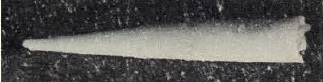
Fossil cephalopods have featured on this site numerous times in the past. I've talked about nautiloids, I've talked about ammonoids. But one group of cephalopods that I haven't given that much time to to date is the group including the majority of living species: the coleoids. In coleoids, the ancestral cephalopod shell has become reduced and internalised (one group, the octopods, has lost the shell entirely) so it should not come as much of a surprise that their fossil record is more limited than that of other cephalopod groups. Nevertheless, the coleoid lineage does include at least one group known from an abundant fossil record: the Mesozoic belemnites.

Fossil guard of Belemnitella americana, from here, in ventral view with the ventral opening of the alveolus visible as a longitudinal fissure.


Belemnites were a significant part of the marine fauna during the Jurassic and Cretaceous. Externally, they were similar in overall appearance to modern squid, as demonstrated by rare finds of specimens with preserved soft body parts. However, whereas squid have the internal shell reduced to the thin, non-calcified pen, belemnites possessed a well-developed internal shell. The posterior end of the shell was a solid, bullet-shaped rostrum or guard, in front of which was a chambered section known as the phragmocone. Being completely calcified, the rostrum of a belemnite was readily preserved and isolated rostra make up the greater part of the belemnite fossil record (the more delicate phragmocone was less likely to survive the fossilisation process). Different belemnite taxa may be recognised by variations in rostral shape and structure and several families are recognised from various parts of the Mesozoic. The latest surviving belemnite family was the Belemnitellidae.

Reconstruction of a typical belemnite showing the life position of the shell (not actually visible externally), copyright Charlotte Miller.


Belemnitellids are characterised by rostra with an alveolus or pseudoalveolus (an anterior conical depression into which the phragmocone would have originally fit) that opens through a ventral fissure, and longitudinal dorsolateral impressions (Christensen 1997, 2002). The earliest belemnitellids appeared during the early part of the Cenomanian epoch of the Cretaceous period, about 98 million years ago (Christensen 1997). They reached their peak of diversity during the lower Santonian, about 86 million years ago, but they persisted in one form or another right up to the end of the Cretaceous, eventually disappearing in the giant colossal environmental clusterbump that brought that period to a close. Throughout their history, belemnitellids were restricted to the Northern Hemisphere, being known from what is now Europe and North America. By the late Cretaceous, of course, the modern continents were definitely approaching their modern forms and positions but were not quite there yet. For a large chunk of this period, sea levels were higher than they are now so much of modern Europe and the central part of North America were covered by shallow seas. The North Atlantic was still a developing prospect; it looks like there still would have been something of a continental shelf connection between what is now its two sides during the Santonian. This continental shelf and shallow seas was the habitat of the belemnitellids; it appears that they never made the shift to deeper waters. Hence their geographical restriction as the deeper Tethys Ocean still separated Eurasia from Africa and India. When the belemnitellids first appeared, these deeper Tethys waters were home to another belemnite family, the Belemnopseidae (the belemnitellids would make some inroads to the northern coast of the Tethys after the belemnopseids became extinct during the Cenomanian but never anything extensive). A third family, the Dimitobelidae, occupied the position of the belemnitellids in the Southern Hemisphere.

The earliest belemnitellids are known from northern Europe where they presumably evolved from belemnopseid ancestors (Christensen 1997). There do appear to be some questions about whether the belemnitellids as currently recognised represent a monophyletic group or whether the belemnopseid invasion happened more than once. However it be, northern Europe would remain the centre of diversity for the group. They reached North America during the Turonian, about ninety million years ago, but for whatever reason never quite diversified there as much as they did in their homeland. During the Campanian, from about 83 million years ago, there is a period of close to ten million years where belemnitellids disappeared from the North American fossil record entirely. Presumably this represents a local extinction followed by a later recolonisation from Europe.

North American belemnitellids also failed to quite make it to the end of the Cretaceous, dropping out about one or two million years earlier. In Europe, however, three species are known from the period's closing hours. Though not at their earlier levels of success, belemnitellids were diversifying right to the end: the distinctive Fusiteuthis polonica appears well within the last couple of million years. Nevertheless, there was precious little from that part of the world at that time in history that did not have the word DOOM stamped firmly on its forehead and belemnitellids were no exception. Their passing marked the final end of the belemnite hegemony and the stage was now completely clear for the more modern coleoids to rise.

REFERENCES

Christensen, W. K. 1997. The Late Cretaceous belemnite family Belemnitellidae: taxonomy and evolutionary history. Bulletin of the Geological Society of Denmark 44: 59–88.

Christensen, W. K. 2002. Fusiteuthis polonica, a rare and unusual belemnite from the Maastrichtian. Acta Palaeontologica Polonica 47 (4): 679-683.

A Neogene Moon

Back when I was a young lad, some time not so long after the end-Cretaceous extinction, we often spent part of the Christmas holidays camped at the estuary beach-front below my great-grandparents' house. Among the things I recall doing there was going out at low tide with my great-grandmother to dig up cockles for lunch. The New Zealand cockle Austrovenus stutchburyi is not an immediate relative of the bivalves of the family Cardiidae known as cockles in Europe but a member of a different bivalve family, the Veneridae. Venerids are shallowly burrowing bivalves that generally live buried below the sand or mud just shallowly enough to extend their short siphons to the surface for filter-feeding.

Dorsal (left) and lateral views of Marama hurupiensis, from Beu & Maxwell (1990).


Because they live pre-buried in this manner in fairly low-energy habitats, venerids have an excellent fossil record. Marama is a fossil genus of a dozen species of venerids known only from New Zealand and Tasmania (Beu & Maxwell 1990; Beu 2012). The genus was first recognised by Marwick (1927) who divided it between two subgenera, Marama sensu stricto and Hina. Both names derive from Maori names for the moon, presumably in reference to the clams' appearance. Marama species are similar in overall appearance to the modern New Zealand cockle, the primary defining characters of the genus reflecting features of the shell hinge. These include the presence of a moderate anterior lateral tooth or tubercle in the left valve. The size of the species varies from the small M. tumida, a bit less than two centimetres in length, to the relatively large M. hurupiensis which reaches six centimetres in length. The shells are sculpted with concentric lamellae, varying from fine and very dense in M. tumida to strong and widely spaced in M. pristina to weak and sparse in M. ovata.

Marama species are known from the Kaiatan to the Nukumaruan stages in the New Zealand stratigraphic system, corresponding to the ealy Late Eocene to the late Pliocene/earliest Pleistocene in the international stratigraphic divisions. Many regions of the world have their own local stratigraphic divisions that may be used in preference to the glocal system for various reasons. In some cases, this may be because of difficulties in correlating the local geological record to global events. There may not be suitable resources preserved for calculating a deposit's absolute age, or a geographically isolated region may lack fossils of cosmopolitan index species. As a result, it may be possible to recognise temporally successive biotas in a region's palaeontological record without being able to tell for sure whether a given biota is (for instance) Eocene or Oligocene. Alternatively, because stratigraphic divisions are commonly based on biotic turnovers such as mass extinctions, the major local biotic events may not exactly line up with the global average (for instance, the characteristic biota of a given geological period may have persisted longer in one region than it did in another). In the case of the New Zealand palaeontological record, Marama was one of a number of molluscan genera that became extinct towards the end of the Nukumaruan in relation to cooling temperatures representing the onset of the Pleistocene ice ages.

REFERENCES

Beu, A. G. 2012. Marine Mollusca of the last 2 million years in New Zealand. Part 5. Summary. Journal of the Royal Society of New Zealand 42 (1): 1–47.

Beu, A. G., & P. A. Maxwell. 1990. Cenozoic Mollusca of New Zealand. New Zealand Geological Survey Paleontological Bulletin 58: 1–518.

Marwick, J. 1927. The Veneridae of New Zealand. Transactions and Proceedings of the New Zealand Institute 57: 567-636.

Platyschismatinae

Platyschisma helicoides, from Knight et al. (1960).


In an earlier post on this site, I commented on some of the various ways that gastropods deal with the fact that their development tends to put their anus uncomfortably close to their mouth. A common solution is the development of a sinus or slit in the shell that provides spaces for the anus to be moved backwards.

One of the major gastropod groups exhibiting such a feature is known as the Pleurotomarioidea. In the modern fauna, pleurotomarioids are not hugely abundant, with living species restricted to deep waters. However, they were one of the dominant gastropod groups back in the Palaeozoic when they were represented by a number of families. One Palaeozoic pleurotomarioid group is the Platyschismatinae, known from the Lower Ordovician to the Middle Permian (Knight et al. 1960). Platyschismatines went with the sinus option, with a sinus present at or above the midpoint on the outer edge of the shell opening. Knight et al. (1960) included five genera in the Platyschismatinae. The type genus, Platyschisma, has a slightly flattened spiral and a relatively thin shell. Some of the other platyschismatines were also relatively flat.

REFERENCE

Knight, J. B., L. R. Cox, A. M. Keen, R. L. Batten, E. L. Yochelson & R. Robertson. 1960. Gastropoda: systematic descriptions. In: Moore, R. C. (ed.) Treatise on Invertebrate Paleontology pt I. Mollusca 1: Mollusca—General Features, Scaphopoda, Amphineura, Monoplacophora, Gastropoda—General Features, Archaeogastropoda and some (mainly Paleozoic) Caenogastropoda and Opisthobranchia pp. I169-I331. Geological Society of America, and University of Kansas Press.

A Second Look at Scallops

In a post that appeared at this site over eight years ago, I described some of the distinctive features of the Pectinoidea, the group of bivalves commonly known as scallops. It's time to look in a bit more detail at some of the points mentioned in that post.

Fossil of Pernopecten, the earliest scallop genus, from ammonit.ru.


Pectinoidea, in the sense recognised by Waller (2006), first appear in the fossil record way back in the late Devonian. They were probably derived from earlier members of the Aviculopectinoidea, an extinct group of bivalves that closely resemble scallops in their overall appearance and were included in the Pectinoidea by many earlier authors (such as in the 1969 Treatise on Invertebrate Paleontology volume on bivalves). However, the shell ligament of aviculopectinoids was reinforced by aragonite fibres (a primitive feature for bivalves) rather than having the specialised rubbery core found in pectinoids. As such, aviculopectinoids would have lacked the swimming abilities of true scallops. The Palaeozoic pectinoids belong to a single genus, Pernopecten, that possesses a number of features such as details of the shell crystalline structure that indicate a position outside the pectinoid crown group. In the early Triassic, Pernopecten begat the family Entolioididae that includes the ancestors of living pectinoids.

As mentioned in the previous post, four pectinoid families survive to the present day: the Pectinidae, Propeamussiidae, Entoliidae and Spondylidae. The first three families diverged in the early Triassic. Spondylids (usually classified in a single genus, Spondylus) were not to appear until the mid-Jurassic and Waller (2006) argued for their derivation from within the Pectinidae. The Pectinidae are otherwise distinguished from other pectinoids by a structure called the ctenolium. This is a row of teeth that develops on the shell in the gap between the disc and one of the auricles (the triangular 'wings' at the top of the shell). During the earlier part of the scallop's life, when it lives attached to the ocean bottom by a byssus (what in mussels we call the 'beard'), the ctenolium functions to hold the byssus threads in place and help stop the shell from twisting. In those pectinid species that lack a byssus in the latter part of their life, the ctenolium may end up getting overgrown by the expanding shell and disappearing, but all pectinids (ignoring the aforementioned Spondylus question) have a ctenolium for at least part of their life.

The propeamussiid Cyclopecten secundus, copyright Museum of New Zealand Te Papa Tongarewa.


The Pectinidae is the largest scallop family in the present day, followed by the Propeamussiidae. The Entoliidae were diverse during the Mesozoic but declined dramatically after the end of the Cretaceous (I'm not clear whether or not their decline was a direct part of the end-Cretaceous mass extinction). Indeed, entoliids are completely unknown from the fossil record between the Palaeocene and the late Pleistocene; like the tuatara, it might be that the post-Mesozoic survival of entoliids could have gone completely unrecognised were it not for the single surviving relictual genus.

In the earlier post, I implied that propeamussiids lack the eyes and guard tentacles of other pectinids; it turns out that this was a mistake on my part. Many propeamussiids found in the deep sea do indeed lack these features but they are present in shallow-water propeamussiids. It appears that these features are ancestrally common to all crown-group pectinoids but have been lost as an adaptation to life below the photic zone. The anatomy and lifestyle of many propeamussiids remains poorly known but those species that have been investigated have simplified gills compared to pectinids. The filaments of the gills are free rather than being connected by ciliary junctions. The lips of the mantle are also simplified, lacking the complex lobes found in pectinids. These features may be related to the carnivorous diet of many propeamussiids that feed on zooplankton rather than smaller phytoplankton and organic particles.

REFERENCE

Waller, T. R. 2006. Phylogeny of families in the Pectinoidea (Mollusca: Bivalvia): importance of the fossil record. Zoological Journal of the Linnean Society 148 (3): 313–342.

A Mystery Ammonoid

Münster's (1834) figure of Goniatites hybridus.


Looks like I drew another dud. For today;s semi-random post, I ended up tasking myself to write something about the Devonian ammonoid genus Heminautilinus. But as it turns out, there simply isn't that much to say about this genus, and what there is isn't really worth saying.

Heminautilinus was established as a genus by A. Hyatt in 1884. He diagnosed it as including "species with whorls similar to those of Anarcestes, but with angular lateral lobes in the adults", and designated George de Münster's (1834) Goniatites hybridus as type species on the basis of that author's original figure. The problem is that Münster's figure is apparently not very reliable; the original specimen was only fragmentary and Münster himself expressed uncertainty as to just what section of the ammonoid conch he had on hand. So Hyatt's assumption that Münster's species retained some juvenile features to maturity should not be considered reliable.

As a result, Hyatt's genus seems to have been pretty roundly ignored. Those authors who have made some speculation as to its identity have suggested that it is probably synonymous with some better known genus such as Cheiloceras or Imitoceras. This might present something of an issue because either one of these genera was published more recently than 1884, meaning that Heminautilinus should be considered the senior name. Because there would be little to be gained from replacing a familiar name with one that is all but forgotten, it seems most likely that, even if Heminautilinus' identity could be reliably established, it would be somehow suppressed. As such, Heminautilinus seems doomed to remain in obscurity.

REFERENCES

Hyatt, A. 1883–1884. Genera of fossil cephalopods. Boston Soc. Nat. History, Proc. 22: 253–338.

Münster, G. de. 1834. Mémoire sur les clymènes et les goniatites du calcaire de transition du Fichtelgebirge Annales des Sciences Naturelles, seconde série, Zoologie 1: 65–99, pls 1–6.

Pontodrilus: Earthworms by Sea

Earthworms are primarily a terrestrial and freshwater group, sensitive to changes in the quality of their habitat. But there are some earthworm species that are tolerant of more saline environments. One such species is Pontodrilus litoralis, a widespread earthworm found in warm coastal habitats around the world, being recorded from such far-flung places as the Caribbean, the Mediterranean, Australia and Japan. The species is found in sandy or muddy soils in coastal habitats, including beaches, estuaries and around the roots of mangroves, and is able to tolerate salinities from 5 to 25 parts per thousand—that is, from fresh water to close to the standard salinity of sea water (Blakemore 2007).

Pontodrilus litoralis in its natural habitat, from here.


Pontodrilus litoralis is one of five species currently recognised in the genus Pontodrilus, though many more have been recognised in the past (Blakemore, 2007, listed eighteen species and subspecies now regarded as synonyms of P. litoralis). Characteristic features of the genus include an absence of nephridia in the anterior segments, and tubular prostrate organs opening to male pores on the eighteenth segment. The other Pontodrilus species have more restricted, non-coastal ranges; one, P. lacustris, is found free-swimming in Lake Wakatipu in New Zealand, whereas the other three are found in terrestrial habitats in Sri Lanka, China and Tasmania.

How P. litoralis achieved its wide distribution is currently unknown. If it arose prior to the separation of the land-masses on which it is now found then it would have had to have survived almost unchanged for hundreds of millions of years, which seems on the face of it unlikely. It seems more credible that it has dispersed more recently from its original point of origin, but while its green, spindle-shaped cocoons are often found attached to floating vegetation we do not know how long they can stand immersion in full-strength salt water. Nor do we know just where P. litoralis originated. It was first described in 1855 from the French Riviera so many authors have assumed the species is Mediterranean in origin. However, the distribution of related species seems to make an Indo-Pacific origin more likely. It may well be that P. litoralis was spread from its original home by humans, carried with rocks and sand used for ballast.

REFERENCE

Blakemore, R. J. 2007. Origin and means of dispersal of cosmopolitans Pontodrilus litoralis (Oligochaeta: Megascolecidae). European Journal of Soil Biology 43: S3—S8.

The Litiopids: Small Sea-Snails among the Weeds

I may have commented before that biodiversity tends to increase as one moves to a smaller scale. If I haven't, I certainly should have. The number of small representatives of a group will almost always be greater than the number of large ones. And if one considers the molluscs, for instance, the diversity of large, eye-catching species is considerably smaller is considerably smaller than the diversity of the micro-mollusks that usually go unnoticed.

Litiopids Alaba virgata crawling about on seagrass, copyright Ria Tan.


The Litiopidae are a group of marine gastropods that are found living among and feeding on seaweeds and seagrasses; though little recognised, they can be very abundant. They have high-spired, conical, translucent shells that reach about an inch in length in the largest species, but seem to be more commonly less than a centimetre. They belong among the larger gastropod clade known as the Cerithioidea and can be difficult to distinguish from other members of this clade by their shells alone. Most members of the Litiopidae are placed within the genera Litiopa and Alaba.

The soft anatomy of the family is more distinctive (Houbrick 1987). Litiopids have a long, narrow foot with a median slit in the rear part of the underside marking the opening of a large mesopodial mucous gland. The sides of the foot carry several epipodial tentacles; in other gastropods with such tentacles, they provide a sensory function. A pair of long tentacles is also present on the head, which is produced into an extensible bilobed snout. A pair of small eyes is present at the base of the tentacles.

Soft anatomy of Alaba incerta, from Houbrick (1987).


Litiopids glide about on the underwater vegetation at some speed; they are also able to glide upside-down on the water surface, hanging from the surface tension. The trail of mucus laid down by the mesopodial mucous gland functions like the drag-line laid down by a spider. If the animal finds itself torn away from its substrate, the mucous strand tethers it in place, and it can then haul itself back into place.

REFERENCES

Houbrick, R. S. 1987. Anatomy of Alaba and Litiopa (Prosobranchia: Litiopidae): systematic implications. Nautilus 101 (1): 9–18.

The Arms of an Ammonite

The ammonoids are one of the most characteristic animal groups of the late Palaeozoic and Mesozoic. During their time on this earth, they were one of the most diverse and abundant groups of mollusks around. But as with other mollusks, their fossil record is overwhelmingly dominated by the hard shells, with little direct evidence of the softer parts of the animal. So what did the rest of an ammonoid look like?

A typical ammonite Asteroceras obtusum, copyright Dlloyd.


Ammonoids belong to the cephalopods, and hence to the same group of mollusks as modern octopods, squids and nautilus. Indeed, it is generally accepted that ammonoids were more closely related to octopods and squid than nautilus. As such, we can safely take as a starting assumption that those features shared by modern cephalopods were also present in ammonoids, such as a muscular siphon for propelling the animal, and an array of arms or tentacles surrounding a central mouth. But how many tentacles did ammonoids have? Squid and octopods have eight or ten arms, but nautilus have many more, about ninety. Because nautilus bear a superficial resemblance to early cephalopods in retaining an external shell, it has been tempting to assume that they are more primitive than octopods and squid, but there are good reasons to believe that the supernumerary tentacles of nautilus are a derived peculiarity of that group. Arm development in cephalopod embryos begins from ten original buds in both nautilus and squid, with these buds becoming divided in nautilus (Klug & Lehmann 2015), suggesting that the lower number could be the more primitive. With ammonoids on the squid line rather than the nautilus line as mentioned above, it seems likely that they retained the primitive arm number like their sister group. In their review of preserved ammonoid soft-tissue remains, Klug & Lehmann (2015) noted that there is only a single known fossil ammonoid (going by the memorable name of GSUB [Geosciences Collection, University of Bremen] C5836) that might include preserved arm tissue, but the area in question shows little more than a tarry smear. Trace fossils have been used to argue for a low tentacle number in orthocerids, a group of Palaeozoic cephalopods commonly believed to include the ancestors of both ammonoids and squid, but again the evidence is not enough to be conclusive.

If we do presume that ammonoids had a squid- or octopus-like number of tentacles, can we then interpret ammonoids as basically a squid in a coiled shell? This may be the most common representation of such animals:

Unfortunately for Akane's purposes, ammonites may not have provided much in the way of good eating. Whereas the fossil record of ammonoid tentacles themselves is next to nonexistent, we do have a bit more evidence about the arrangement of an ammonoid's mouthparts. Living cephalopods usually have a hardened beak at the opening of the mouth, with the ribbon-like radula sitting directly behind it. The majority of tearing and crushing of food is done by the beak; the radula mostly functions to pull food particles back into the gullet. In basal ammonoids, the beak was more or less similar to that of a recent cephalopod, but in the derived ammonites* it became quite modified. Ammonites possessed a broad structure near the opening of the body chamber that is called an anaptychus or aptychus according to its configuration (though just to confuse matters, the term 'aptychus' seems to sometimes be used to cover both types). An 'anaptychus' was a single chitinous, semi-circular plate; an 'aptychus' was a calcified, bivalved arrangement. The aptychi were not directly attached to the main shell and may commonly be found as isolated fossils. Examination of aptychi that have been preserved still in their original body chamber has lead to the widely held conclusion that they represent a modification of the original lower jaw of the beak. Meanwhile, the upper jaw became reduced and weakened in ammonites with aptychi (Tanabe et al. 2015).

*A quick explanation about 'ammonoid' versus 'ammonite': 'ammonoids' are a particular group of shelled cephalopods that first appeared during the Devonian. 'Ammonites' are a particular clade within the ammonoids including most of the Mesozoic species (a small number of non-ammonite ammonoids survived into the Triassic). So all ammonites are ammonoids, but not all ammonoids are ammonites.

Specimen of Neochetoceras with aptychus in place, from here.


Because they often have a similar configuration to the opening of the ammonite's shell, the aptychi have often been interpreted as functioning as an operculum for when the animal retracted itself into the body cavity, presenting a tough barrier to any would-be predator. Certainly the reduced upper jaw meant that they could not function as a beak to bite into food (though some Late Cretaceous ammonites did exhibit a re-enlargement of the upper jaw and may have regained their bite). However, if aptychi functioned as opercula then the tentacles of ammonites could not have sat in quite same arrangement as in modern cephalopods. They could not have completely surrounded the mouth because then they would have prevented the operculum from closing. Perhaps some of the lower tentacles were lost, or perhaps the base of the circle became divided. Some authors have argued that aptychi were jaw structures only, with no operculum function, but I confess I find it difficult to understand their purpose in that case.

That most ammonoids were not subjecting their food to strenuous chewing is also indicated by the structure of the radula: where known, the majority of ammonoids had radulae with high, slender teeth more suited to grasping than rasping (Keupp et al. 2016). The overall indication is that most ammonoids were probably micropredators, feeding on small plankton such as crustaceans; where possible stomach contents have been identified in ammonoid fossils, they have also supported this conclusion. The modern nautilus has a similar diet, and ammonoid arms possibly did resemble nautilus tentacles in being short and slender rather than long and muscular (though at least one author has discussed the possibility of ammonoid arms being expanded into broad fans for the capture of plankton). The Late Jurassic ammonite Aspidoceras had a much more robust, powerful radula than is known for other ammonoids but may provide something of an exception to prove the rule: its stomach contents are dominated by the pelagic crinoid Saccocoma, suggesting that it was still a planktivore even if it was tackling tougher prey than its relatives (Keupp et al. 2016).

A speculative reconstruction of an ammonite with filter-feeding arms, copyright sethd2725. Despite its highly conjectural elements, in some ways this is one of the better ammonite reconstructions I've seen. Most have too many arms, too robust arms, or (arguably worst of all) show the aptychus articulating dorsally in the manner of a nautilus' hood (Edit: Turns out I made an error here; see the bottom of this post for an explanation).


So to sum up, ammonoids probably had only a small number of tentacles, no more than ten at the most. They were probably slight affairs, suited for sweeping small or poorly motile food objects out of the water rather than grabbing and manipulating struggling prey. A planktivorous habit for ammonoids would also seem to fit with their predominance when they were around; after all, there's no shortage of plankton in the sea.

REFERENCES

Keupp, H., R. Hoffmann, K. Stevens & R. Albersdörfer. 2016. Key innovations in Mesozoic ammonoids: the multicuspidate radula and the calcified aptychus. Palaeontology 59 (6): 775–791.

Klug, C., & J. Lehmann. 2015. Soft part anatomy of ammonoids: reconstructing the animal based on exceptionally preserved specimens and actualistic comparisons. In: Klug, C., et al. (eds) Ammonoid Paleobiology: From Anatomy to Ecology pp. 507–529. Springer Science.

Tanabe, K., I. Kruta & N. H. Landman. 2015. Ammonoid buccal mass and jaw apparatus. In: Klug, C., et al. (eds) Ammonoid Paleobiology: From Anatomy to Ecology pp. 429–484. Springer Science.

What We Have Here is a Failure to Communicate

To those without much of a background in taxonomy, the various rules governing the naming of organisms can seen frustratingly byzantine and laborious. "Surely," they think to themselves as they despairingly attempt to come to grips with concepts of holotypes and lectotypes, synonyms and homonyms, "there must be an easier way of doing this". Nevertheless, the easiest way to develop an appreciation for just how valuable it is to have a set of rules governing nomenclature is to attempt to deal with anything dating back to the days before such rules were established. Settle back, readers, while I tell you a tale. Pour yourself a drink. You're going to hate this.

Collonista glareola, a species that just might be related to the subject of this post, copyright Huang, Fu & Poppe.


These days, it is generally accepted that before a new name can enter general use, it should be clearly established in some form of formal, widely-accessible publication just to what it is that the name is supposed to refer. Back in the day, however, this was not always the case. A century or two ago, the communities of researchers working on a particular group of organisms were often small, and it was not uncommon for names to effectively spread through personal correspondence or word of mouth alone. One naturalist might refer to a new genus he had come to recognise in a letter to another, and the latter naturalist may then assign his own species to that genus without the first naturalist ever publishing a formal description. At the time, this might not be seen as much of an issue: after all, if there was ever any question as to the first naturalist's original intent, surely it could be clarified by simply writing to him personally?

The name Leptothyra seems to have been established in this kind of way in the mid-1800s by the American naturalist James Graham Cooper for a genus of small marine gastropods (belonging to the vetigastropods, related to the top shells and cat's-eyes) found on the coast of California. In 1871, W. H. Dall attributed the name to an unpublished manuscript of Cooper's and cited the type species as Linnaeus' Turbo sanguineus, a Mediterranean species to which Cooper had also attributed specimens from the Pacific. As it happens, Turbo sanguineus was already the type species for an earlier genus name, Homalopoma, so Dall's 'Leptothyra' would be considered invalid and give precedence to Homalopoma. However, in 1869 the name Leptothyra had been used by W. H. Pease for L. costata, a species from Hawaii, without direct reference to any other species (thus making L. costata the effective type species of Leptothyra). Subsequent authors often considered 'Leptothyra Pease' to be a separate genus from Homalopoma/'Leptothyra Dall'. At least one author who did not, Henry A. Pilsbry (1888), nevertheless used the name Leptothyra under the mistaken belief that the name Homalopoma was preoccupied. Over time, numerous species both living and fossil from around the Pacific were assigned to Leptothyra in one way or another.

It was not until over a century later that Coan (1986) pointed out that the name Leptothyra had appeared in print even earlier than Pease's usage. Cooper himself had used the name in a list of Californian molluscs in 1867. Even though Cooper's list lacked any descriptive details, this counts as enough to validate the name because he included species for which descriptions had already been published under other genera. One of these was Turbo sanguineus, which Coan officially designated as type species and fixed Leptothyra's status as an invalid later name for Homalopoma.

Which leaves open the question of what one should call the genus formerly known as 'Leptothyra Pease'. It doesn't help matters that Pease's 'Leptothyra costata' has apparently never been illustrated and its identity has been open to question. Iredale (1918) proposed the name Collonista for use with species previously included in Leptothyra, stating that the latter "proves to have been first published by Pease in connexion with a juvenile shell of a different genus", but gave no further elaboration or explanation how he reached that conclusion. The online resource WoRMS lists L. costata as a junior synonym of the widespread Pacific species Collonista verruca, but I have been unable to find where that synonymy was published. Nevertheless, any sort of replacement name for 'Leptothyra Pease' seems like it would be misguided at best. It is unlikely that L. costata represents any genus otherwise unknown and, even without any explicit statement to the effect, it is quite possible that Pease only intended to assign his species to Cooper's manuscript genus rather than establish a new genus of his own. Any concept of a genus Leptothyra is best left to sink into the annals of history.

REFERENCES

Coan, E. 1986. Some additional taxonomic unites that first appear in publications by J. G. Cooper. Nautilus 100 (1): 30–32.

Cooper, J. G. 1867. Geographical catalogue of the Mollusca found west of the Rocky Mountains, between latitudes 33° and 49° north. Geological Survey of California: San Francisco.

Dall, W. H. 1871. Descriptions of sixty new forms of mollusks from the west coast of North America and the North Pacific Ocean, with notes on others already described. American Journal of Conchology 7 (2): 93–160, pls 13–16.

Iredale, T. 1918. Molluscan nomenclatural problems and solutions.—No. 1. Proceedings of the Malacological Society of London 13 (1–2): 28–40.

Pease, W. H. 1869. Descriptions of new species of marine Gasteropodae inhabiting Polynesia. American Journal of Conchology 5 (2): 64–79.

A Place for Worms

When we think of endangered species, we tend to focus on the charismatic vertebrates, such as pandas, parrots, tigers or turtles. But endangered species may come from all walks, crawls or wriggles of life. Have you ever considered, for instance, the plight of endangered earthworms?

An unidentified species of Glossodrilus, copyright Thibaud Decaens.


Glossodrilus is a genus of earthworms found in tropical and subtropical regions of Central and South America. They are mostly fairly small as earthworms go, averaging only a few centimetres long and one or two millimetres in diameter. The largest, G. oliveirai from Brazil's Roraima State and Guyana, is about 25 centimetres long; the smallest, G. tico from Roraima and Venezuela, is less than two centimetres in length. Most species lack pigmentation, meaning that they appear greyish from the colour of their gut contents. A single species, G. freitasi from Amapá State in Brazil, is a bright violet in colour. Other diagnostic features of the genus include: eight setae per segment, arranged in regular series; a pair of (or sometimes one) calciferous glands sitting above the oesophagus in segments XI to XII; two or three pairs of lateral hearts in segments VII to IX, and two pairs of intestinal hearts in X and XI; and a pair of testes in segment XI. Glossodrilus is distinguished from a closely related earthworm genus, Glossoscolex, by the absent of a pair of muscular copulatory chambers associated with the male ducts in the latter genus (Righi 1996).

Over sixty species have been assigned to Glossodrilus; as is usual with earthworms, they are mostly distinguished by internal characters such as features of the reproductive systems. They are most diverse in upland regions, with many species inhabiting high rain forest. A few species in the northernmost or southernmost parts of the genus' range inhabit secondary grasslands. Glossodrilus species are conspicuous by their absence in the Brazilian central plateau, and only infrequently present in lowland Amazonia (Righi 1996).

And this is where the question of conservation comes in. You see, the greater number of Glossodrilus species are known only from a very restricted area (Lavelle & Lapied 2003). Part of this may be an artefact of sampling: in more recent decades, our understanding of South American earthworm diversity has been heavily shaped by one researcher, Gilberto Righi of the Universidade de São Paulo (I referred to him briefly in an earlier post on Amazonian earthworms), and we know little of areas where Righi did not collect specimens himself or from where he did not receive specimens supplied by ecological surveys. Nevertheless, sampling has probably been extensive enough to expect that the low number of shared species between different regions will hold firm at the broad scale at least. Most Glossodrilus species (and other native South American earthworms) are dependent on old-growth habitats; as land is cleared for farming, forestry and the like, exotic and invasive earthworm species take over. It would be all to easily for the little Glossodrilus to find themselves homeless, and slip into extinction without any to mark their passing.

REFERENCES

Lavelle, P., & E. Lapied. 2003. Endangered earthworms of Amazonia: an homage to Gilberto Righi. Pedobiologia 47: 419–427.

Righi, G. 1996. Colombian earthworms. Studies on Tropical Andean Ecosystems 4: 485–607.