Field of Science

Showing posts with label Asgard. Show all posts

Lifestyles of the Rosalinidae

Among the modern foraminiferans, one of the most prominent radiations is among members of the Rotaliida, characterised by globose chambers and calcareous, hyaline test walls. Among the numerous families making up the Rotaliida are members of the Rosalinidae.

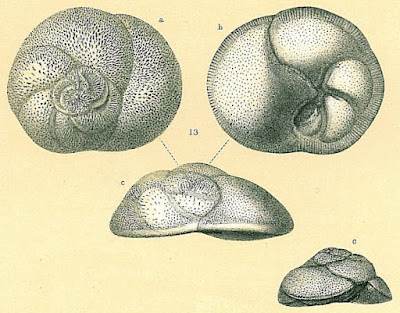
Benthic form of Rosalina globularis, from Brady (1884).


Rosalinids may be regarded as fairly typical-looking marine rotaliids with the test growing freely as a low trochospire (so a flattened cone or dish shape). The aperture of the test is a low slit on the interior margin along the umbilicus (Hansen & Revets 1992). Rosalinids have a complex life cycle involving both benthic and planktonic stages (Sliter 1965). The asexually reproducing diploid stage is benthic. Depending on conditions, diploid individuals may divide to produce other diploid individuals, resulting in several asexual generations. Eventually, however, the diploid generation will undergo meiosis to produce the haploid sexual generation (in the common species Rosalina globularis, this is induced by exposure to warmer water). In the sexual generation, a large globular chamber forms at maturity that covers the umbilical side of the test. This float chamber becomes filled with gas, allowing the foram to disperse planktonically before releasing gametes to produce the next diploid generation. Planktonic individuals are distinct enough in appearance from their benthic counterparts that they were long mistaken for distinct taxa before their identity was revealed by lab cultures.
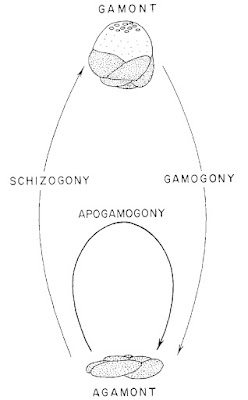
Life cycle of Rosalina globularis, from Sliter (1965).


The majority of forams are particulate feeders. A network of filamentous pseudopodia radiating outwards from the cell body captures micro-organisms and other organic particles. However, one genus of rosalinids, Hyrrokkin, lives as parasites on sessile invertebrates (Cedhagen 1994). Species of this genus have variously been found on sponges, corals and bivalves. On sponges, they settle on the inhalent surface of the sponge and dissolve the underlying tissues. On bivalves, they form pits on the shell surface from which they bore holes through to the body cavity. Pseudopodia extended through this hole allow the foram to feed on host tissue. Infested hosts may bear multiple scars from the foram moving about on the outer surface. The forams may also feed on other animals such as polychaete worms or bryozoans attached to the surface of their primary host. In such cases, Hyrrokkin remains in its original pit but develops an irregularly shaped chamber with its aperture directed towards the alternate prey. Hyrrokkin species evidently do well from their rapacious lifestyle: whereas other rosalinids are only a fraction of a millimetre in diameter, Hyrrokkin sarcophaga is an absolute giant reaching around six millimetres across and with protoplasm containing thousands of nuclei. Proving once again that one may make a great deal of profit from the labour of others.
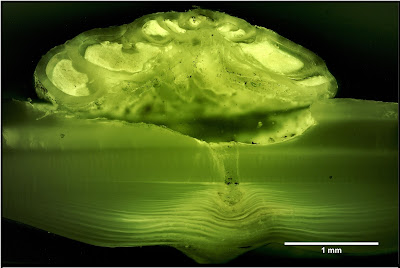
Cross-section of Hyrrokkin sarcophaga boring into shell of file clam Acesta excavata, from Schleinkofer et al. (2021).


REFERENCES

Cedhagen, T. 1994. Taxonomy and biology of Hyrrokkin sarcophaga gen. et sp. n., a parasitic foraminiferan (Rosalinidae). Sarsia 79: 65–82.

Hansen, H. J., & S. A. Revets. 1992. A revision and reclassification of the Discorbidae, Rosalinidae, and Rotaliidae. Journal of Foraminiferal Research 22 (2): 166–180.

Sliter, W. V. 1965. Laboratory experiments on the life cycle and ecologic controls of Rosalina globularis d'Orbigny. Journal of Protozoology 12 (2): 210–215.
The Sordariales: In the Soil and Under the Skin

Microfungi are a very important factor in our lives. They play a key role in assuring that we are not literally up to our armpits in shit. Their hungry little hyphae break down ordure, cleaning up the planet and unlocking nutrients that will then be made available to other organisms. And among the most significant lineages of these largely unseen decomposers are the members of the order Sordariales.

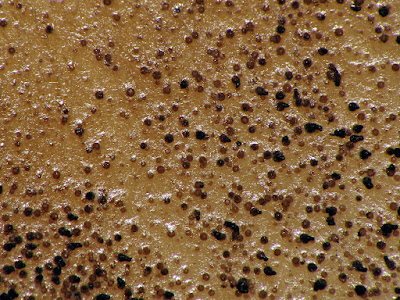
Lab culture of Sordaria fimicola, copyright BlueRidgeKitties.


Members of the Sordariales are, without exception, minute. Many species are coprophilous, growing on dung. Others may be found on rotting wood, or other decaying plant matter or soil. Fruiting bodies, when they appear, are flask-shaped perithecia protruding to a greater or lesser degree from the surface of their substrate. The walls of the perithecia are made up of large cells and have a membranous or coriaceous (leathery) texture. Within the fruiting body, the asci are single-walled and contain one- or two-celled ascospores that are often surrounded by a gelatinous sheath or bear various appendages. If the ascospores are two-celled, the cells are typically differentiated into an apical head and a basal tail (Kruys et al. 2015; Marin-Felix et al. 2020). Genera of Sordariales have historically been recognised on the basis of ascospore morphology but the advent of molecular data has indicated that such genera are highly polyphyletic. As a result, the Sordariales have seen (and are still seeing) a great deal of taxonomic reassessment. Miller & Huhndorf (2005) suggested that the structure of the fruiting body walls are more consistent with molecular phylogenies than ascospore morphology.

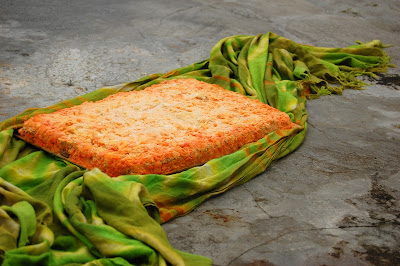
Cake of oncom-fermented beans, copyright Hariadhi.


Apart from their significant role as decomposers, most Sordariales have little direct impact on human economics. The mould Neurospora intermedia is used to make oncom, a fermented food similar to tempeh. A number of species of Sordariales such as Neurospora crassa and Sordaria fimicola have been widely used in genetic research, to the extent that they have been labelled the 'fruit flies of the fungal world'. Seriously, it's one of those expressions almost every publication seems obliged to crow-bar in somewhere. The analogy is made even more apropos by the fact that one of the most widely used species, Triangularia née Podospora anserina, has been made the subject of debate whether taxonomic considerations should be allowed to shake up the name of a popular model organism.

Molecular studies have also shown that the Sordariales encompass Madurella mycetomatis, a fungus causing subcutaneous inflammation in humans (van de Sande 2012). Seeing as sexual fruiting bodies are unknown in this species, and even asexual spore-producing structures are exceedingly rare, this organism would have previously been all but impossible to classify. Infection by M. mycetomatis is characterised by the production of granular swellings. It is most significant in central Africa but is also known from other tropical regions of the world. Madurella mycetomatis infects people via trauma such as animal bites and other wounds, and it has been isolated from soil and ant nests. In its normal state, M. mycetomatis is probably a quite innocent soil fungus. The trouble comes when it finds itself somewhere it shouldn't be.

REFERENCES

Kruys, Å., S. M. Huhndorf & A. N. Miller. 2015. Coprophilous contributions to the phylogeny of Lasiosphaeriaceae and allied taxa within Sordariales (Ascomycota, Fungi). Fungal Diversity 70: 101–113.

Marin-Felix, Y., A. N. Miller, J. F. Cano-Lira, J. Guarro, D. García, M. Stadler, S. M. Huhndorf & A. M. Stchigel. 2020. Re-evaluation of the order Sordariales: delimitation of Lasiosphaeriaceae s. str., and introduction of the new families Diplogelasinosporaceae, Naviculisporaceae, and Schizotheciaceae. Microorganisms 8: 1430.

Miller, A. N., & S. M. Huhndorf. 2005. Multi-gene phylogenies indicate ascomal wall morphology is a better predictor of phylogenetic relationships than ascospore morphology in the Sordariales (Ascomycota, Fungi). Molecular Phylogenetics and Evolution 35: 60–75.

van de Sande, W. W. J. 2012. Phylogenetic analysis of the complete mitochondrial genome of Madurella mycetomatis confirms its taxonomic position within the order Sordariales. PLoS One 7 (6): e38654.

The Bolivinitids

The Cretaceous was a period of significant innovation in the evolution of Foraminifera with a number of distinct new lineages making their appearance during this period. Among those, appearing in the latter part of the Cretaceous, were the first members of the modern family Bolivinitidae.

Bolivinita costifera, from the Smithsonian National Museum of Natural History.


The Bolivinitidae are free-living benthic forams with a calcareous, hyaline (glassy) test. The overall shape of the test is elongate with chambers arranged in biserial coils (that is, there are two chambers per loop). The terminal aperture is usually loop-shaped with a surrounding lip. Inside the chamber, a tooth plate (an inner protrusion of the test) runs from the aperture to the opening of the previous chamber and may protrude through the aperture (Revets 1996).

Representatives of the Bolivinitidae are found in a wide range of depths, from the shallow waters of the ocean to the bathyal zone. They may be among the most abundant forams in areas of low oxygen concentrations and are commonly associated with sustained organic matter input (Erdem & Schönfeld 2017). In other words, these are muck-lovers. Individuals growing in low oxygen conditions tend to show less pronounced surface sculpture on the test than those where the oxygen levels are higher. Conversely, individuals at deeper levels tend to be larger overall than those in shallower waters (Brun et al. 1984). As such, bolivinitids have received their fair share of attention as potential indicators of changes in environmental condition over time.

REFERENCES

Brun, L., M. A. Chierici & M. Meijer. 1984. Evolution and morphological variations of the principal species of Bolivinitidae in the Tertiary of the Gulf of Guinea. Géologie Méditerranéenne 11 (1): 13–57.

Erdem, Z., & J. Schönfeld. 2017. Pleistocene to Holocene benthic foraminiferal assemblages from the Peruvian continental margin. Palaeontologica Electronica 20.2.35A: 1–32.

Revets, S. A. 1996. The generic revision of the Bolivinitidae Cushman, 1927. Cushman Foundation for Foraminiferal Research Special Publication 34: 1–55.

Dictyotales

Most of the various 'seaweeds' found around the world can be assigned to one of three major groups, each named for their most characteristic pigments: green algae, red algae and brown algae. Of these, green algae are the closest relatives of land plants, and red algae are the most taxonomically diverse. But for many people, the most familiar of the three will be brown algae. Owing to their often relatively large size and predilection for growing in visible locations, brown algae are likely to be the first examples to come to mind when one thinks of seaweed. For this post, I'm examining a particular subgroup of the brown algae, the family Dictyotaceae.

Forkweed Dictyota dichotoma, copyright Ria Tan.


Representatives of the Dictyotaceae can be found around the world but are more diverse in warmer tropical and subtropical waters. They seem to be particularly diverse in the Australasian region. Dictyotaceae are moderately sized seaweeds with flattened thalli that may grow as branching ribbons or radiating fans. One fan-shaped species of Dictyotaceae, Padina pavonica, has earned itself the vernacular name of 'peacock's tail'(this species is also notable for being one of the few calcified brown algae). These thalli grow apically from meristematic cells. Dictyotaceae have an isomorphic life cycle with the alternating sexually and asexually reproducing generations being similar in overall appearance. Sporangia in asexual individuals grow as superficial nodules scattered over the surface of the thallus; the resulting spores usually differ from those of other brown algae in lacking flagella. The less abundant sexual individuals are mostly divided between separate males and females (Bittner et al. 2008).

Peacock's tail Padina pavonica, copyright Diego Delso.


Dictyotaceae are distinct enough from other brown algae to have consistently been treated as their own order (indeed, their sporangia are unique enough that some very early authors did not even regard them as brown algae). Two species found around Australasia, Dictyotopsis propagulifera and Scoresbyella profunda, have previously been considered distinct enough to warrant their own separate families within this order Dictyotales. Dictyotopsis propagulifera has a monostromatic thallus (that is, the thallus is only one layer of cells thick). Scoresbyella profunda has an apical growing cell that divides lengthwise to the thallus instead of transversely as in other Dictyotales. However, molecular data have indicated that these two genera are nested within Dictyotaceae and so only the single family is currently recognised. Dictyotaceae has also been divided in the past between tribes Dictyoteae and Zonarieae based on the nature of the apical growing cells (Dictyoteae have a single meristematic cell whereas Zonarieae have a cluster or row of cells) and some authors have even treated them as distinct families. Again, however, molecular data have not corroborated this division (Bittner et al. 2008).

Lobophora variegata, copyright John Turnbull.


For most species of Dictyotaceae, their greatest significance to humans probably comes from the role they play in providing habitats to fish and other marine animals. As with other algae, Dictyotaceae produce a range of secondary metabolites that serve functions such as protecting them from grazers, and some of these may prove to have economic applications. Some species of Dictyotaceae, on the other hand, have become significant invasive species. A dramatic recent example has been provided by the northern Pacific species Rugulopteryx okamurae which was probably first imported to the Mediterranean as a contaminant on farmed oysters (García-Gómez et al. 2020). This species was recorded on the southern coast of France in 2002 and was later recorded on the coast of Ceuta in 2015. Within a year of the latter record, its presence in Ceuta had reached absolute plague proportions. Most of the illuminated rocky sea bottom was covered by R okamurae, up to about 90% coverage at optimal depths about ten to twenty metres. Over 5000 tons of washed-up seaweed was removed from the beaches of Ceuta in 2016. Needless to say, native seaweeds, and other sessile marine organisms such as corals, would have been severely impacted by this spread.

Rugulopteryx okamurae in Morocco, from El Aamri et al. (2018).


What caused this dramatic invasion? It would have certainly been a factor that defensive metabolites produced by Rugulopteryx okamurae had a negative impact on competitors. But perhaps even more significant a factor was climate change. Rising sea temperatures in the Straits of Gibraltar would have made things uncomfortable for native marine life used to cooler conditions. Meanwhile, the subtropical immigrant would have found things increasingly to its liking. With its competition hobbled and nothing to hold it back, R. okamurae was set to take over.

REFERENCES

Bittner, L., C. E. Payri, A. Couloux, C. Cruaud, B. de Reviers & F. Rousseau. 2008. Molecular phylogeny of the Dictyotales and their position within the Phaeophyceae, based on nuclear, plastid and mitochondrial DNA sequence data. Molecular Phylogenetics and Evolution 49: 211–226.

García-Gómez, J. C., J. Sempere-Valverde, A. R. González, M. Martínez-Chacón, L. Olaya-Ponzone, E. Sánchez-Moyano, E. Ostalé-Valriberas & C. Megina. 2020. From exotic to invasive in record time: the extreme impact of Rugulopteryx okamurae (Dictyotales, Ochrophyta) in the strait of Gibraltar. Science of the Total Environment 704: 135408.

Gel Weeds

The red algae of the genus Gigartina are a widespread bunch, most diverse in temperate regions of the southern hemisphere but also found on most coasts of the north. They grow as erect thalli that may come in a variety of forms: foliose or dichotomously branched, cylindrical, compressed or flattened (Hommersand et al. 1993). Like other members of the Gigartinaceae, the family to which they belong, growth is multiaxial (the primary growth axes composed of multiple filaments). The inner cortical and medullary cells are rather loosely arranged and separated by a copious matrix (Hommersand et al. 1999).

Pestle weed Gigartina pistillata, copyright Ignacio Bárbara.


Members of the Gigartinaceae have an isomorphic life history with the alternating haploid gametophyte and diploid tetrasporophyte generations being similar in overall appearance. Historically, Gigartina has included some species that were subsequently found to have a heteromorphic life cycle with very different-looking generations (Guiry & West 1983). Despite the similarities in appearance of the gametophytes to true Gigartina, these species are now thought to belong to a distinct family, the Phyllophoraceae. The specific details of Gigartina reproduction are, as with all red algae, obscenely complicated, but it is on the basis of these details that Gigartina is distinguished from related genera (Hommersand et al. 1993). Gigartina gametophytes may be either monoecious (with male and female gametes formed on a single thallus) or dioecious (with separate male and female individuals). The reproductive structures of the gametophytes are formed near the apex of the thallus on distinct branchlets, pinnules or papillae. Again as is typical for red algae, ova are not released but retained on the gametophyte, and their fertilisation results in the growth of a diploid carposporophyte on the parent gametophyte. The carposporophyte then releases diploid spores (carpospores) that are released to give rise to the tetrasporophyte generation. In Gigartina, the carposporophytes are each surrounded by an envelope of secondary filaments. Filaments of the carposporophyte penetrate between the cells of the envelope and fuse with them to form a placenta composed of heterokaryotic cells (with a mix of haploid and diploid nuclei). Carposporangia are produced in grape-like clusters. In the tetrasporophytes, tetrasporangia develop embedded within the thallus at the boundary between the cortex and the medulla. Tetraspores are released when the tetrasporangium as a whole is released by the breakdown of the containing patch of cortex; the resulting holes can leave the tetrasporophyte thallus with a reticulate appearance.

Mature carposporophyte of Gigartina pistillata, from Hommersand et al. (1993).


Economically, Gigartina species are of most interest to humans as a source of long polysaccharides called carrageenans. Carrageenans are characteristic of the Gigartinaceae; other notable carrageenan producers include the well-known Irish moss Chondrus crispus. Though not digestible by humans (they largely past through the digestive tract unaltered), carrageenans are used in food production to thicken and set liquids in a similar manner to gelatin. According to Wikipedia, the use of Gigartina for food production is known as far back as 600 BC in China. In pre-industrial methods, carrageenan can be obtained by boiling cleaned seaweed and then straining the resulting brew. In modern times, carrageenans are used to provide texture to a wide range of products, including dairy products such as ice cream or yoghurt, processed meats or vegetarian meat substitutes, or cosmetic products such as toothpaste or shampoo. It has even been used in paper production: old-style marbled paper was made by floating ink on a mixture including carrageenan. Truly a versatile little compound!

REFERENCES

Guiry, M. D., & J. A. West. 1983. Life history and hybridization studies on Gigartina stellata and Petrocelis cruenta (Rhodophyta) in the North Atlantic. Journal of Phycology 19: 474–494.

Hommersand, M. H., S. Fredericq, D. W. Freshwater & J. Hughey. 1999. Recent developments in the systematics of the Gigartinaceae (Gigartinales, Rhodophyta) based on rbcL sequence analysis and morphological evidence. Phycological Research 47: 139–151.

Hommersand, M. H., M. D. Guiry, S. Fredericq & G. L. Leister. 1993. New perspectives in the taxonomy of the Gigartinaceae (Gigartinales, Rhodophyta). Hydrobiologia 260–261: 105–120.

Gastrotrichs and their Tacky Little Tubes

When I was a student, I was taught that known animal diversity could be divided between somewhere in the region of a couple of dozen 'phyla'. These were the fundamental units of animal classification, the basic archetypes of animal morphology. Many of these were the major assemblages with which we all were familiar: chordates, arthropods, molluscs and the like. But many were the so-called 'lesser phyla', those taxonomic orphans that, whether small in size or small in number or both, tended to escape observation and study by the majority of people. One such 'minor phylum' was the collection of small worm-like animals known as the Gastrotricha.

Polymerurus nodicaudus, a paucitubulate gastrotrich, from Balsamo et al. (2015). Scale bar equals 100 µm.


Gastrotrichs are, in general, minute (Todaro et al. 2019). The largest reach about three-and-a-half millimetres in length, the smallest are about sixty microns, and there are probably many more at the lower range than the higher. They are dorsoventrally flattened with numerous cilia, and their cuticle may often be differentiated into a covering of scales or spines. Gastrotrichs are aquatic and are often referred to as part of the meiofauna, the assemblage of animals specialised for living within and crawling through the spaces between sand grains. That is indeed the preferred habitat for many species and gastrotrichs may be among the most abundant inhabitants of this milieu, edged out only by the nematodes and copepods. However, other species live above the sediment surface, crawling over the surface of aquatic vegetation or even floating among the plankton. Over 850 species are known to date, of which are a bit over 500 are marine (with all marine species being meiofaunal) and the remainder are found in fresh water. They feed on micro-organisms such as bacteria and algae, swallowing them by means of a muscular pharynx.

Gastrotrichs differ from other animals in a number of significant features. Among these is the differentiation of the outer cuticle into two distinct layers. The outermost of these layers, the epicuticle, covers the entire outer surface of the body, including coating the cilia. Gastrotrichs also possess characteristic tubular outgrowths ending in adhesive glands. Their relationships to other animals remain uncertain. Most authors now agree that they represent an early-diverging branch of the Lophotrochozoa, the animal superclade including such creatures as molluscs and annelids. It is possible that they are more closely related to flatworms than anything else but even then the relationship would hardly be close.

Pseudostomella etrusca, a macrodasyidan gastrotrich, from Todaro et al. (2011). Scale bar = 50 µm.


Historically, gastrotrichs have been divided between two orders, the Macrodasyida and Chaetonotida. This division was supported by structural features of the pharynx and the body wall but is also reflected in the distribution of the adhesive tubes. The Macrodasyida, which are usually vermiform, possess adhesive tubules at both the anterior and posterior ends of the body, as well as laterally. Macrodasyidans are always interstitial in habits and usually marine. The Chaetonotida, on the other hand, lack anterior tubules. Chaetonotidans were further divided between two major taxa. One of these was the isolated genus Neodasys which is vermiform and interstitial like a macrodasyidan, and possesses both lateral and posterior tubules. The remaining Chaetonotida were recognised as the suborder Paucitubulatina. As indicated by their name (meaning 'few tubules'), members of this suborder are characterised by the reduction in number of adhesive tubules, usually to a single pair at the end of the body (a few species have two pairs of tubules, others lack distinct tubules and have the adhesive glands opening directly on the main body). They are short, generally shaped more or less like a bowling pin, and are the most ecologically diverse major gastrotrich group, including both marine and freshwater forms.

A phylogenetic analysis of gastrotrichs by Kieneke et al. (2008), however, questioned the established classification of the group. Rather than affirming a basal division between Chaetonotida and Macrodasyida, their results placed Neodasys as the sister group of all other gastrotrichs. Such a division may be reflected in the nature of their adhesive tubules: Neodasys has tubules containing a single gland but Macrodasyida and Paucitubulatina have two glands per tubule (unfortunately, because of the lack of close outgroups, it's hard to know which tubule type was ancestral). Within the Macrodasyida + Paucitubulatina clade, the macrodasyidans were then paraphyletic to the paucitubulates. Interestingly, the sister group to the Paucitubulatina was a clade of the only two known freshwater macrodasyidans, Marinellina and Redudasys. The implication was that gastrotrichs may have made the move to fresh water on just one occasion (followed by a number of returns to the sea among paucitubulates). This is not an isolated case: a number of phylogenetic studies of micro-organisms have found deep divides between marine and freshwater lineages. It seems it's hard to adjust to a life less salty.

REFERENCES

Kieneke, A., O. Riemann & W. H. Ahlrichs. 2008. Novel implications for the basal internal relationships of Gastrotricha revealed by an analysis of morphological characters. Zoologica Scripta 37 (4): 429–460.

Todaro, M. A., J. A. Sibaja-Cordero, O. A. Segura-Bermúdez, G. Coto-Delgado, N. Goebel-Otárola, J. D. Barquero, M. Cullell-Delgado & M. Dal Zotto. 2019. An introduction to the study of Gastrotricha, with a taxonomic key to families and genera of the group. Diversity 11: 117.

Eurotiomycetes: Small but Significant Fungi

Mention the word 'fungi' and most people's thoughts will probably go to images of mushrooms or toadstools. A few may conjure up pictures of lichens. Nevertheless, the great majority of fungal species are microscopic and likely to pass unremarked by most observers. That does not, however, mean that they are of no consequence. Today's post involves one major group that, for all their visual insignificance, include some of the most significant fungal species for modern human society: the Eurotiomycetes.

Developmental stages of Aspergillus glaucus, with cleistothecia as figs 21–23, from Raper & Fennel (1965).


The class Eurotiomycetes has been recognised in recent years as including a diverse assemblage of fungi, associated with a wide range of morphologies and habitats, that are united as a clade by molecular analyses. Réblová et al. (2017) recognised five subclasses within the Eurotiomycetes of which the two largest (or at least the most studied) are the Eurotiomycetidae and the Chaetothyriomycetidae. The Eurotiomycetidae are, for the greater part, saprobes. They were largely recognised as a distinctive group even before the advent of molecular phylogenetic analysis owing to the production by sexually reproducing forms of a distinctive type of fruiting body, the cleistothecium. In cleistothecia, the fruiting body is completely enclosed with no openings to faciliatate the release of spores, which only escape when the fruiting body itself breaks down. Cleistothecia are most commonly produced by fungi that grow in enclosed locations such as underground (the Eurotiomycetidae are not the only group of fungi to produce cleistothecia though they are one of the most diverse). Within the cleistothecium, spores develop within globular asci with a single wall that breaks down shortly after maturity (Geiser et al. 2015).

Penicillium expansum on rotting pear, copyright H. J. Larsen.


For many people, though, the most familiar members of the Eurotiomycetidae are likely to be asexually reproducing forms. This is the clade containing the moulds of the genera Aspergillus and Penicillium. Even before a species of the latter achieved fame as the shource of the first known antibiotic, penicillin, members of these genera had a great impact on human lives. Species of Penicillium are the moulds used in the production of cheeses such as Roquefort and camembert. Species of Aspergillus are used to ferment soy beans and rice in the production of comestibles such as soy sauce and sake. On the flip side, a number of species of Eurotiomycetidae act as pathogens of mammals including humans, causing conditions such as respiratory illnesses or tinea, with the former being of particular concern in immunocompromised individuals. Eurotiomycetid moulds may also cause problems for food storage and the like, particularly as many species are capable of growing under remarkably hot and/or dry conditions. Some Aspergillus moulds produce dangerous toxins, capable of causing acute poisioning or cancer development.

Verrucaria maura, copyright Richard Droker.


The Chaetothyriomycetidae are less clearly defined morphologically than the Eurotiomycetidae but fruiting bodies are mostly produced as perithecia: flask-shaped structures with an apical pore through which spores are released. The asci within the perithecium usually possess a double wall. Like many eurotiomycetids, chaetothyriomycetids have a tendency to be associated with habitats where water availability is a concern such as in very dry and/or saline environments. A number of chaetothyriomycetid species form lichens. One genus, Verrucaria, is often found as a thin black lichen growing on rocks along the seashore. Some species grow within the cavities of myrmecophytes, plants that form mutualistic associations with ants (the plant provides food and/or accomodation for the ants and the ants help keep the plant clear of grazers or sap-suckers). The fungi are cultivated by the ants that use them for food.

The other three subclasses of the Eurotiomycetes are less well known and recognised as containing a single order each. The Sclerococcales were first recognised as such by Réblová et al. (2017) via molecular analysis. Fruiting bodies, where known, are apothecia (open bowls) bearing single-walled asci. Representatives are known from marine and terrestrial habitats, growing on wood or lichens, and some have been isolated from within the digestive tracts of bark beetles. The Coryneliaceae, living as parasites on podocarps, have been considered as morphologically intermediate between chaetothyriomycetids and eurotiomycetids. Molecular analysis positions them as sister to the latter (Wood et al. 2016). Finally, the Mycocaliciales live as parasites or commensals of other fungi, particularly lichens.

There are other representatives of the Eurotiomycetes that I haven't even had the time to gloss over, such as endophytes and ectomycorrhizal truffles. You may not know they're there but that doesn't mean they don't mean anything to you.

REFERENCES

Geiser, D. M., K. F. LoBuglio & C. Gueidan. 2015. Pezizomycotina: Eurotiomycetes. In: D. J. McLaughlin, & J. W. Spatafora (eds) The Mycota 2nd ed. vol. 7. Systematics and Evolution part B pp. 121–141. Springer-Verlag: Berlin.

Réblová, M., W. A. Untereiner, V. Štěpánek & W. Gams. 2017. Disentangling Phialophora section Catenulatae: disposition of taxa with pigmented conidiophores and recognition of a new subclass, Sclerococcomycetidae (Eurotiomycetes). Mycological Progress 16: 27–46.

Wood, A. R., U. Damm, E. J. van der Linde, J. Z. Groenewald, R. Cheewangkoon & P. W. Crous. 2016. Finding the missing link: resolving the Coryneliomycetidae within Eurotiomycetes. Persoonia 37: 37–56.

The Glyceriforms: Stabby Worms and Grabby Worms

Historically, the annelid worms have been considered a difficult group to classify. Whereas most of the recognised families have been fairly well established, higher taxa uniting these families have tended to be a bit on the vague side. Nevertheless, there are some supra-familial groups that can be considered well established, one such group being the Glyceriformia.

Specimen of Goniadidae (head to the right), from NOAA Fisheries.


The glyceriforms are two families of marine worms, the Glyceridae and Goniadidae. More than a hundred species are known in this clade (over forty glycerids and over sixty goniadids), found in habitats ranging from the intertidal to the abyssal. They range in size from about a centimetre in length to well over half a metre. The front end of the body tapers to a narrow, elongate conical point in front of the mouth, bearing two terminal pairs of small, slender appendages that may correspond to the antennae and palps of other worms. Eyes may be present or absent. The pharynx forms a remarkably elongate, eversible proboscis. In Glyceridae, the proboscis ends in a ring of four hook-shaped jaws, all similar to each other. In Goniadidae, the arrangement of jaws is more complex with the usual arrangement being small micrognaths on one side of the ring and larger macrognaths on the other. Glycerids usually have a transparent skin and an overall red or white colour reflecting the coloration of the internal fluids (red-coloured individuals are sometimes known as 'bloodworms', as are many other similarly coloured worm-like invertebrates). Goniadids have a more opaque cuticle and often have an iridescent sheen (Rouse & Pleijel 2001).

Glycera dibranchiata with everted proboscis, from the Yale Peabody Museum.


Glyceriforms most commonly live as burrowers in muddy or sandy substrates though some live on the surface of rocks. Most are carnivores of active invertebrates such as crustaceans or other worms; some may be detritivores. They may be vagile or they may construct permanent galleries of burrows with multiple entrance and exit openings in which they wait to lunge at anything foolish enough to pass nearby. In glycerids, the stabby jaws are associated with venom glands leading to ducts opening through pores on the jaw's underside. In some species, this venom is strong enough to cause a painful reaction in humans (though I haven't come across any references to long-term consequences). Goniadids lack venom glands and seem to rely on the physical use of their jaws to capture prey. As with many other marine worms, reproduction happens via pelagic epitokes. As a suitable time approaches (Prentiss, 2020, records goniadid epitokes emerging only during a full moon), the glyceriform worm undergoes a metamorphosis involving the break-down of the digestive system and enlargement of the parapodia. The transformed epitokes swim towards the surface where they release gametes through ruptures of the body wall, ending their life in a suicidal orgasm.

Close-up on proboscis of Glycera alba, copyright Hans Hillewaert.


Because of their hardened jaws, which are mostly constructed of protein but partially mineralised, glyceriforms have quite a good fossil record compared to many other worms (Böggemann 2006). Fossilised glyceriform jaws have been found as far back as the Triassic and are little different from those of modern glyceriforms. Body fossils are, unsurprisingly, much rarer but a worm from the Carboniferous Mazon Creek fauna, Pieckonia helenae, has been identified as a stem-group goniadid. The glyceriform body plan seems to have been a very successful one, remaining essentially unchanged over hundreds of millions of years.

REFERENCES

Böggemann, M. 2006. Worms that might be 300 million years old. Marine Biology Research 2: 130–135.

Prentiss, N. K. 2020. Nocturnally swarming Caribbean polychaetes of St. John, U.S. Virgin Islands, USA. Zoosymposia 19: 91–102.

Rouse, G. W., & F. Pleijel. 2001. Polychaetes. Oxford University Press.

Naviculi, Navicula

Diatoms are one of the most prominent groups of micro-algae in aquatic environments, perhaps more abundant than any other major group of aquatic organisms except bacteria. As such, they are a key component in many of the environmental processes that we ultimately depend on: food for aquatic animals, producers of oxygen, et cetera et cetera. To those who study them, they are also known for the intricate architecture of their silica walls. As well as being aesthetically pleasing, this architecture forms a key component of diatom classification. One of the most diverse groups of diatoms recognised has been the mega-genus Navicula.

Light microscope view of Navicula tripunctata, copyright Kristian Peters.

Historically, over one thousand species have been assigned to Navicula. Though more recent authors have restricted the name to a smaller, more tightly defined concept than before, it still contains some 200 or so species (Bruder & Medlin 2008). Species assigned to this genus are an elongate diamond or pill shape. Though the term 'navicula' can be translated from Latin as a small boat, and this is often assumed to be the name's origin, this is incorrect. Its original author, the French naturalist Jean-Baptiste Geneviève Marcellin Bory de Saint-Vincent, derived the name from the French term for a weaver's spindle (navette de tisserand; Cox 1999). A long fissure, the raphe, runs down the midline of each valve of the diatom wall; the diatom moves by extruding secretions through the raphe. In Navicula, the raphe is largely straight though it may be hooked at the ends of the valve. Perpendicular to or radiating from the raphe are striae formed of rows of openings (areolae); in Navicula, these areolae are more or less elongate with their long axes perpendicular to the line of the stria. In some species historically included in Navicula, the striae may be biseriate with two rows of areolae. Some authors have proposed recognising species with biseriate striae as a distinct genus Hippodonta. Cox (1999) disputed whether this distinction was enough to warrant a separate genus but Bruder & Medlin (2008) conducted a molecular phylogenetic analysis of naviculoid diatoms in which the one Hippodonta species included was placed as the sister taxon to Navicula sensu stricto. In distinguishing the genus Sellaphora from Navicula, Mann (1989) also identified a number of cytoplasmic features characteristic of Navicula sensu stricto, such as the possession of two distinct plastids per cell with rod-like pyrenoids.

SEM view of Navicula dobrinatemniskovae, from Van de Vijver et al. (2011). Scale bar = 1 µm.


Ecologically, the majority of species of Navicula sensu stricto (about 150 species) are found in freshwater environments (Bruder & Medlin 2008). In temperate and tropical regions, they are a diverse element of benthic diatom communities, but they are less predominant in coldwater habitats (Van de Vijver et al. 2011). They are most characteristic of meso- to eutrophic lakes and permanent waterways and Van de Vijver et al. (2011) therefore suggested that they might be less suited for the damp soils and temporary pools that dominate freshwater habitats in the frozen South. Nevertheless, these authors still managed to identify five previously unknown species from just this inhospitable region, giving some indication of what still remains to be discovered of this already diverse genus.

REFERENCES

Bruder, K., & L. K. Medlin. 2008. Morphological and molecular investigations of naviculoid diatoms. III. Hippodonta and Navicula s. s. Diatom Research 23 (2): 331–347.

Cox, E. J. 1999. Studies on the diatom genus Navicula Bory. VIII. Variation in valve morphology in relation to the generic diagnosis based on Navicula tripunctata (O. F. Müller) Bory. Diatom Research 14 (2): 207–237.

Mann, D. G. 1989. The diatom genus Sellaphora: separation from Navicula. British Phycological Journal 24 (1): 1–20.

Van de Vijver, B., R. Zidarova, M. Sterken, E. Verleyen, M. de Haan, W. Vyverman, F. Hinz & K. Sabbe. 2011. Revision of the genus Navicula s.s. (Bacillariophyceae) in inland waters of the sub-Antarctic and Antarctic with the description of five new species. Phycologia 50 (3): 281–297.

Silicon Rockets

In a previous post, I spoke of the radiolarians, marine protists renowned for their intricate skeletons, and the major radiolarian group known as the Spumellaria. Standing in contrast to the spumellarians is another major group, the Nassellaria. Like spumellarians, nassellarians have a skeleton of silica but whereas the basic shape of spumellarian skeleton is a sphere, that of nassellarians is a cone, bell or some similar shape, arranged along a longitudinal axis. The origination point of the skeleton is at or near the top of the cone and is known as the cephalis (from the Greek for 'head'). There may be an apical spine rising above the cephalis. Below it, the skeleton is commonly divided into recognisable sections referred to as the thorax, abdomen and post-abdominal segments (if present). The nucleus of the cell is more or less associated with the cephalis, contained within it at least during the juvenile stage of development though it may shift below the cephalis as the cell matures (Suzuki et al. 2009).

Skeleton of a Eucyrtidium sp., copyright Picturepest.


As is commonly the case with unicellular organisms, radiolarian taxonomy has been influenced by disagreements about which features should be regarded as more significant. Some would arrange taxa based on the overal formation of the skeleton. Others would focus on the development of the initial embryonic spicule around which the cephalis develops. A recent phylogenetic analysis of living nassellarians by Sandin et al. (2019), based on both morphological and molecular data, found that overall skeleton morphology was a much better indication of relationships than the internal structure. One well supported subgroup of the Nassellaria is the superfamily Eucyrtidioidea.

Eucyrtidioids have a fossil record going back to the Triassic (Afanasieva et al. 2005). The cephalis is spherical and clearly distinguished from the following segments by a constricted basal aperture. The test is usually multi-segmented; members of the subfamily Theocotylinae may have just two segments but other members of Eucyrtidiidae have up to ten segments. Fossil families assigned to Eucyrtidioidea by Afanasieva et al. (2005) may have up to twenty (but as Afanasieva et al.'s concept of Eucyrtidioidea was not found to be monophyletic by Sandin et al., the affinities of these fossil families perhaps warrant re-investigation). Segments are commonly divided by distinct inner rings. The skeleton lacks feet, the term used for protruding spines around the basal aperture of the skeleton found in many other nassellarians.

The phylogeny of nassellarians indicated by Sandin et al. (2019) places the Eucyrtidiidae as the sister taxon to other living nassellarians. Other living families included in the Eucyrtidioidea by Afanasieva et al. (2005) were placed in more nested positions. The implication is that the multi-segmented condition may be ancestral for crown Nassellaria. Segments are added progressively during the life of the radiolarian, leading the organism to look quite different at different ages. Indeed, this metamorphosis is pronounced enough that one of the earliest influential researchers on radiolarians, Ernst Haeckel (he of Kunstformen der Natur fame), made the mistake of classifying different ages as different species, genera and even families. Our understanding may be better than in Haeckel's time but there may still be a lot to learn about these intricate organisms.

REFERENCES

Afanasieva, M. S., E. O. Amon, Y. V. Agarkov & D. S. Boltovskoy. 2005. Radiolarians in the geological record. Paleontological Journal 39 (Suppl. 3): S135–S392.

Sandin, M. M., L. Pillet, T. Biard, C. Poirier, E. Bigeard, S. Romac, N. Suzuki & F. Not. 2019. Time calibrated morpho-molecular classification of Nassellaria (Radiolaria). Protist 170: 187–208.

Suzuki, N., K. Ogane, Y. Aita, M. Kato, S. Sakai, T. Kurihara, A. Matsuoka, S. Ohtsuka, A. Go, K. Nakaguchi, S. Yamaguchi, T. Takahashi & A. Tuji. 2009. Distribution patterns of the radiolarian nuclei and symbionts using DAPI-fluorescence. Bulletin of the National Museum of Nature and Science, Series B 35 (4): 169–182.

The Glandulinid Position

In an earlier post, I described how the majority of modern multi-chambered foraminiferans can be divided between two lineages, the Tubothalamea and Globothalamea. The two groups generally differ in the shape of the first chamber following the proloculus (the central embryonic chamber of the test): in one, this chamber is tubular whereas in the other it is globular or crescent-shaped (guess which is which). But there is a third notable group of multi-chambered forams: the Nodosariata. In both tubothalameans and globothalameans, the chambers more or less coil around the proloculus to form a spiral. In the Nodosariata, the test is more or less linear with apical chamber apertures. The chambers may be successively stacked one after the other to form a uniserial test, or they may be arranged in a zig-zag or twirling arrangement to form biserial, triserial, etc. arrangments. In living Nodosariata, the wall of the test is made of a single layer of hyaline calcite though some earlier representatives (up to the end of the Jurassic) had differing wall make-ups (Rigaud et al. 2016). Among the numerous notable representatives of the Nodosariata in the modern fauna are representatives of the family Glandulinidae.

Series of Glandulina ovula, from Brady (1884).


Species have been assigned to the Glandulinidae going back to the Jurassic with the modern genus Glandulina recognisable in the Palaeocene (Loeblich & Tappan 1964). The test may be uniserial, biserial or polymorphine (more than two series); a common arrangement is for the test to start out biserial or polymorphine then become uniserial as the individual chambers become larger. In Glandulina, the microspheric generation starts biserial but the megalospheric form is uniserial throughout (Taylor et al. 1985). As the test grows, the internal walls between chambers may be resorbed. The terminal aperture of the test may be radial or slit-like. The most characteristic feature of the family is a tube running into the chamber from the inside of the aperture, referred to as the entosolenian tube. Some glandulinids have been described as lacking an entosolenian tube but such absences are likely artefacts of preservation: the delicate tube is easily dislodged during the fossilisation process (Taylor et al. 1985).

The overall relationships of the Nodosariata remain a question open to investigation. The classification of forams by Loeblich & Tappan (1964) included both multi-chambered and single-chambered (unilocular) forms within the Glandulinidae, with the unilocular forms placed in a subfamily Oolininae. Oolinines resemble glandulinids proper in a number of features including wall structure and the presence of an entosolenian tube. More recent authors, however, have rejected this relationship. Rigaud et al. (2016) entirely excluded unilocular forms from the Nodosariata as a whole, regarding it as improbable that single-chambered forms could have evolved from multi-chambered ancestors (as would seemingly be required by their relative appearances in the fossil record). Do the similarities between glandulinids and oolinines reflect a common ancestry, or are they the result of simple convergence? Unfortunately, with so few significant characters available to inform our understanding of foram higher relationships, the answer you prefer may come down to no more than your own personal feelings about which indicators are more reliable.

REFERENCES

Loeblich, A. R., Jr, & H. Tappan. 1964. Treatise on Invertebrate Paleontology pt C. Protista 2. Sarcodina: chiefly "thecamoebians" and Foraminiferida vol. 2. The Geological Society of America, and The University of Kansas Press.

Rigaud, S., D. Vachard, F. Schlagintweit & R. Martini. 2016. New lineage of Triassic aragonitic Foraminifera and reassessment of the class Nodosariata. Journal of Systematic Palaeontology 14 (11): 919–938.

Taylor, S. H., R. T. Patterson & H.-W. Choi. 1985. Occurrence and reliability of internal morphologic features in some Glandulinidae (Foraminiferida). Journal of Foraminiferal Research 15 (1): 18–23.

Pyrgoidae

I have referred in the past to there being something of a divide in approaches to the classification of the Foraminifera. This divide arises from disagreements such as the relative significance of various character complexes. One taxon that stands as an example of such disagreements is the subject of this post, the family Pyrgoidae as recognised by Mikhalevich (2005).

Pyrgo williamsoni, copyright Michael.


Pyrgoids are members of the group of forams generally recognised as the Miliolida, the porcelaneous forams. In this group, the wall of the test is composed of calcite but the calcite crystals are not regularly lined up with each other so the wall is not transparent. As a result, the wall of the test resembles porcelain in appearance. Most miliolidans have the chambers of the test coiling in a single plane. The Pyrgoidae were distinguished from other miliolidans by Mikhalevich (2005) by the overall structure of the test which is primarily biloculine (with the whorls of the test composed of two chambers). The family was divided into subfamilies by the nature of the test aperture: single with an inner tooth in Pyrgoinae, single with a flap in Biloculinellinae, and multiple (at least when mature) in Cribropyrgoinae and Idalininae. Idalininae also differed from other subfamilies in that the very last chamber was further enlarged to envelop the entire test. Members of the Pyrgoidae are known from the fossil record going back to the Jurassic period.

In the system of Loeblich & Tappan (1964), however, the pyrgoids were not recognised as a single group. Instead, they were dispersed among separate subfamilies of the family Miliolidae. Part of the reason was simply that Loeblich & Tappan did not divide the miliolidan families as finely as Mikhalevich later would but a bigger difference was one of priority. Loeblich & Tappan regarded the nature as an aperture as a more important feature taxonomically than the arrangement of chambers. Both classifications seem to have been constructed more from a diagnostic viewpoint than necessarily intended to reflect phylogenetic relationships.

Cribropyrgo aspergillum, from the National Museum of Natural History.


As with most other forams, pyrgoids exist in what are called megalosphaeric and microsphaeric forms. These forms represent alternate generations in the foram life cycle: microsphaeric forams are the sexually reproducing generation whereas megalosphaeric forams reproduce asexually. The names refer not to the overall size of the individuals but to the size of the proloculus, the very first embryonic chamber that sits at the center of the test. In megalosphaeric pyrgoids, the developing test is biloculine from the very start. In microsphaeric individuals, the earliest stages of the test are quinqueloculine (with five chambers per whorl) then become triloculine then finally biloculine (with a further progression for the idalinines, of course). The significance of the differences between the two forms has historically been the subject of discussion with some authors arguing that the microsphaeric forms represented a retention and overwriting of ancestral forms, or an expression of the trajectory the lineage might evolve along in the future (Loeblich & Tappan 1964). The most likely explanation, though, seems to me to be the simplest. The size of the proloculus correlates with the amount of cytoplasm in the young foram. Megalosphaeric pyrgoids start with fewer chambers per volution from the start for the simple reason that they don't have the space to pack in more.

REFERENCES

Loeblich, A. R., Jr, & H. Tappan. 1964. Treatise on Invertebrate Paleontology pt C. Protista 2. Sarcodina: chiefly "thecamoebians" and Foraminiferida vol. 1. The Geological Society of America, and The University of Kansas Press.

Mikhalevich, V. 2005. The new system of the superfamily Quinqueloculinoidea Cushman, 1917 (Foraminifera). Acta Palaeontologica Romaniae 5: 303–310.

Algal Intrafamilial Strife

Most of you are probably familiar with the old adage that one should keep one's friends close and one's enemies closer. From a phylogenetic perspective, the red algal genus Plocamium has certainly achieved the latter.

Plocamium species growing on the coast of South Africa, copyright Derek Keats.


Plocamiaceae is a cosmopolitan family of marine red algae found mostly in temperate waters. They may grow in a variety of habitats from sheltered to exposed. Phylogenetic analyses have indicated that the family is somewhat distantly related to other red algal families, such that it is currently classified in its own order (Saunders & Kraft 1994). The great majority of the forty-odd known species of Plocamiaceae are currently placed in the genus Plocamium. These are reasonably sized seaweeds with erect or decumbent thalli that can grow about half a metre in length/height. They have flattened, complanately branched axes (that is, the branches are in the same plane as the axis they branch from). Branching is pectinate (comb-like) with each axis producing usually between two and six branchlets. The lower branchlets in a series are usually unbranched but higher ones will produce their own series of side-branchlets. In particular, the last branchlet will generally grow and overtop the axis it arose from to effectively replace it (as a result, the axis of the algal thallus will appear at first glance to have many more side branches than mentioned previously but can be seen on close inspection to have something of a zig-zag appearance representing the successive axes). The comb-like pattern of the branching is particularly evident in terminal branches of the thallus. In section, the axes have a disorganised cortex surrounding the central axial cells. Plocamiaceae have the standard triphasic red algal life cycle with gametophytes and sporophytes similar in outward appearance. Cystocarps appear to be more or less globular and borne along axial margins. Tetrasporangia are borne on the underside of modified branchlets called stichidia in a manner reminiscent of the sporangia of ferns (Gabrielson & Scagel 1989).

Close-up on terminal brachlets of Plocamium coccineum, copyright Fernan Federici. Some tetrasporangia-bearing stichidia are visible in the lower part of the image.


Only a few species have been described to date of the other genus of Plocamiaceae, Plocamiocolax. Though its reproductive anatomy demonstrates its relationship to Plocamium, Plocamiocolax is very different in its superficial appearance. It is a parasite, specifically a parasite of its sister genus. As such, they exhibit greatly reduced thalli and coloration. They grow on the host Plocamium as wartlike cushions, up to about five millimetres in diameter. As the cushion grows, it produces short, flattened projections that may be simple or forked. Tetrasporophytes may bear tetrasporangia on greatly reduced stichidia or on partially endophytic, verrucose patches.

Plocamiocolax pulvinata growing on Plocamium, copyright Michael Hawkes.


Parasitic forms that are closely related to the species they infect are referred to as 'adelphoparasites', meaning 'sister-parasites'. Adelphoparasitism is remarkably common among red algae: of over sixty known genera of parasitic red algae, about 90% are adelphoparasites (Salomaki & Lane 2014). One of the very first posts I ever wrote on this site was about red algal adelphoparasites, way back in...(gosh, really?...doesn't time fly when you're marching unceasingly towards oblivion...) It is possible that the regularity of this phenomenon is related to a distinctive feature of red algal development: the ability to open connections between adjacent cells allowing the passage of cytoplasm and organelles. Though the primary function of this process is presumably to facilitate the transfer of cellular products between cells of a single individual, it is not difficult to imagine a scenario where one individual hijacks another. The more closely related the adjacent cells, the greater the chance of an illicit connection succeeding. And succeeding multiple times. Though treated as a distinct genus, 'Plocamiocolax' lineages have apparently arisen within Plocamium multiple times (Goff et al. 1996). In some cases, a Plocamiocolax species proves to be the direct derivative of the Plocamium species they are found infesting. In others, a Plocamiocolax has arisen on one host species but later made the switch to another. Children are supposed to become independent and find their own way in the world, but sometimes the blighters just won't leave.

REFERENCES

Gabrielson, P. W., & R. F. Scagel. 1989. The marine algae of British Columbia, northern Washington, and southeast Alaska: division Rhodophyta (red algae), class Rhodophyceae, order Gigartinales, families Caulacanthaceae and Plocamiaceae. Canadian Journal of Botany 67: 1221–1234.

Goff, L. J., D. A. Moon, P. Nyvall, B. Stache, K. Mangin & G. Zuccarello. 1996. The evolution of parasitism in the red algae: molecular comparisons of adelphoparasites and their hosts. Journal of Phycology 32: 297–312.

Salomaki, E. D., & C. E. Lane. 2014. Are all red algal parasites cut from the same cloth? Acta Societatis Botanicorum Poloniae 83 (4): 369–375.

Saunders, G. W., & G. T. Kraft. 1994. Small-subunit rRNA gene sequences from representatives of selected families of the Gigartinales and Rhodymeniales (Rhodophyta). 1. Evidence for the Plocamiales ord.nov. Canadian Journal of Botany 72: 1250–1263.

Chondria: Turf of the Surf

Of the major groups of multicellular algae (or 'seaweeds' in the common parlance) found in the world today, the red algae are unquestionably the most speciose. In this post, I'm looking at a widespread genus of red algae going by the name of Chondria.

Chondria coerulescens, copyright Alan Thurbon.


Chondria is a genus of fifty or more known species of marine algae belong to the Rhodomelaceae, one of the most diverse families of red algae, found in tropical and temperate regions of the world. Species vary in size and are found in a range of habitats from intertidal to subtidal. They may live attached to rock or growing over other seaweeds. Turfs of Chondria may form a significant part of local habitats, but like many smaller red algae they tend not to receive a great deal of attention from humans (I did come across webpages referring to it as a weed in marine aquaria). In the majority of Chondria species, the thallus is erect; more rarely, it grows prostrately against its substrate or free-floating. The thallus is attached to the substrate by a discoid holdfast or by haptera growing from stolons. The greater part of the thallus is filamentous and more or less irregularly branched. The branches may be cylindrical and compressed; the younger branches are often constricted at their bases. The tips of the branches may end in a depression or in a tapering filament. Structure-wise, filaments are solid in cross-section without internal hollows. A central axial cell is surrounded by a ring of five pericentral cells, with the outside of the filament composed of smaller cortical cells.

Like other red algae, Chondria species have a complicated triphasic life cycle. The haploid gametophytes are dioecious: that is, there are separate male and female individuals. Males produce flat, disc-shaped or slightly lobed spermatangia that release male gametes. Female gamete-producing structures grow from the base of lateral filaments on the thallus; fertilised female gametes grow into a diploid, more or less ovoid cystocarp that remains attached to the parent gametophyte. Diploid spores released by the cystocarp grow into independent tetrasporophytes. These produce haploid spores by meiosis that will be released and grow into new gametophytes, and the cycle begins again.

REFERENCE

Womersley, H. B. S. 2003. The Marine Benthic Flora of Southern Australia. Rhodophyta—Part IIID. Ceramiales—Delesseriaceae, Sarcomeniaceae, Rhodomelaceae. Australian Biological Resources Study: Canberra, and State Herbarium of South Australia: Adelaide.

Rugosofusulinids?

We return once again to the fusulinoids, large, complex Foraminifera of the late Palaeozoic. For this post, I'm taking a look at the Rugosofusulinidae, a group known from the last part of the Carboniferous and the earliest part of the Permian. Or to put it more technically, from the Gzhelian and Asselian epochs; their numbers collapsed at the end of the Asselian (Leven 2003).

Axial section of Rugosofusulina prisca, from Loeblich & Tappan (1964).


In an earlier post, I referred to a historical divide that has existed between American and Russian classifications of fusulinoids, with the Russian system recognising a more divided arrangement of taxa. The rugosofusulinids are one example of this: whereas Rauzer-Chernousova et al. (1996) recognise them as a distinct family in the order Schwagerinida, Loeblich & Tappan (1964) treated the entire group of 'schwagerinidans' as a subfamily Schwagerininae in the Fusulinidae (I believe more recent western authors might be inclined to at least treat Schwagerinidae as a separate family but would probably still not separate the rugosofusulinids). Whatever level you wish to place them at, the most distinctive feature of rugosofusulinids as a group is a distinct rugosity of the outer wall of the chambers. This may be due to undulations in the entire chamber wall or rugosity of the outer surface only. When first described, it was thought that this unevenness reflected ridges on the outer surface, but it was later observed that the rugosity looked much the same whatever angle the foram was cut at (remember, fusulinoids are most commonly studied in thin sections rather than as entire separated fossils) so probably represented more discrete ornaments. Skinner & Wilde (1966) suggested that "the outer surface [of Rugosofusulina] is scored by numerous sharp furrows which are directed both axially and sagittally, resulting in a surface which resembles a miniature cobblestone pavement".

The question of whether you wish to recognise rugosofusulinids as a distinct family is definitely not helped by a question hanging over recognition of the name Rugosofusulina. The problem is not really with Rugosofusulina itself but with another genus, Pseudofusulina, recognised in the Rauzer-Chernousova et al. (2007) system as type of another family of Schwagerinida, Pseudofusulinidae, and its type species P. huecoensis. Classically, this genus and family has been supposed to have a smooth rather than rugose outer tectum. However, the type specimen of P. huecoensis was re-examined by Skinner & Wilde (1966) who found that it did indeed have 'Rugosofusulina'-type external rugosities. They consequently synonymised the two genera with Pseudofusulina standing as the older name. The response of Russian authors to this challenge to their system, it seems, was generally to ignore it. Pseudofusulina and Rugosofusulina may still potentially be distinguishable as genera by degree of rugosity (Zhang et al. 2013) but this seems a weak basis for a full family distinction. Even if 'Rugosofusulina' is okay, 'Rugosofusulinidae' may not be.

REFERENcES

Leven, E. J. 2003. The Permian stratigraphy and fusulinids of the Tethys. Rivista Italiana di Paleontologia e Stratigrafia 109 (2): 267–280.

Loeblich, A. R., Jr, & H. Tappan. 1964. Treatise on Invertebrate Paleontology pt C. Protista 2. Sarcodina: chiefly "thecamoebians" and Foraminiferida vol. 1. The Geological Society of America, and The University of Kansas Press.

Rauzer-Chernousova, D. M., F. R. Bensh, M. V. Vdovenko, N. B. Gibshman, E. Y. Leven, O. A. Lipina, E. A. Reitlinger, M. N. Solovieva & I. O. Chedija. 1996. Spravočnik po Sistematike Foraminifer Paleozoâ (Èndotiroidy, Fuzulinoidy). Rossijskaâ Akademiâ Nauk, Geologičeskij Institut, Moskva "Nauka".

Skinner, J. W., & G. L. Wilde. 1966. Type species of Pseudofusulina Dunbar & Skinner. University of Kansas Paleontological Contributions 13: 1–7.

Zhang, Y.-C., Y. Wang, Y.-J. Zhang & D.-X. Yuan. 2013. Artinskian (Early Permian) fusuline fauna from the Rongma area in northern Tibet: palaeoclimatic and palaeobiogeographic implications. Alcheringa 37 (4): 529–546.

Chilostomellidae: Deep Forams

Holotype of Chilostomella serrata, from the Smithsonian National Museum of Natural History.


The specimen in the figure above is a fairly typical representative of the Chilostomellidae, a cosmopolitan family of forams known from the Jurassic to the present day. Members of this family have a translucent calcareous test with chambers arranged in a trochospiral (broad conical) or planispiral (flat spiral) pattern. The chambers of each spiral are expanded to cover over the prior spirals so only the outermost spiral is generally visible. The aperture of the test in the final chamber is a narrow slit along the margin with the underlying chamber (Loeblich & Tappan 1964).

Despite their long history and wide distribution, I get the general impression that chilostomellids are not usually abundant. They are generally restricted to deeper waters, more than 100 m below the surface (Cushman et al. 1954). Members of the genus Chilostomella, at least, have commonly been regarded as associated with low-oxygen environments. However, it has also been suggested that their favoured conditions are not so much a question of low oxygen as high organic flux (Jorissen 2002). Perhaps the best location to find chilostomellids would be around sites where dead animals and seaweeds have fallen to the deeper waters below.

REFERENCES

Cushman, J. A., R. Todd & R. J. Post. 1954. Recent Foraminifera of the Marshall Islands. Bikini and nearby atolls, part 2, oceanography (biologic). Geological Survey Professional Paper 260-H: 319–384, pls 82–93.

Jorissen, F. J. 2002. Benthic foraminiferal microhabitats below the sediment-water interface. In: Sen Gupta, B. K. (ed.) Modern Foraminifera pp. 161–179. Kluwer Academic Publishers: Dordrecht.

Loeblich, A. R., Jr & H. Tappan. 1964. Treatise on Invertebrate Paleontology pt C. Protista 2. Sarcodina: chiefly "thecamoebians" and Foraminiferida vol. 2. The Geological Society of America, and The University of Kansas Press.

The Model Tetrahymenidans

Ciliates have long been one of the most (if not the most) confidently recognised groups of unicellular eukaryotes owing to their distinctive array of features, in particular locomotion by means of more or less dense tracts of small cilia that often run the length of the organism. And of all ciliates, perhaps none have been more extensively studied than species of the genus Tetrahymena such as T. thermophila. Being easily cultured in the laboratory, Tetrahymena species have become model organisms for the study of a great many genetic and cellular systems such as cell division and gene function. At least two Nobel prizes have been awarded for work based on Tetrahymena that established the functions of telomeres and ribozymes. But Tetrahymena is just one genus of larger group of ciliates, the Tetrahymenida.

Tetrahymena thermophila, from Robinson 2006.


In general, tetrahymenidans are more or less 'typical'-looking ciliates with an ovoid body form and a well-developed 'mouth' at one end. The name Tetrahymena, meaning 'four membranes', refers to the presence of four membrane-like structures inside the oral cavity, a larger, ciliated undulating membrane on the left and three membranelles (formed from polykinetids, complex arrays of cilia and associated basal bodies and fibrils). Most tetrahymenidans possess some variation of this arrangement with the exception of Curimostoma, a genus of parasites of freshwater flatworms and molluscs that lack oral structures (Lynn & Small 2002). Life cycles may contain a number of morphologically differentiated stages. A more mobile theront stage will seek out food sources then transform into a feeding trophont. Mature trophonts may divide asexually or reproduce through conjugation. Cellular multiplication often involves successive divisions so a single parent cell may give rise to four daughter cells. In a number of species, resistant resting cysts may form under adverse conditions.

Glaucoma scintillans, another well-studied tetrahymenidan, copyright Proyecto Agua.


Tetrahymenidans are also ecologically diverse, occupying a range of freshwater habitats. They may be free-living, feeding on bacteria, or they may be parasitic or histophagous, feeding on the tissues of invertebrates. Some species may switch between one or the other depending on circumstances. A few Tetrahymena species have even been cultured in the laboratory axenically: that is, absorbing nutrients directly from a culture broth without requiring a bacterial food supply. Recently, the first confirmed case of a tetrahymenidan containing endosymbiotic algae was described by Pitsch et al. (2016). The species Tetrahymena utriculariae inhabits the bladders of the carnivorous bladderwort Utricularia reflexa. Endosymbiotic green algae provide it with oxygen, allowing the ciliate to survive within the anoxic environment of the bladders.

REFERENCES

Lynn, D. H., & E. B. Small. 2002. Phylum Ciliophora Doflein, 1901. In: Lee, J. J., G. F. Leedale & P. Bradbury (eds) An Illustrated Guide to the Protozoa: Organisms traditionally referred to as Protozoa, or newly discovered groups 2nd ed. vol. 1 pp. 371–656. Society of Protozoologists: Lawrence (Kansas).

Pitsch, G., L. Adamec, S. Dirren, F. Nitsche, K. Šimek, D. Sirová & T. Posch. 2016. The green Tetrahymena utriculariae n. sp. (Ciliophora, Oligohymenophorea) with its endosymbiotic algae (Micractinium sp.), living in traps of a carnivorous aquatic plant. Journal of Eukaryotic Microbiology 64: 322–335.