Field of Science

A Brief Spotlight on Scopariines

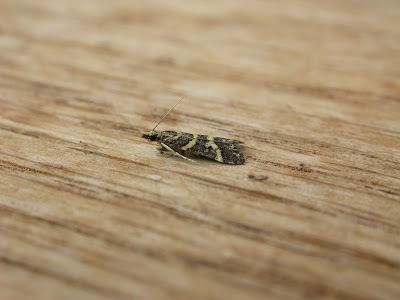
The moths of the Pyraloidea are perhaps one of the more under-appreciated sectors of lepidopteran diversity. With many thousands of species, they comprise a significant proportion of the order in terms of both taxonomic and ecological diversity. Nevertheless, with most species being small and dull in coloration, many Lepidoptera enthusiasts will tend to lump them in the too-hard basket for study. One subgroup of the pyraloids to which this issue definitely applies is the subfamily Scopariinae.

Scoparia spelaea, copyright Donald Hobern.


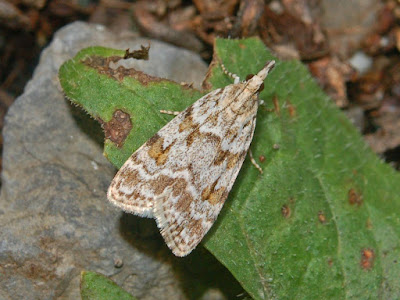
Close to 600 species of Scopariinae are known from around the world with the highest diversity found on tropical mountains and islands (Léger et al. 2019). They are mostly a mottled greyish in coloration, blending in among the rocks and tree trunks on which they settle during the day. Like other pyraloids, they have large palps that extend in front of the head; pyraloids as a whole are sometimes referred to as 'snout moths' in reference to the appearance this gives them. Forewing venation is characterised by clear separation of vein R2 from R3+4 and absence of CuP (Nielsen & Common 1991).

Meadow grey Scoparia pyralella, copyright Hectonichus.


The majority of scopariine species feed as larvae on mosses, living concealed within a slight silk web. A smaller number feed on dicotyledons or lichens. One New Zealand species, the sod webworm Eudonia sabulosella, has been known to cause economic damage to pasture during sporadic outbreaks. Other species generally do not cause significant impact to humans.

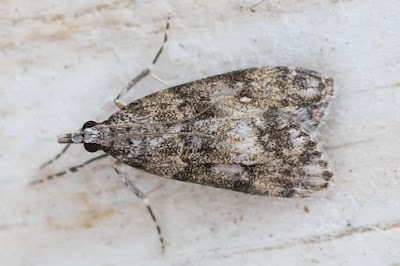
Eudonia lacustrata, copyright Tony Morris.


Identification of scopariines is notoriously difficult with many species closely approximating each other in pattern or exhibiting confounding intra-specific variation. The two largest genera Scoparia and Eudonia can only be reliably separated by examination of the genitalia. Two genera, the Indo-Australian Micraglossa and the Neotropical Gibeauxia, are distinguished by the presence of shiny golden scales on head, thorax and abdomen. With such significant challenges to their study, it would not be surprising if 600 species should turn out to be a marked under-estimate of their true diversity.

REFERENCES

Léger, T., B. Landry & M. Nuss. 2019. Phylogeny, character evolution and tribal classification in Crambinae and Scopariinae (Lepidoptera, Crambidae). Systematic Entomology 44: 757–776.

Nielsen, E. S., & I. F. B. Common. 1991. Lepidoptera (moths and butterflies). In: CSIRO. The Insects of Australia: A textbook for students and research workers 2nd ed. vol. 2 pp. 817–915. Melbourne University Press: Carlton (Victoria).

Psalidothrips

Many of you may know thrips as small insects that infest buds and young shoots of garden plants, stymieing growth and causing malformed development. However, there is also a wide diversity of thrips species that feed on fungi, inhabiting leaf litter and other fallen vegetation. In tropical and subtropical regions of the world, one of the more numerous genera of such fungus-feeders is Psalidothrips.

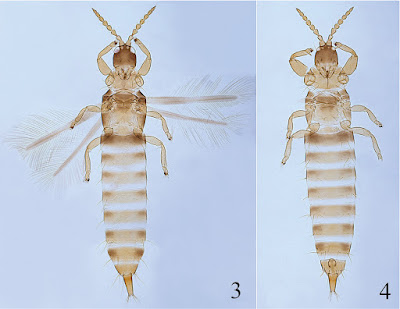
Winged female (left) and wingless male of Psalidothrips comosus, from Zhao et al. (2018).


Close to fifty species of Psalidothrips have been described from various locations around the world (Wang et al. 2019). They are most commonly found among leaf litter and are believed to feed on fungal hyphae. Most Psalidothrips are relatively small, pale thrips, yellowish or light brown in coloration. As members of the family Phlaeothripidae, the last segment of the abdomen is modified into a tube ending in a ring of setae; in Psalidothrips, this tube is commonly short and the terminal setae are often longer than the tube.

As is common among thrips, the recognition of Psalidothrips and its constituent species is often complicated by within-species variation. Many species are known as both winged and wingless forms (Wang et al., 2019, note that Australian species seem particularly prone to winglessness). Wingless forms often show reductions in the sclerotisation of the thorax. It is difficult to name a single feature of the genus that does not find exception in some species or other. Most species are weakly sculpted. For the most part, the maxillary stylets are short and sit low and far apart in the head when retracted. The mouth-cone is similarly short and rounded. The head is often fairly short with rounded cheeks that do not bear strong setae. Setae on the anterior margin of the pronotum are often reduced. The wings, if present, are often more or less constricted at about mid-length. Many phlaeothripids possess a series of large setae on the abdomen that hold the wings in place when folded back; in individuals of Psalidothrips with such setae (obviously, they tend to disappear in wingless individuals), they are often relatively few in number and simply curved.

Many of these features are related to the thrips' litter-dwelling habits. The short mouthparts, for instance, presumably reflect how these thrips are gleaning fungi from the surface of leaves without needing to pierce the leaf's cuticle. As such, it will be interesting to see how the genus holds out as our understanding of thrips phylogeny improves. Is this a true evolutionarily coherent assemblage, or disparate travellers who are following a fashion?

REFERENCE

Wang, J., L. A. Mound & D. J. Tree. 2019. Leaf-litter thrips of the genus Psalidothrips (Thysanoptera, Phlaeothripidae) from Australia, with fifteen new species. Zootaxa 4686 (1): 53–73.

In Honour of Amblyseius

At this point in time, the Phytoseiidae are one of the most intensely studied families of mites. They are the only group of mesostigmatan mites to have significantly diversified among the foliar environment (on and around plant leaves) where they are mostly predators on other small invertebrates. The taxonomic history of phytoseiids is storied and complex but one taxon that has been consistently recognised as a major part of the family is the genus Amblyseius.

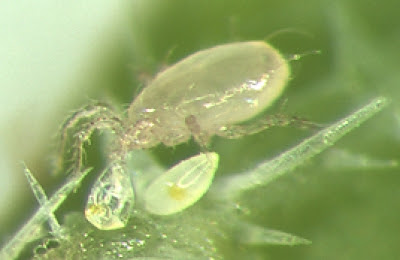
Swirski mite Amblyseius swirskii, from here.


When reviewed by Chant & McMurtry in 2004, Amblyseius was a sizeable assemblage of close to 350 known species (I quite expect that number to have expanded by now). Species of Amblyseius are lightly sclerotised, mostly pale in colour, and usually have a smooth shield covering most of the dorsum. The genus is characterised by the presence of eighteen or nineteen pairs of setae on the dorsum of the idiosoma (the central body) with three sublateral pairs being particularly long: one about the level of the third pair of legs (referred to as the s4 pair) and the other two towards the rear of the body. Except for a few pairs forward of the s4 setae, the remaining dorsal setae are all minute.

The primary focus of human interest in phytoseiids has been their role as predators of crop pests. I described some of the ways in which phytoseiids have been commercially utilised in an earlier post. Species used in this way include several Amblyseius though matters are complicated slightly by changes in taxonomy (for instance, one species which has been widely traded as Amblyseius cucumeris is now placed in the genus Neoseiulus). One of the most widely used of the commercial phytoseiids in recent years has been Amblyseius swirskii, commonly known as the Swirski mite (E. Swirski being an acarologist after whom the species was named). This species was first described in 1962 from almond trees in Israel and subsequently identified from a wide range of plant and crop species. Its history in pest control has been described in detail by Calvo et al. (2015).

The Swirski mite feeds on a range of prey, including mite, thrips and whitefly species, as well as on pollen and micro-fungi. It was first promoted as a commercial control for silverleaf whitefly Bemisia tabaci in the early 2000s. However, it did not get taken up in a big way until media publicity about pesticide residues on capsicum crops in Spain led to a crash in demand. Farmers in that country were forced to look for alternative means of pest control and found great success with A. swirskii (previous attempts to use the cooler-clime preferring Neoseiulus cucumeris in Spain had not been promising). Since then, the Swirski mite has been adopted in numerous countries for use on a range of crops to control various pests such as western flower thrips Frankliniella occidentalis. Because of its ability to grow and thrive on non-insect foods, including artificial diets, this mite is easily cultured commercially. It may also be released on crops before pest infestations develop, building up numbers on a diet of pollen until suitable prey presents itself. For the same reason, Swirski mite populations do not crash before pest control is complete. Overall, a remarkable success and a prime example of the value of Amblyseius species to mankind.

REFERENCES

Calvo, F. J., M. Knapp, Y. M. van Houten, H. Hoogerbrugge & J. E. Belda. 2015. Amblyseius swirskii: what made this predatory mite such a successful biocontrol agent? Experimental and Applied Acarology 65: 419–433.

Chant, D. A., & J. A. McMurtry. 2004. A review of the subfamily Amblyseiinae Muma (Acari: Phytoseiidae): part III. The tribe Amblyseiini Wainstein, subtribe Amblyseiina n. subtribe. International Journal of Acarology 30 (3): 171–228.

By the Light of the Pony

Light-emitting organs have evolved in many different species of marine fish. For the greater part, they are associated with inhabitants of the deep sea, the twilight and midnight zones beyond the reach of celestial light. Light production by species found in shallow waters is much less common. Nevertheless, one particularly notable radiation of near-surface glowers is the ponyfishes of the family Leiognathidae.

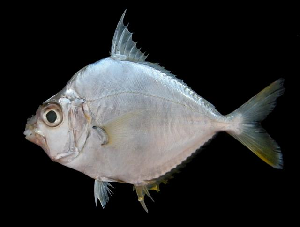
Leiognathus equulus, copyright Sahat Ratmuangkhwang.


Ponyfishes are small, mostly silvery fishes found in coastal and brackish waters in tropical regions of the Indo-West Pacific. The largest ponyfishes grow to about 25 cm in length but most species are much smaller (Woodland et al. 2002). They live in large schools that forage near the surface at night, descending close to the bottom sediment during the day. Why these animals are referred to as 'ponyfishes', I have no idea (perhaps the head is meant to look a bit pony-like?) An alternative vernacular name of 'slipmouth' makes a lot more sense as these fish have highly extensible jaws that can be used to snipe prey out of the water. A groove along the top of the skull allows for reception of a long, mobile premaxilla, supporting the mouth as an elongate tube when extended. Most ponyfishes are planktivores with simple, minute teeth in the jaw and the mouth extending horizontally. Species of the genus Deveximentum have the mouth tilted obliquely at rest so that it stretches upwards when extended. Members of the genus Gazza are piscivores when mature, feeding on other fish, and possess a pair of large caniniform teeth in each of the upper and lower jaws to hold their prey (James 1975).

Ponyishes are also notable for their elaborate light-producing organs. In most bioluminescent fishes, the photophores sit on or close to the skin surface but in leiognathids it is an internal outgrowth of the gut. A cavity around the end of the oesophagus houses colonies of bioluminescent bacteria, usually the species Photobacterium leiognathi. This light organ sits alongside or projects into the gas bladder which has a reflective internal coating. In many species, patches of scale-less, translucent skin allow the transmitted light to shine forth brightly. Muscular 'shutters' associated with the light organ allow the fish to control light transmission more directly (Woodland et al. 2002).

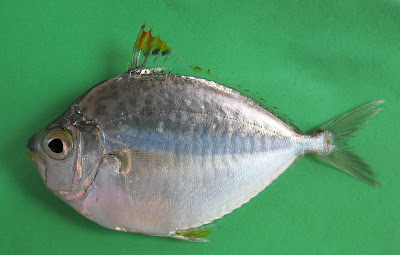
Photopectoralis bindus, copyright D. G. R. Wiadnya.


In a review of ponyfish taxonomy by James (1975), no mention was made of the light-emitting organ or many of its associated structures (though reference was made to the absence of scales on certain parts of the body). With the exceptions of the distinctive genera Gazza and Deveximentum, ponyfishes were assigned to a broad genus Leiognathus. Since then, variations in the structure of the light organ have been recognised as taxonomically significant, allowing the recognition of several genera divided between two subfamilies Leiognathinae and Gazzinae (Chakrabarty et al. 2011). Leiognathinae is defined by plesiomorphic characters and is likely to be paraphyletic to Gazzinae (Sparks & Chakrabarty 2015).

Because of the nocturnal habits of ponyfish and the delicacy of the light-emitting structures, our understanding of how light production functions in Leiognathidae remains somewhat limited. In Leiognathinae and females of Gazzinae, the light organ is relatively small and the external body surface lacks translucent patches. For the most part, light is expressed in these individuals as a uniform ventral glow that probably functions as counter-illumination (the light from the venter prevents the fish from appearing as a silhouette against light from the water surface to predators swimming below). Alternatively, light may be flashed to warn school-mates of danger. In males of Gazzinae, conversely, the light organ is enlarged relative to females and associated with translucent 'windows'. The shape of the organ and the arrangement of the 'windows' is a primary factor in distinguishing genera. Rhythmic flashing of light has been observed in males of many gazzine species and is probably characteristic of the group as a whole. Woodland et al. (2002) observed a school of several hundred Eubleekeria splendens flashing their lights synchronously shortly after nightfall. The exact function of such displays is uncertain, whether in courtship displays, co-ordinating school movements, attracting prey or dissuading predators. The sexually dimorphic nature of the light organ system, together with its species-specific expression, might seem to favour the first of these options but it should be noted that they are not all mutually exclusive.

Despite their small size, ponyfishes are often significant food fish for people living in areas where they are found. Thanks to their schooling behaviour, they are often a major component of dredge catches. In the Philippines, they are used for making bagoong, a fermented fish paste. In other places, they may be cooked whole after cleaning. The glow, sadly, does not survive the process.

REFERENCES

Chakrabarty, P., M. P. Davis, W. L. Smith, R. Berquist, K. M. Gledhill, L. R. Frank & J. S. Sparks. 2011. Evolution of the light organ system in ponyfishes (Teleostei: Leiognathidae). Journal of Morphology 272: 704–721.

James, P. S. B. R. 1975. A systematic review of the fishes of the family Leiognathidae. J. Mar. Biol. Ass. India 17 (1): 138–172.

Sparks, J. S., & P. Chakrabarty. 2015. Description of a new genus of ponyfishes (Teleostei: Leiognathidae), with a review of the current generic-level composition of the family. Zootaxa 3947 (2): 181–190.

Woodland, D. J., A. S. Cabanban, V. M. Taylor & R. J. Taylor. 2002. A synchronized rhythmic flashing light display by schooling Leiognathus splendens (Leiognathidae: Perciformes). Marine and Freshwater Research 53: 159–162.

Centaurea acaulis, Stemless Star-thistle

In an earlier post, I commented on the diversity of species of the star-thistle genus Centaurea. Among the many, many species that have been assigned to this genus is the stemless star-thistle Centaurea acaulis* of northern Africa.

*Though dissolution of the polyphyletic Centaurea may lead to this species changing places. Banfi et al. (2005) listed it under the name of Colymbada acaulis.

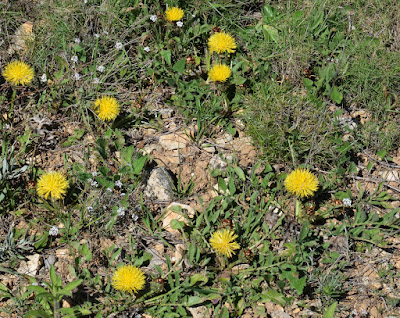
Patch of stemless star-thistles Centaurea acaulis, from L'herbiel de Gabriel.


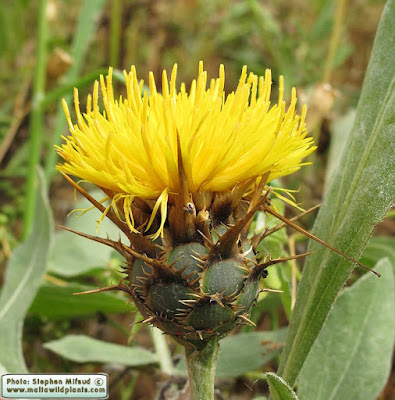
Centaurea acaulis is an inhabitant of dry, rocky habitats that is native to Tunisia and northeastern Algeria. As indicated by both the vernacular and botanical names, its growth habit lacks a central stem. Instead, the long, lobed leaves (which can be up to about a foot in length going by photos provided by Agut Escrig et al., 2021) lie prostrate on the ground. These leaves end in a large, ovate apical section with lobes running down the side of the central rib, becoming smaller towards the base. Flower heads are solitary and carry a mass of bright yellow florets. The involucral bracts (the 'scales' around the outside of the base of the flower head) are flat and green with darker longitudinal veins. The distal section of the bracts is triangular with a membranous, ciliate margin and typically (though not always) ends in a long spine. A closely related species found in northwestern Algeria and Morocco, C. oranensis, has historically been treated as a subspecies of C. acaulis (under the name C. acaulis ssp. boissieri, because botanical nomenclature is weird). However, C. oranensis was raised to species level by Greuter & Aghababian (in Greuter & von Raab-Straube, 2005) on the basis of its distinct involucral bracts, which are distally blackish, ovate and concave, with a margin of dense, long, stiff setae.

Close-up of flower head of Centaurea acaulis, copyright Stephen Mifsud.


Recent years have seen this species extending its range northwards with populations now found in Spain, Italy and Malta. In Malta, it was initially found grown in a disturbed area with particularly alkaline soil (Buttigieg & Lanfranco 2001). The mechanism of its arrival is uncertain. It could have dispersed naturally across the Mediterranean, or it may have arrived mixed into bird seed. However it got there, one might expect that as the south of Europe becomes increasingly hotter and drier, the stemless star-thistle will continue to spread.

REFERENCES

Agut Escrig, A., J. P. Solís Parejo & P. Urrutia Uriarte. 2021. Noticias sobre la presencia de Centaurea acaulis L. (Asteraceae) en la Península Ibérica. Flora Montiberica 81: 51–54.

Banfi, E., G. Galasso & A. Soldano. 2005. Notes on systematics and taxonomy for the Italian vascular flora. 1. Atti Soc. It. Sci. Nat. Museo Civ. Stor. Nat. Milano 146 (2): 219–244.

Buttigieg, R., & E. Lanfranco. 2001. New records for the Maltese flora: Centaurea acaulis L. (family: Asteraceae). Central Mediterranean Naturalist 3 (3): 147–148.

Greuter, W., & E. von Raab-Straube (eds) 2005. Euro+Med notulae, 1. Willdenowia 35: 223–239.

Lifestyles of the Rosalinidae

Among the modern foraminiferans, one of the most prominent radiations is among members of the Rotaliida, characterised by globose chambers and calcareous, hyaline test walls. Among the numerous families making up the Rotaliida are members of the Rosalinidae.

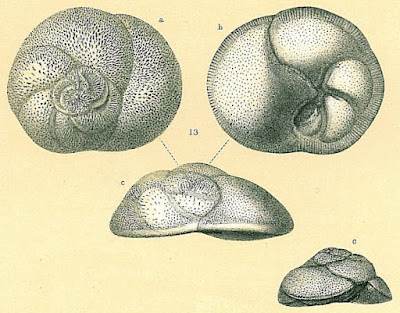
Benthic form of Rosalina globularis, from Brady (1884).


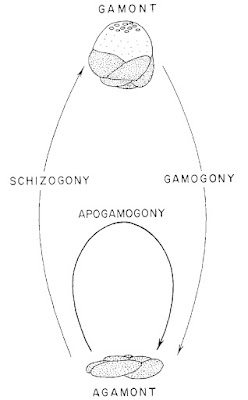
Rosalinids may be regarded as fairly typical-looking marine rotaliids with the test growing freely as a low trochospire (so a flattened cone or dish shape). The aperture of the test is a low slit on the interior margin along the umbilicus (Hansen & Revets 1992). Rosalinids have a complex life cycle involving both benthic and planktonic stages (Sliter 1965). The asexually reproducing diploid stage is benthic. Depending on conditions, diploid individuals may divide to produce other diploid individuals, resulting in several asexual generations. Eventually, however, the diploid generation will undergo meiosis to produce the haploid sexual generation (in the common species Rosalina globularis, this is induced by exposure to warmer water). In the sexual generation, a large globular chamber forms at maturity that covers the umbilical side of the test. This float chamber becomes filled with gas, allowing the foram to disperse planktonically before releasing gametes to produce the next diploid generation. Planktonic individuals are distinct enough in appearance from their benthic counterparts that they were long mistaken for distinct taxa before their identity was revealed by lab cultures.

Life cycle of Rosalina globularis, from Sliter (1965).


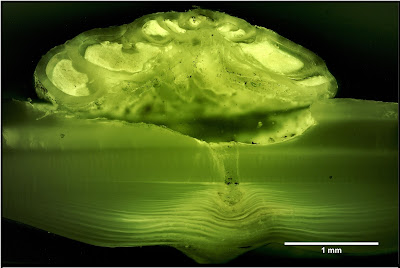
The majority of forams are particulate feeders. A network of filamentous pseudopodia radiating outwards from the cell body captures micro-organisms and other organic particles. However, one genus of rosalinids, Hyrrokkin, lives as parasites on sessile invertebrates (Cedhagen 1994). Species of this genus have variously been found on sponges, corals and bivalves. On sponges, they settle on the inhalent surface of the sponge and dissolve the underlying tissues. On bivalves, they form pits on the shell surface from which they bore holes through to the body cavity. Pseudopodia extended through this hole allow the foram to feed on host tissue. Infested hosts may bear multiple scars from the foram moving about on the outer surface. The forams may also feed on other animals such as polychaete worms or bryozoans attached to the surface of their primary host. In such cases, Hyrrokkin remains in its original pit but develops an irregularly shaped chamber with its aperture directed towards the alternate prey. Hyrrokkin species evidently do well from their rapacious lifestyle: whereas other rosalinids are only a fraction of a millimetre in diameter, Hyrrokkin sarcophaga is an absolute giant reaching around six millimetres across and with protoplasm containing thousands of nuclei. Proving once again that one may make a great deal of profit from the labour of others.

Cross-section of Hyrrokkin sarcophaga boring into shell of file clam Acesta excavata, from Schleinkofer et al. (2021).


REFERENCES

Cedhagen, T. 1994. Taxonomy and biology of Hyrrokkin sarcophaga gen. et sp. n., a parasitic foraminiferan (Rosalinidae). Sarsia 79: 65–82.

Hansen, H. J., & S. A. Revets. 1992. A revision and reclassification of the Discorbidae, Rosalinidae, and Rotaliidae. Journal of Foraminiferal Research 22 (2): 166–180.

Sliter, W. V. 1965. Laboratory experiments on the life cycle and ecologic controls of Rosalina globularis d'Orbigny. Journal of Protozoology 12 (2): 210–215.

Colus and Co.

The neogastropods have long been a challenge taxonomically. They are extremely diverse, encompassing a large number of species with a wide range of lifestyles, but they also exhibit exhibit regular patterns of convergence and/or conservatism between different lineages. Perhaps the most challenging group of all has been the whelks, commonly recognised as the superfamily Buccinoidea, a massive radiation of over 3300 known species. Whelks are particularly diverse in colder regions of the world's oceans, including amongst their number there the members of the family Colidae.

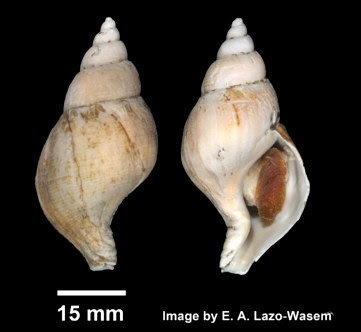
Hairy colus Colus pubescens, copyright E. A. Lazo-Wasem.

Colus has been used as the basis of a family group name at many levels of whelk classification, whether it be Colidae, Colinae or Colini. The gastropod classification laid out by Bouchet et al. (2017) recognised 'Colini' as a diverse tribe within the main whelk family Buccinidae, including a range of cold-water taxa. However, a more recent phylogenetic analysis of the buccinoids by Kantor et al. (2021) found Bouchet et al.'s concept of Colini to be polyphyletic, placing the type genus Colus outside what the called the 'core Buccinoidea'. As such, they raised Colidae to the status of a separate family and restricted it to just two genera, Colus and Turrisipho.

In this restricted form, the Colidae are thin-shelled, medium-sized to large whelks with the largest having shells up to twenty centimetres in length. The shells are fusiform to ovate in shape with a more or less elongate siphonal canal and covered by a brown periostracum. Axial sculpture is absent; spiral sculpture is expressed as more or less prominent cords. The aperture is closed with a operculum bearing a terminal nucleus. The animal has a more or less long proboscis. The radula bears three teeth per row; the middle tooth has a more or less square base and one to three cusps, with the middle cusp the largest, whereas the lateral teeth bear three hooked cusps with the outermost cusp significantly larger than the other two. None of these features, it should be noted, is entirely unique to the Colidae (Kantor et al. 2021).

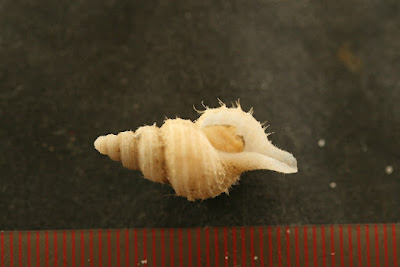
Turrisipho dalli, from BoldSystems.


Members of the Colidae are found in the Arctic and northern Atlantic Oceans, from subtidal to bathyal depths. Because they are not targeted commercially, the life habits of colids have not been well studied. However, what we do know indicates that they are likely predators on other invertebrates (Kosyan 2007). The long proboscis of most species is probably used to pull infaunal animals such as amphipods and bivalves out of their burrows. Colids have well-developed salivary glands and it is possible that these may produce toxins as found in other neogastropods. They do not have anything like the elaborate venom delivery setups like those found in the conoids, but even a little dose of toxic saliva helps to subdue a struggling crustacean.

REFERENCES

Bouchet, P., J.-P. Rocroi, B. Hausdorf, A. Kaim, Y. Kano, A. Nützel, P. Parkhaev, M. Schrödl & E. E. Strong. 2017. Revised classification, nomenclator and typification of gastropod and monoplacophoran families. Malacologia 61 (1–2): 1–526.

Kantor, Y. I., A. E. Fedosov, A. R. Kosyan, N. Puillandre, P. A. Sorokin, Y. Kano, R. Clark & P. Bouchet. In press 2021. Molecular phylogeny and revised classification of the Buccinoidea (Neogastropoda). Zoological Journal of the Linnean Society.

Kosyan, A. R. 2007. Morphological features, ecology, and distribution of poorly studied molluscan genera of the Colinae subfamily (Gastropoda, Buccinidae) from the far eastern seas of Russia. Oceanology 47 (4): 531–536.